![MaritimeJournal[Seawork]](https://www.maritimejournal.com/wp-content/uploads/2026/09/MaritimeJournalSeawork.svg)






Australian tug salvage operation
A salvage operation is underway at an Australian port to salvage two wrecked tugs which sank in January.
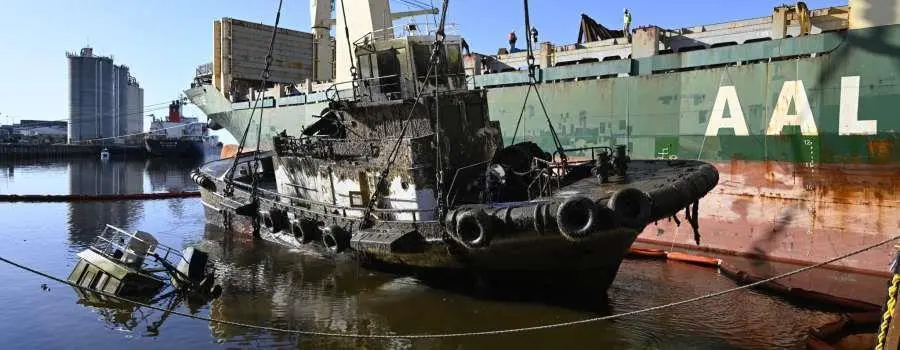
The first tug York Cove has already been raised, but the second lift will be more complex owing to the way the Campbell Cove is positioned on the bed of the Mersey River.
“The first lift was made complex by a series of factors including lifting methodology, weather and river currents that have been affected by recent rain and the condition of the wrecks themselves in the water,” said Stephen Casey, chief operation officer, TasPorts.
“In planning and executing the second lift, just as was the case with the first lift, our Insurer the Shipowners Club, United Salvage, TasPorts and the operators of the AAL Melbourne will be working to manage the safety of all personnel involved in the salvage operation and those working on and around the Port of Devonport.”
Environmental focus
Mr Casey said that ensuring the protection of the environment and the integrity of the oil spill response boom around the wreck site is a key focus of the salvage project.
The salvage operation follows the January collision of the cement carrier Goliath with the two berthed TasPorts tugs. The incident damaged the tugs significantly causing them to sink.
TasPorts responded quickly at the time, deploying oil spill response equipment and activating its crisis response teams.
But it has been required to continue to actively monitor the incident site 24 hours a day, seven days a week since.
Mr Casey said the first lift was an important step forward for TasPorts which had been focused on removing the wrecks and returning all commercial berths at the Port of Devonport to full operations, while at the same time carefully managing environmental and safety since the sinking.
The 194-metre-long AAL Melbourne is being used to salvage the vessels. It’s operated by United Salvage, the Australian-based company appointed to undertake the removal works.