![MaritimeJournal[Seawork]](https://www.maritimejournal.com/wp-content/uploads/2026/09/MaritimeJournalSeawork.svg)

Crane ship crash leads to fatal accident: Report
Strong winds and poor communication led in part to a worker’s death after a crane ship crashed into a jack-up rig at Rotterdam, the Dutch Safety Board has found.
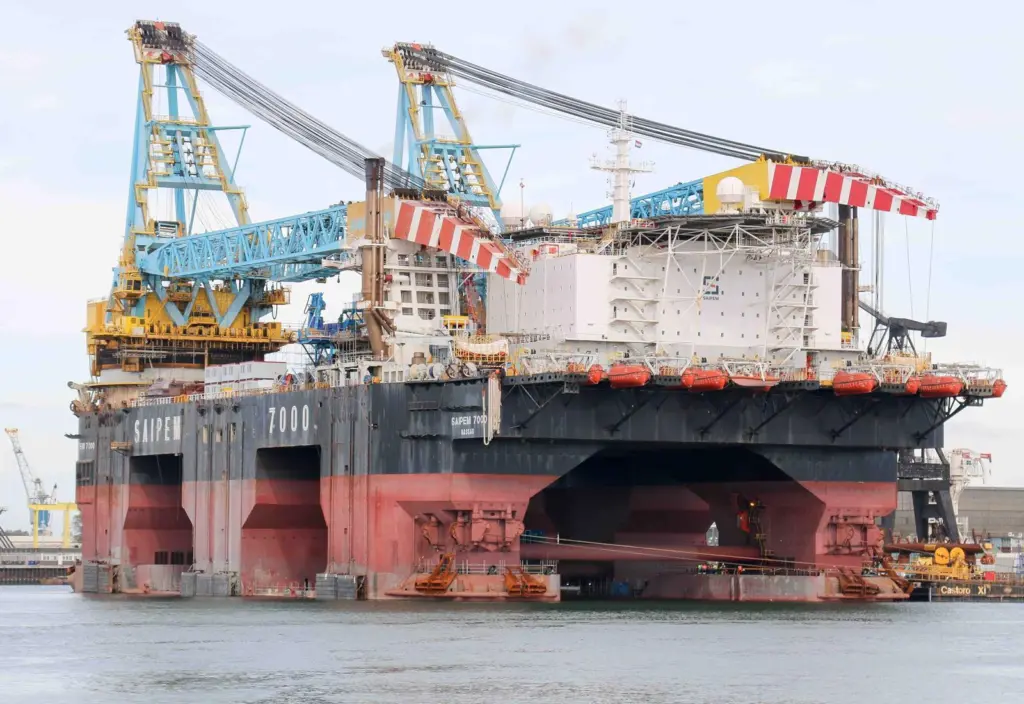
The report follows an allision between a semi-submersible crane ship and a jack-up drilling rig, when a welder on the jack-up scaffolding became trapped, fell into the sea and vanished for weeks before his body was found.
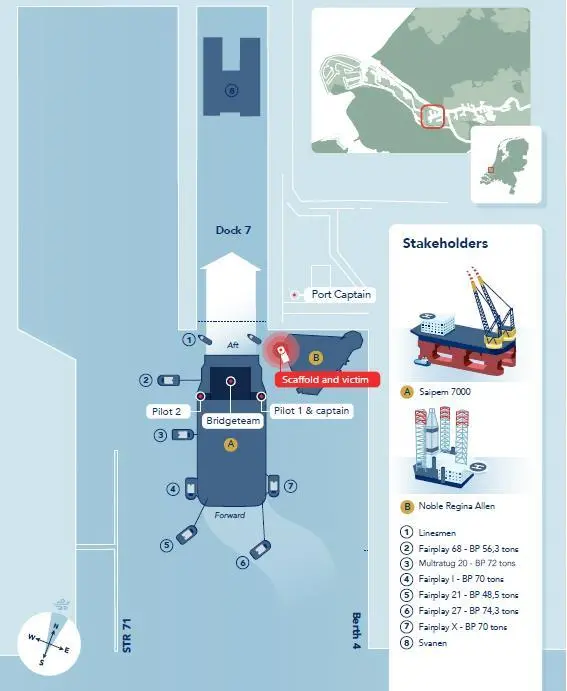
The crane ship was being manoeuvred to enter the drydock in Rotterdam’s Botlek harbour, assisted by six port tugs. Due in part to the weather conditions, the vessel veered off course, ending up at an angle to the dock entrance.
In a bid to correct its course, the crane ship swung too far to the other side, crashing into the scaffolding of the jack-up, which was engaged in its own separate maintenance routine alongside the dock entrance.
When the two vessels separated, the welder fell from the damaged scaffolding and despite an intensive search operation it was several weeks before his body was recovered.
Investigation
The Dutch Safety Board’s report is a forensic study of the operation and examines the crane ship; the local pilots’ organisation; the shipyard and jack-up vessel’s working procedures; assisting tugs; and the linesmen/mooring boat operation.
At 198m in length and with a width of 87m, the 117,812gt crane ship, with its two 7,000t revolving cranes, is a visually impressive and yet formidable vessel which, despite its 10 azimuth and two bow thrusters required six tugs to assist it into the drydock.
The report centres on procedures including the advance preparation for such manoeuvres and in particular communication between the various parties, including the two pilots, the master and four officers on the bridge of the crane ship, who operated the thrusters.
A margin of 50cm was necessary between the dock’s keel blocks and the crane ship’s keel, a margin needed for three-and-a-half hours for the docking. A first attempt three days before the incident had in fact been aborted due to strong winds and a reduced high tide window.
The DP system was temporarily deactivated and the tunnel thrusters kept on standby for the second attempt, the vessel held in position by the six tugs. A series of course deviations and responding corrections followed, including assistance from the tugs, and preceded the allision with the jack-up.
One aspect highlighted in the investigation is where the conversation between pilot and master was not recorded due to the positioning of the VDR’s microphones.
“The communication with the tugboats, the linesman and the shipyard was in Dutch,” the report, which criticises the lack of detailed communication between the pilot, master and crew, says. “It is common practice internationally that communications happen in the language of the country. This creates an even greater challenge for the bridge team to keep engaged with the pilot’s actions.”
Conclusion and recommendations
The report examines the whole operation and includes preparations for the dry-docking, the welding work on the scaffold, risk management of simultaneous operations and the occurrence itself.
“It was already clear during preparations for the docking that the maximum permitted wind speed limits would be exceeded,” it says. “The captain, his team on the bridge and the pilot had not made clear arrangements as to how the manoeuvre could be monitored and what information was important to share with one another.”
While recognising that responsibility for risk management during such complex operations lies with the shipyard, recommendations are made to the shipyard along with the regional maritime pilots’ corporation and the crane ship’s owners.
The shipyard itself has since taken a number of actions to improve safety and are in line with the learned lessons and primarily focused on risk management while docking in and out.