![MaritimeJournal[Seawork]](https://www.maritimejournal.com/wp-content/uploads/2026/09/MaritimeJournalSeawork.svg)



Former Harland & Wolff shipyards in leadership shake-up
A new CEO has been appointed at Navantia UK as the Spanish shipyard continues integrating the four Harland & Wolff shipyards that it saved from bankruptcy just before Christmas.
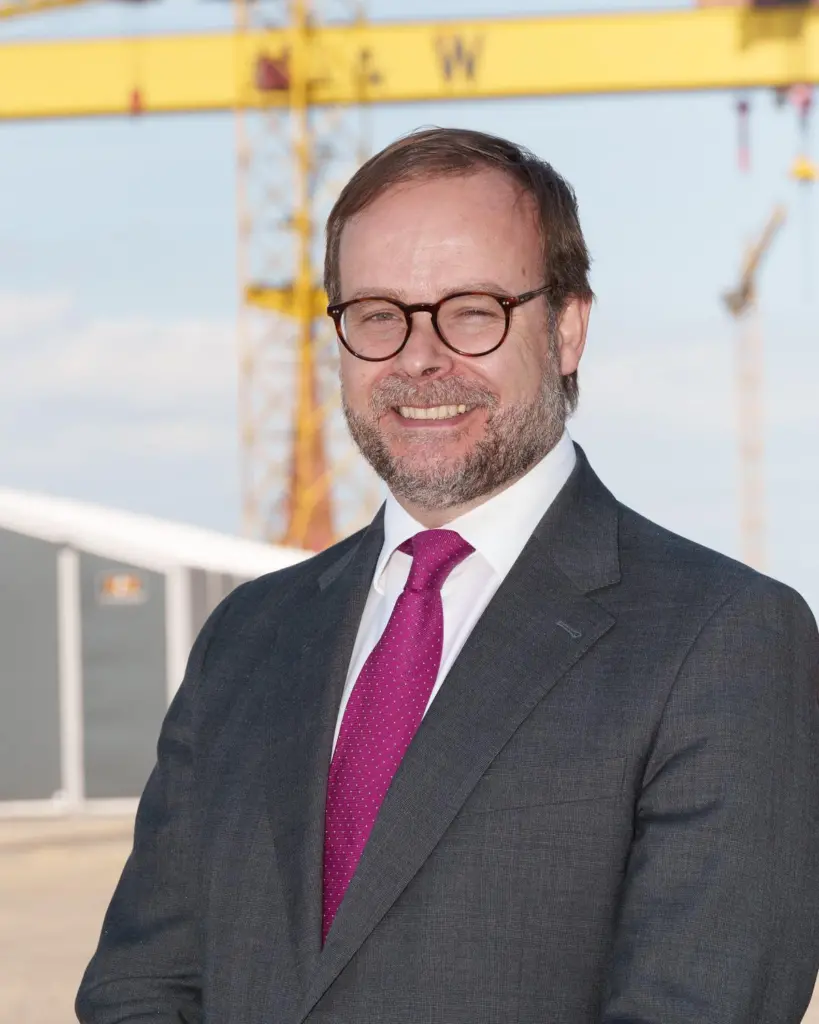
Donato Martínez takes over from Juan Ignacio de la Cueva, under whose leadership Navantia says it ‘has accomplished the first steps of the integration of Harland & Wolff’.
Navantia has put its faith in the famous Titanic shipbuilder, investing £115 million (€136 million) in the four sites at Belfast, Appledore, Arnish and Methil. with much of it going to Belfast.
“The company has already completed the first phase of integration, protecting more than 1,000 jobs and strengthening the leadership team to deliver the FSS programme,” it says.
The FSS programme, the Fleet Solid Support programme, was awarded to H&W by the Royal Navy to build three new vessels for the Royal Fleet Auxiliary. The vessels will support the UK Carrier Strike Group and conduct replenishment for the Queen Elizabeth-class aircraft carriers, frigates and destroyers. All three 215m vessels are due to be operational by 2032 and will be built at Belfast, Appledore and Navantia’s Spanish yards.
“With the acquisition now complete and our initial integration priorities addressed, this is a natural point for leadership transition,” said Sir Alan Massey, non-executive chair of Navantia UK. “Mr Martínez’s technical background, digital transformation expertise, and experience operating Navantia subsidiaries in international markets position him well to lead Navantia UK’s next phase of growth and development.”
“I am thrilled to take on the reins of Navantia UK at this exciting juncture,” said Martínez. “Our vision for Navantia UK is to establish a world-class defence and energy capability that contributes significantly to the UK’s industrial base. By transferring Navantia’s global expertise, digital systems and shipbuilding technology, we are creating sustainable, high-skilled jobs and building resilient supply chains across the country.”