![MaritimeJournal[Seawork]](https://www.maritimejournal.com/wp-content/uploads/2026/09/MaritimeJournalSeawork.svg)




From art to smart: hull optimisation for workboats
The Cloud Towing Tank (CTT) team is bringing a service reserved for big ship companies to the workboat sector: a systematic approach to lowering a vessel’s water resistance.
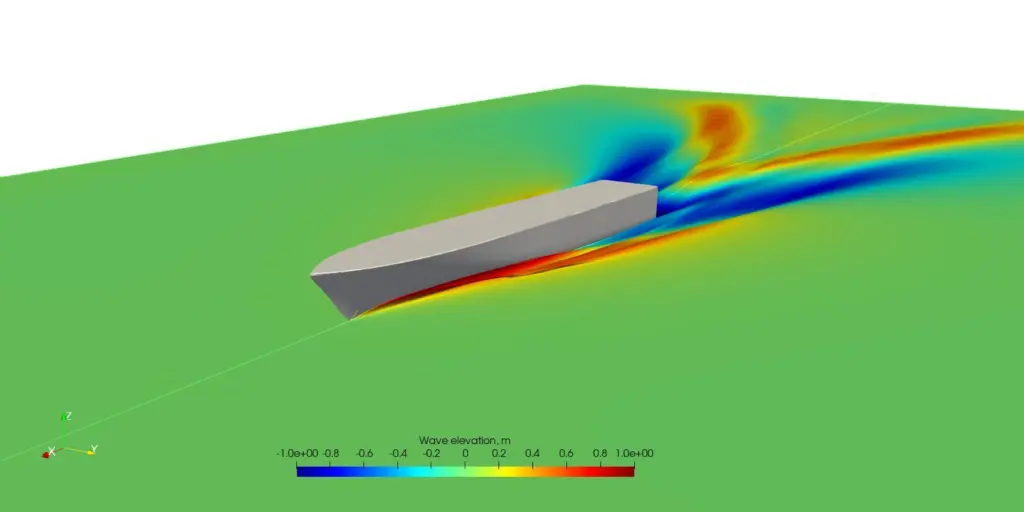
“Normally, hull development is half science, half art,” says naval architect Inno Gatin. But in CTT’s case, however, its most recently developed service brings together CFD (computational fluid dynamics) and parametric shape optimisation. In short, it promises to take the initial hull design and tweak it for hydrodynamic efficiency.
“We find the best form in terms of fuel consumption,” says Gatin, so rather than taking iterative steps, CTT’s software will take the concept and develop a handful of practical variations.
This is not new.
“There are very good tools on the market serving ship design offices but it’s too expensive for smaller vessels and one-off projects,” he says. “If you’re designing for one or two boats, maybe crew transport, a tug, dredger or a fire-fighting vessel, then the budget doesn’t usually allow running a proper hydrodynamic optimisation study.”
While not identical to these bigger software systems, CTT’s is a very-cost effective option: “We cannot explore as many variants as the full service, but we can get 80% of the effect for about a quarter of the typical market price,” says Gatin.
It appears to be a worthwhile pursuit. In-house R&D studies on a 40-metre semi-displacement vessel, typical of fast patrol or search and rescue missions, has been convincing enough to be published in a white paper (available on CTT’s website).
“Our optimisation of the hull achieved a 4.5% resistance reduction: it showed that the approach makes sense as you can get a meaningful improvement for relatively little effort,” he says.
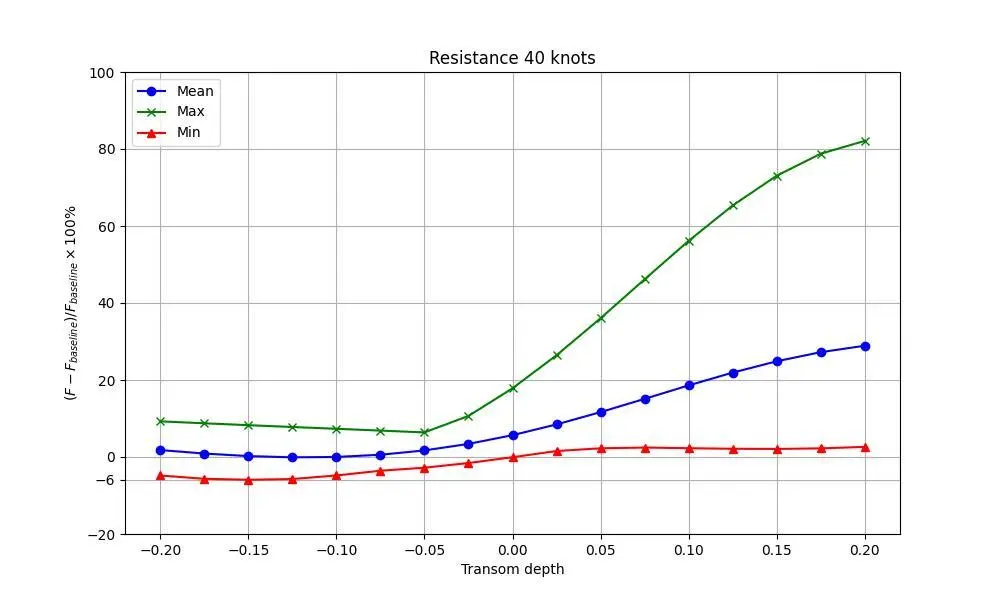
The company’s research also demonstrated that their work could turn up some surprising, non-intuitive outcomes. For example, variations on transom width for this particular hull form didn’t yield the expected efficiencies in the required speed range. Yet transom depth did make a substantial difference, demonstrating the value of an unforeseen departure from the predictable.
Bring these elements together and it appears CTT’s services could prove very useful for the workboat segment. It’s especially timely now that the drive for alternative fuels, hybrids and electric running means hull efficiency is inexorably rising up the agenda.