![MaritimeJournal[Seawork]](https://www.maritimejournal.com/wp-content/uploads/2026/09/MaritimeJournalSeawork.svg)






Ørsted culls management in ‘challenging environment’
Offshore wind energy giant Ørsted has sacked its CFO and COO amid what it calls a ’challenging and volatile environment’.
The announcement has come shortly after the company confirmed it was pulling the plug on two major offshore wind developments in the US, the Ocean Wind 1 and 2 projects.
“Ørsted, along with the rest of the industry, is experiencing a challenging and volatile business environment,” said a statement by CEO Mads Nipper.
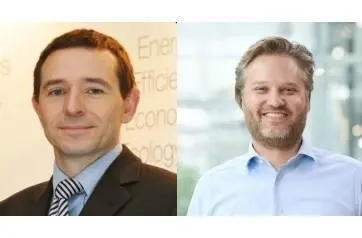
“By mutual agreement, two members of executive management are stepping down and leaving Ørsted with immediate effect: Daniel Lerup, Chief Financial Officer (CFO), and Richard Hunter, Chief Operating Officer (COO).
“Ørsted has initiated the processes of identifying a new CFO and a new COO and expects the processes to be concluded as soon as possible in 2024.”
Rasmus Errboe will serve as interim CFO and Andrew Brown, member of Ørsted’s Board of Directors, has been appointed interim COO.
The move could be seen as a shake-up in a rather precarious wind farm industry globally, with auctions for leases not receiving bidders, both in the US and in the UK.
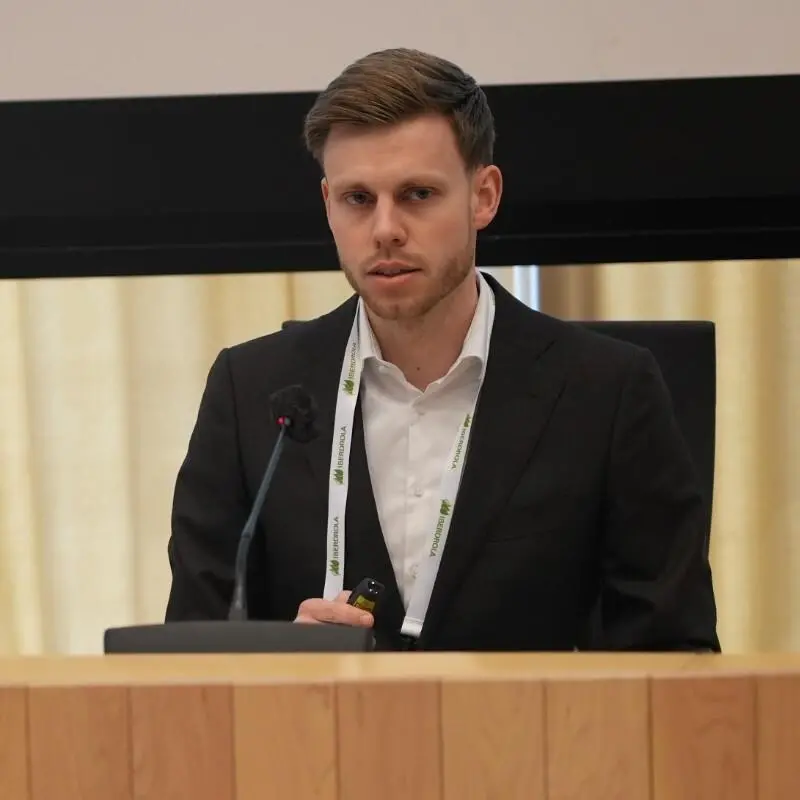
Talking to Maritime Journal about the current offshore wind situatiuon globally, WindEurope media relations officer Christoph Zipf said there were differences between the US and European sectors in that the US market was so new that supply chains had not been set up yet and factories and port infrastructure were still in a fledgling state.
However a common theme in both continents was inflation, which meant that when a project could take up to 10 years from planning to build, costs could have soared in the meantime.
“Every wind turbine now costs 30% more than it did three years ago,” he said. “The most important component of a wind turbine is steel – and quite a lot of that came from Russia and Ukraine.
“There are two options. Either the OEMs swallow these costs and keep producing turbines at the same price and they go into the negative, or the developers of the projects have higher costs – which means there is no business case. Basically what needs to happen is OEMs can index their prices to inflation and the energy price cap ceiling needs to be raised, for instance in the UK, where it hasn’t moved for the last two or three years yet inflation has gone up by 10%.
“The UK should raise its ceiling cap (currently £44 (€50) per MWh) and run the auction again.”
in Germany it was a case of negative bidding – where German developers paid the state for leases which meant if they proved unprofitable, ‘not only do they get nothing, they pay to get nothing’.
He also cited the fact that BP and Total, in July, were successful in winning bids for offshore wind farms that they would then use to power their oil and gas operations.
Zipf said storage and intermittency were also not solved.
“Hydrogen is still in its infancy. We can store it but it’s in its very early stages,” he said. “Battery storage has seen huge quantities of electricity breakthroughs and improvements keep happening. People are experimenting with new models and batteries are getting bigger.”
With Ørsted, who has not replied to MJ’s request for an interview, there are still developments going ahead.
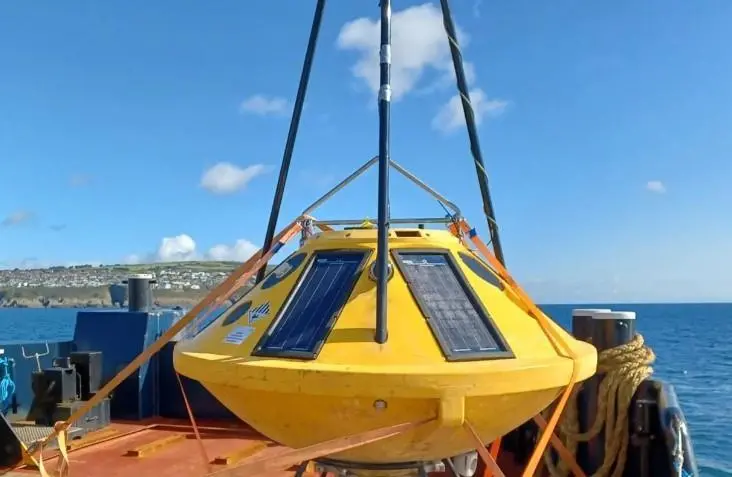
One example is by the Isle of Man, where the company is carrying out survey and exploration work for the British territory’s first offshore wind farm.
In September a measurement buoy by Fugro was installed at the site to measure temperatures and wave heights.