![MaritimeJournal[Seawork]](https://www.maritimejournal.com/wp-content/uploads/2026/09/MaritimeJournalSeawork.svg)



Workboat Code 3 update at Seawork
Despite the emotive Workboat Code conference at Seawork last year, no MCA representative appeared at this year’s session.
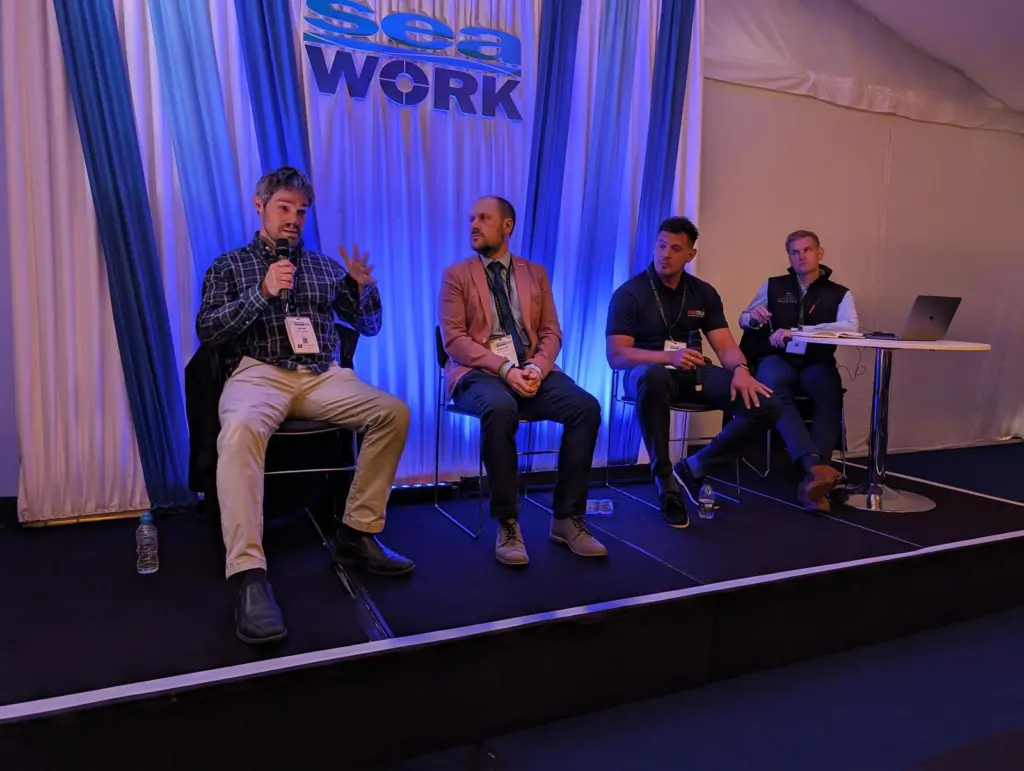
Seawork’s update last year on the then impending MCA Workboat Code 3 encouraged a memorable level of emotive debate.
At last year’s session, MCA representatives were given a thorough interrogation by vessel operators, Certifying Authorities (CAs) and surveyors alike, all desperate for answers on fundamental outstanding questions which many felt looked set to cause potential costs to their businesses.
Twelve months later, the same Seawork conference session would give us a good indication on how well the new code has bedded in, how well the MCA has addressed the outstanding questions and to what extent industry has come to terms with it.
The session was chaired by Chartwell Marine’s CEO, naval architect Andy Page. On the panel sat Stewart Gladwell, SCMS CEO2, and Owen Preece, Mecal MD. SCMS and Mecal are Certifying Authorities that are responsible for the coding of approximately 75% of the UK workboat fleet. The CAs exist at the sharp end of the implementation of any new coding systems. These are the organisations that have to straddle the grey areas between the black and white framework of regulations laid down by the MCA and the successful implementation aboard the vessels themselves, which might be a single person-crewed beach-launched cockle fishing boat, or a 24m wind farm CTV with high voltage battery hybrid system.
Also in attendance, to give a more overarching industry perspective, was Workboat Association CEO Kerrie Forster.
While perhaps less ‘entertaining’ from the media perspective, this year’s session was indicative of an industry working to help a somewhat struggling MCA make the right decisions, which will ultimately lead to a safer and cleaner working environment aboard workboats and a more easily understood and better harmonised single coding system.
The MCA’s Sport and Pleasure Boat Code, which was behind Workboat Code 3, has recently been put back in terms of its implementation dates.
The MCA has made no secret of its under-staffing and under-funding issues, which is not an uncommon story in government departments post austerity and pandemic.
The MCA itself was not represented this year, citing parliamentary rules surrounding the forthcoming UK general election.
Attendees heard how Workboat Code 3 had followed the implementation dates advised by MCA last year, with implementation for newbuilds being the statutory code for keels laid from the end of 2023.
For existing tonnage the implementation is more complex, as it depends upon factors such as the nature of the existing coding and how long that has to run. According to Stewart Gladwell, with existing tonnage, if a vessel was coded the day before Workboat Code 3 came into force, it could have up to five years before it needs to be certified for the new code. If the vessel’s coding timeline didn’t work out so well, it could need to comply in as little as three years.
Ongoing issues
Either way, it came across as not the panic and ‘industry up in arms’ situation that we saw in this conference session in 2023.
Andy Page added that while the coding requirement is clearly more detailed than previous codes and the CA representatives confirmed that the manpower overhead of coding a vessel is clearly greater, there is one beneficial change that has come in between Workboat Code 2 and 3.
The system for granting exceptions to the coding has changed, becoming more extensive and pragmatic. Owen Preece illustrated this with an example of a boat designed and constructed to the new code that has a fuel tank directly as engine boundary; ostensibly in direct contravention of Workboat Code 3.
Upon consultation with the MCA, the vessel was granted coding under the new code following the addition of some non-structural fire suppression measures.
The panel shared similar experiences of legislative flexibility on other grey areas, such as proving age and replacement dates for flexible hoses on existing tonnage (difficult or impossible), and sewage discharge equipment issues.
That isn’t to say that all the issues with the bedding-in of the new code are over and that the manning issues at the MCA are not ongoing. The UK CAs as a whole still have more than 100 pending queries with the MCA on Workboat Code 3.

For example, the extent of any Safety Management System SMS desperately needs fleshing out. The code currently only goes into detail on the somewhat ancillary cyber security aspects of any SMS while the industry, in the climate of a major shortage of qualified workers, is much more interested in more concrete direction on manning implications, such as which vessels undertaking which work types will require a Designated Person Ashore.
The difficulty in getting timely answers from the MCA has been the main frustration in the last year for those CAs and proactive vessel operators keen to future-proof their fleets with the new code.
Owen Preece cited one example, where a line from Workboat Code 2 was been carried over to Code 3 word for word, but with ‘mandatory’ changed to ‘non mandatory’. Earlier versions of the code had a few typos. Was this one of those or had the code really been flipped 180 degrees on this aspect?
Either way, life would be much better if the MCA were easier to communicate with.
The general feel of the session was positivity and an industry that will always work out a sensible way forward despite any temporary legislature headwinds.
For many attendees the most valuable advice was expressed by Stuart Gladwell, who reminded all that in the context of the outstanding queries around the code, 2025 would be a much more suitable time to code a vessel under Workboat Code 3 than 2024.
Tellingly, despite the code’s introduction for over six months, only 0.4% of the fleet certified by SCMS and 1% of the Mecal certified fleet are operating under Workboat Code 3.