![MaritimeJournal[Seawork]](https://www.maritimejournal.com/wp-content/uploads/2026/09/MaritimeJournalSeawork.svg)





Bob Cripps: Growing the industrys future
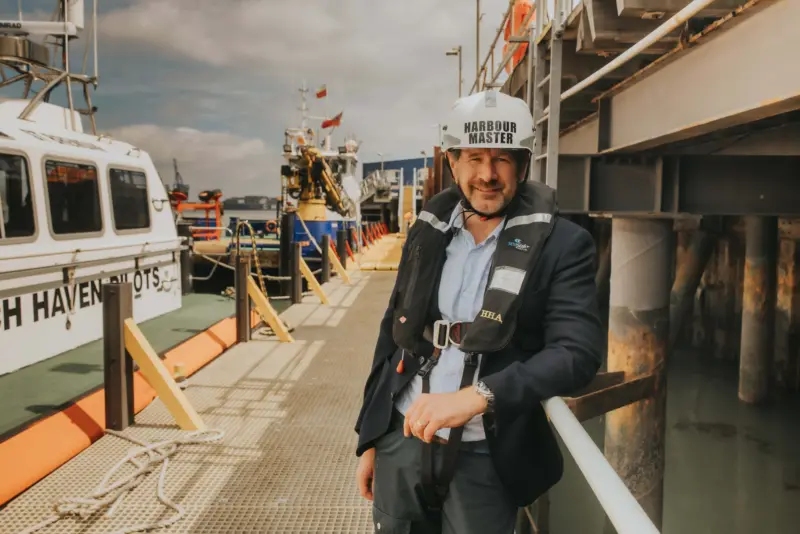
“There’s no point in building a boat for tomorrow based on today’s technology,” says Bob Cripps of Longitude Consulting Engineers, part of LOC Group. “A design has to have room to evolve.”

But, as Mr Cripps points out, any real success is not just down to a single project or even a series; the engineering capability behind it also has to develop deep roots.
Mr Cripps was the man behind the RNLI’s now familiar Severn, Trent, Tamar and Mersey class lifeboats. However, on taking up the role of RNLI’s chief naval architect back in 1987, he was fresh from Lloyd’s Register and so assumed there would be some structure already in place, “so it was a surprise to find no formal rules or regulations actually existed”.
He explained: “The challenge was to develop not just four new designs but our own criteria and research: it really was a blank sheet of paper.” And one, he admits, that “proved to be a lot of fun”.
His 18 years at the RNLI saw it through move from wooden craft barely capable of 8 knots to 25 knots composite designs with a whole new ethos. For example the communication had to be simple enough for weekend volunteers to master and the steering went from a tiller to joystick “as you want to make it easier for the coming generation, not just the ones on the way out”.
But he is just as proud of the in-house capability that crystallised during the process: “We worked with the regulatory bodies, got the class societies on-board and involved the universities: when I started there was very much a traditional drawing office approach, by the time I left there were 35 in the team with very much an engineering and systems approach to design.”
It’s not by chance that teams blossom around Mr Cripps; his self confessed “passion” for people’s development has been a consistent thread through various roles with VT Halmatic, BVT and then BAE. He explained: “The industry has been very good to me… so when I saw newly qualified naval architects that weren’t hitting the ground running I got involved in helping them learn.”
It’s a dedication has earned him an honorary engineering doctorate and the role of visiting professor with a number of universities – so Mr Cripps quietly becomes ‘Prof Cripps’ while away from his day job, quite a feat in itself.
This concern shows, too, in a practical concern with skills. While engineers doubtless need software, he said: “Pushing a button isn’t the same as having a skill set and it’s really easy to get seduced by the system.” And you need to know what’s important: “These days, you are able to pare down the figures for, say, weight or fuel consumption. But with ‘optimal’ solutions you can find you’ve gone below the point where a vessel can stand the forces it will be facing.”
Given all this, you can be sure Bob – or Prof – Cripps will be standing by the latest generation of naval architects with sound advice for as long as he can, helping them to grow “deep roots”.
By Stevie Knight