![MaritimeJournal[Seawork]](https://www.maritimejournal.com/wp-content/uploads/2026/09/MaritimeJournalSeawork.svg)





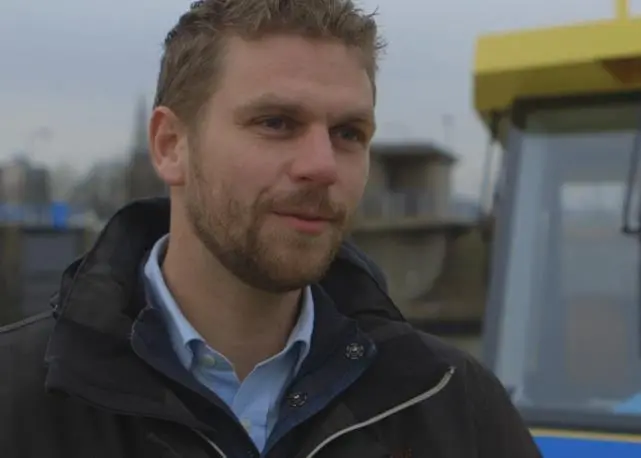
Peter Bouma: evolution not revolution
“From the numbers point of view it can look like a fantastic boat – but when a design gets out onto the waves and starts bouncing around, then you know if its workable or not,” says Peter Bouma, Naval Architect at Vripack.
“You may be getting a kick out of low fuel consumption numbers but you need to get onto the sea trials, get talking to the crew about what they like, and what they don’t.”
He points out there are always a few surprises, but sometimes they can lead off in a new direction. “One recent example was a semi-planing vessel in which we tried out some very sharp entry angles and deep V hull to lower resistance with the intention of gaining fuel efficiency. Actually the fuel didn’t gain as much as the seakeeping – which turned out to be fantastic.”
The characteristic was so pronounced that the latest vessel of that particular design – the SC Puma – was sold to the Australian Reef Pilots Association to help them cope with the straits around Thursday Island “which has very shallow but very steep seas half the year”. And the ‘unintended consequence’ has been kept for one of Vripack’s latest designs, the SC Amethyst, which has been particularly developed for fuel economy and comfort.
“I believe more in evolution than in revolution,” admits Mr Bouma. “Every now and then I go back to looking at old workboat designs to see why a particular design is the way it is. After all, many things have been tried in the past, some of which have resulted in some very useful characteristics.”
Mr Bouma points out that vessels running at semi-planing speeds actually date back before combustion engines, in fact to the late 1800s: “Though we are talking about steam, you saw all sorts of developments that led to getting as much speed out of a boat as possible with very little power and as well as almost no room for fuel.”
He adds that while combustion engines got fully planing boats going: “It always has been a delicate balance between weight, power and speed,” as with every development, there’s a new kind of demand.
He also works on the structural specifications and he finds the building materials equally fascinating: “It used to be steel, steel, and then some aluminium, but several years ago we started with the new composites. However, you need to know what you are doing. Every material has its own purpose and benefits and you shouldn’t confuse them.”
As for the changing face of the market, he says: “The smaller commercial boats are more focused on doing a few tasks really well, rather than spreading their capability too thinly. A hydrographic boat is now designed to do just that, whereas a few years ago virtually any boat could have a sonar kit fitted onto it.”
“This means the operator has a much harder task in getting the focus right, and focus is essential now for success, so designers now have to be in contact with the operators, the contractors, the charterers, plus of course the crew.”
By Stevie Knight