![MaritimeJournal[Seawork]](https://www.maritimejournal.com/wp-content/uploads/2026/09/MaritimeJournalSeawork.svg)



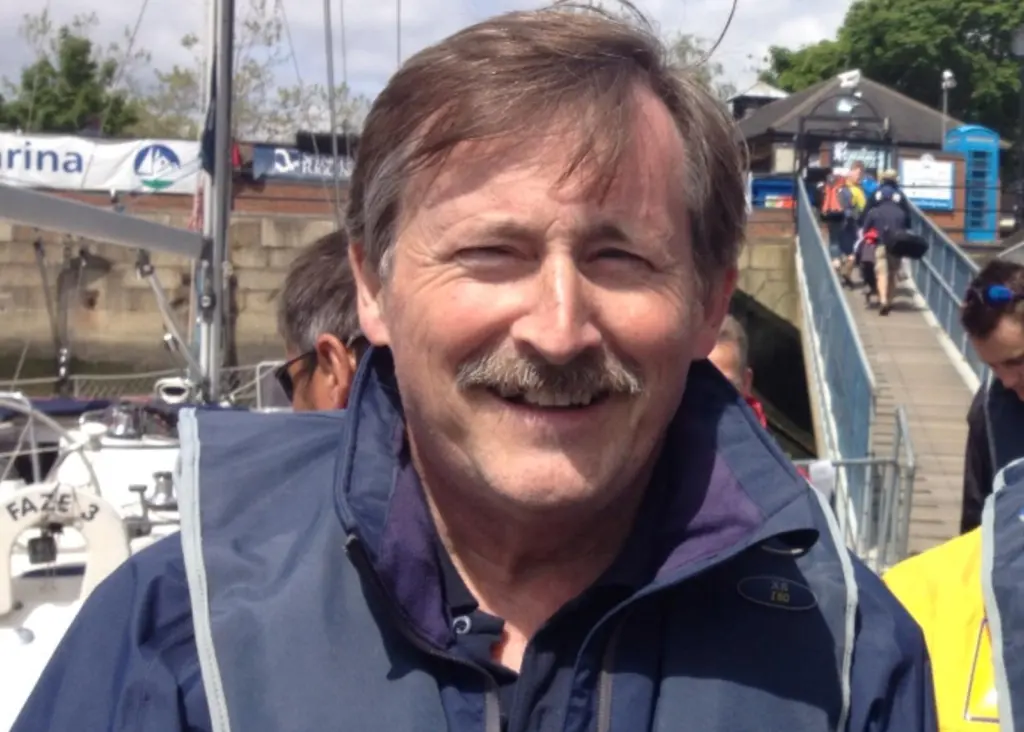
Peter Curtis: The missing link?
It’s a bit like being a marriage broker, admits Peter Curtis, “on one side I have the marine businesses, on the other I have the banks and fund managers, the trick is to get them to see eye to eye.”
It was the potential for both cooperation and equally, discord that got Mr Curtis thinking hard about just where he fitted in, back in the ‘90s. “I was with a major bank when an established client asked if we could finance the purchase of four older but still useful tugs.” It was a straightforward, obvious purchase “so I was really shocked when the answer came back ‘no’”.
Of course he argued the case – and lost. But on passing the lead to an independent colleague who got the deal through the penny dropped. “I saw then that if good, strong customers are not being helped by the major banks, there must be a market to develop.”
Despite the potential there was a hiccup; his first attempt to make the idea a reality “was a disaster simply because every vessel was different, in a different place”. He adds: “The lesson for me was be selective, pick the vessel builder and identify the specific market.”
Having narrowed the target, he now opens potential marine finance projects with an outline that shows where each bank or fund has its strengths and where it struggles. This helps to highlight some of the opportunities as well as hidden snags that could sink the most painstaking plans: “For example a bank can have a low credit ceiling, so despite fairly easy financing for a first boat, a second wouldn’t be considered even if it makes perfect sense.”
However, realism is a necessary part of the picture for all concerned, and there’s no getting away from both the seasonal shifts and overall cyclic nature of the sector, which means the banks need his insight as much as the businesses. “For example, the honeymoon period is over for the smaller crew transfer vessels. Now the banks – and customers – have to accept that and plan around the issue.”
The best finance matchmaking means, he says, bringing two worlds together – but sometimes it can do with a bit of lateral thinking: “I had the idea of showcasing the Iceni Defiant at St Katherine’s Dock in London.” Not only did it give the Defiant an extra ‘splash’, it allowed funders to get up close to the type of asset being used in the offshore wind market.
This kind of strategy has yielded quite a few wins involving some big names like Williams Shipping alongside quite a few smaller ones: it has also given him the opportunity to run customer finance programmes for builders like CTruk. However, sometimes it has meant pulling a number of purse strings and people together to weave a deal: for example, the purchase of a year-old boat with a live windfarm contract only met the deadline by holding an all-parties meeting in Liverpool – with everyone’s pens at the ready.
Building a relationship does work. Mr Curtis adds: “I’ve found if you take the finance guy to see the good customers, not – as is usually the case – the bad ones, they see the possibilities, and suddenly there’s room to double a vessel order.”
By Stevie Knight