![MaritimeJournal[Seawork]](https://www.maritimejournal.com/wp-content/uploads/2026/09/MaritimeJournalSeawork.svg)






ABS guide for floating offshore wind turbines
Global classification society, ABS, has released a complete Guide for Building and Classing Floating Offshore Wind Turbine Installations, based on the results of case studies and existing technologies.
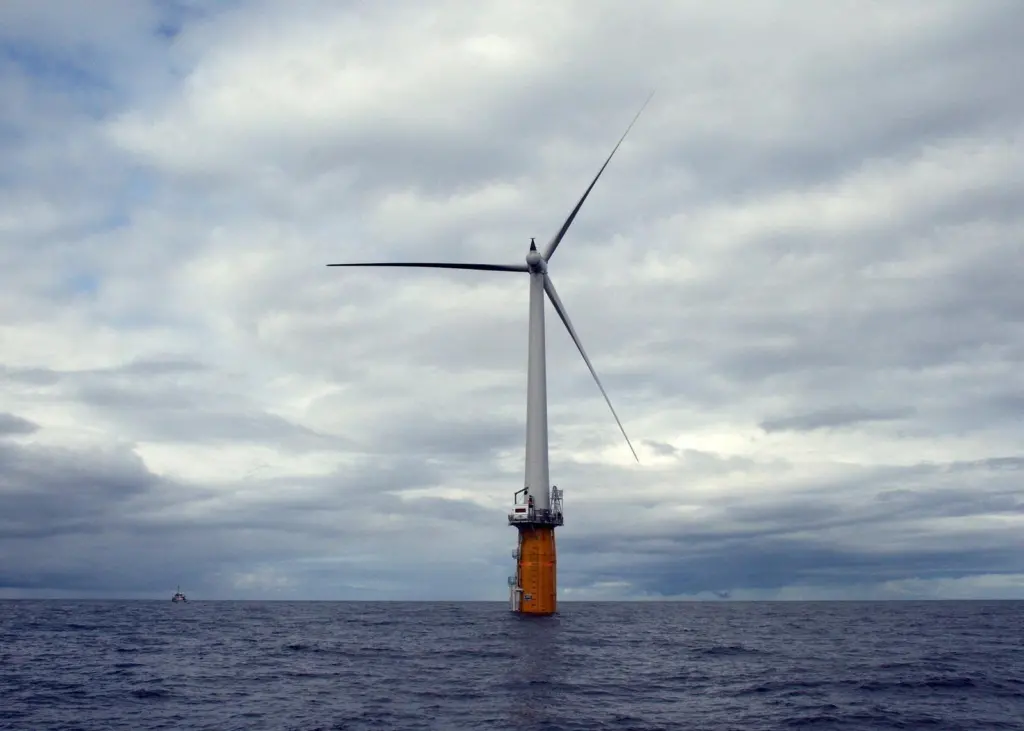
The guide provides criteria for the design, construction, installation and survey of permanently sited floating offshore wind turbines and includes specific guidelines for areas subject to cyclonic storms. It also addresses the floating support structure, the stationkeeping system and onboard machinery, equipment and systems that are not part of the turbine rotor-nacelle assembly.
Qing Yu, managing principal engineer, Offshore Technology, ABS, said: “What makes floating offshore wind turbines unique is the strong interaction among the wind turbine rotor, turbine control systems, floating hull structure and stationkeeping system. We took this interaction into account, developing the criteria based on understanding the characteristic global responses of representative floating offshore wind turbine designs that included a tension leg platform, semisubmersible and spar.”
He added: “It is important to bear in mind that drift away of a single floating offshore wind turbine due to the failure of its stationkeeping system could cause severe damage to an offshore windfarm where dozens or even hundreds of floating turbines and subsea power cables can be installed in close proximity.”
Related Articles
 OTHER NEWS
 ACCESSORIES & EQUIPMENT
 ACCESSORIES & EQUIPMENT