![MaritimeJournal[Seawork]](https://www.maritimejournal.com/wp-content/uploads/2026/09/MaritimeJournalSeawork.svg)


Chinese take away RNLI boats and expertise
Since 2005 an arrangement involving the UK’ s Royal National Lifeboat Institution providing a package of ex-RNLI lifeboats, together with specialist crew training, to the fledgling lifeboat service in China has resulted in a special relationship between these two organisations on opposite sides of the world.
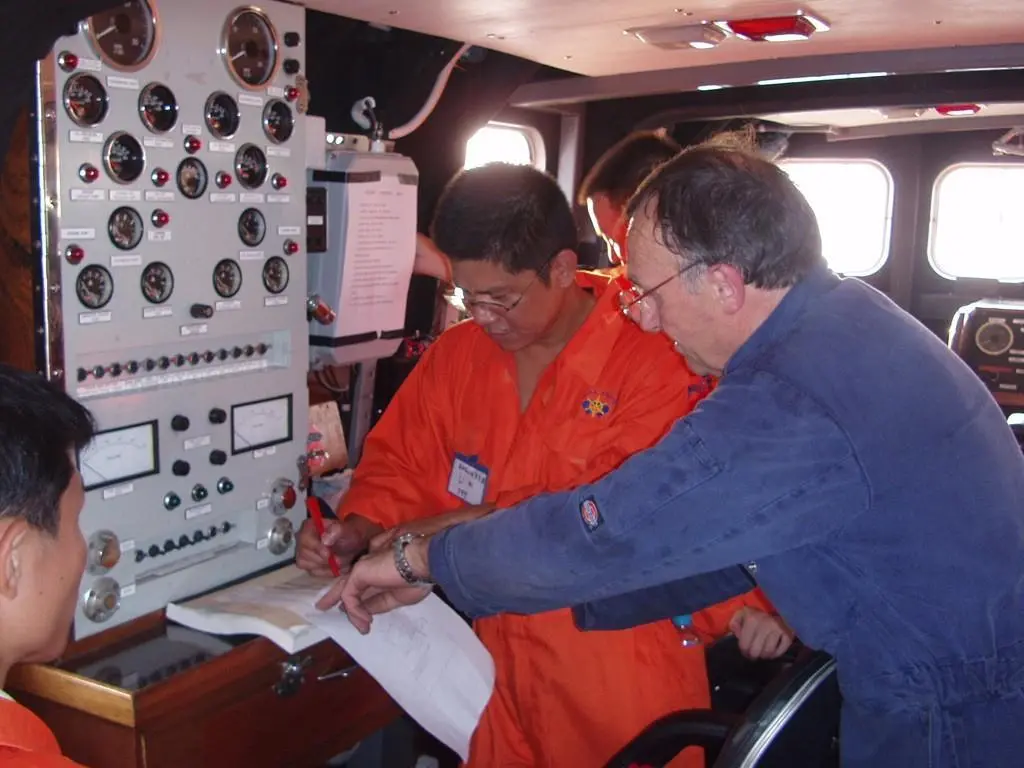
The China Rescue and Salvage Bureau (CRSB) is a member of the International Maritime Rescue Federation (formerly the International Lifeboat Federation) and following their conference in Cape Town in 2003 became interested in developing their own modern maritime rescue service.Originally China’s state run salvage organisation, the CRSB operated a fleet of large tugs and salvage vessels and it became clear that smaller rescue vessels and specialist crew training would be required for this demanding rescue environment. After looking at other rescue organisations worldwide including the USCG, an agreement was signed in 2005 with the RNLI to provide both the boats and the training.
Even after completing a lifetime of service in the RNLI, the quality of build and maintenance of old lifeboats make them an attractive option for similar organisations. Meanwhile the training of RNLI lifeboat crews has been transformed in recent years and has included the opening of the £25m Lifeboat College at Poole. The combination of a supply of both suitable lifeboats and access to the skills and experience of the RNLI therefore made the arrangement an obvious choice.
While the Chinese crews are professional seafarers in their own right, their limited experience in small boats provided an interesting challenge for both the RNLI and the Chinese alike. Initially pairs of RNLI trainers spent a month at a time in Shanghai where over 75 Chinese crewmembers benefited from the experience of their UK counterparts.
An even better arrangement was however to train the crews at the Lifeboat College at Poole, working on the actual lifeboats that were destined to operate in China. 25 crewmembers have now been trained in the various roles of coxswains, mechanics, crewmembers and divisional engineers.
So far ten Arun class and eight Tyne class all weather lifeboats together with two Atlantic 21 inshore lifeboats have been shipped to the Far East, with three more Tyne class boats to follow shortly. The boats are not modified in any way, the CRSB are encouraged to maintain them themselves and develop relationships with local engine and spares dealers. Each year a two man technical team from the RNLI spends a month in China checking that the required technical standards are met.
Other than providing specialist menus (and chopsticks) at the Lifeboat College, the Chinese have the same experiences as the volunteer crews from the RNLI. Language differences are a major problem, with interpreters being required, but the presence of the Chinese crews has provided an interesting and rewarding cultural experience for all concerned.
The CRSB pays the RNLI (a registered charity) for this training at a specially negotiated rate which, together with the sale of the lifeboats themselves, benefits the RNLI.
The Chinese are planning to develop their rescue service further, including building their own training college and possibly buying new boats.
Ian Ventham, Corporate Services Director at the RNLI commented on the organisation’s experience so far. ‘This has certainly been very different for the RNLI and we have developed a very friendly and warm relationship with our counterparts in the CRSB. Most ex-RNLI lifeboats do go on to a new life with other rescue services, in the past this has tended to be with our friends in Europe, the IMRF, or in the Commonwealth, but to develop such a close relationship with a service in Asia has certainly been a fascinating and rewarding experience.
‘We are delighted that our boats are continuing to be used for their original purpose and are very proud that in March 2007 the Arun based at Rudong carried out a rescue during which 43 people were saved.’
Related Articles
 ACCESSORIES & EQUIPMENT
 ACCESSORIES & EQUIPMENT
 MARINE CONSTRUCTION