![MaritimeJournal[Seawork]](https://www.maritimejournal.com/wp-content/uploads/2026/09/MaritimeJournalSeawork.svg)

EU to triple Med SAR budget
The European Council will triple the funds going towards its Med search and rescue operations in response to the increased number of illegal migrants trying to cross to Europe by boat.
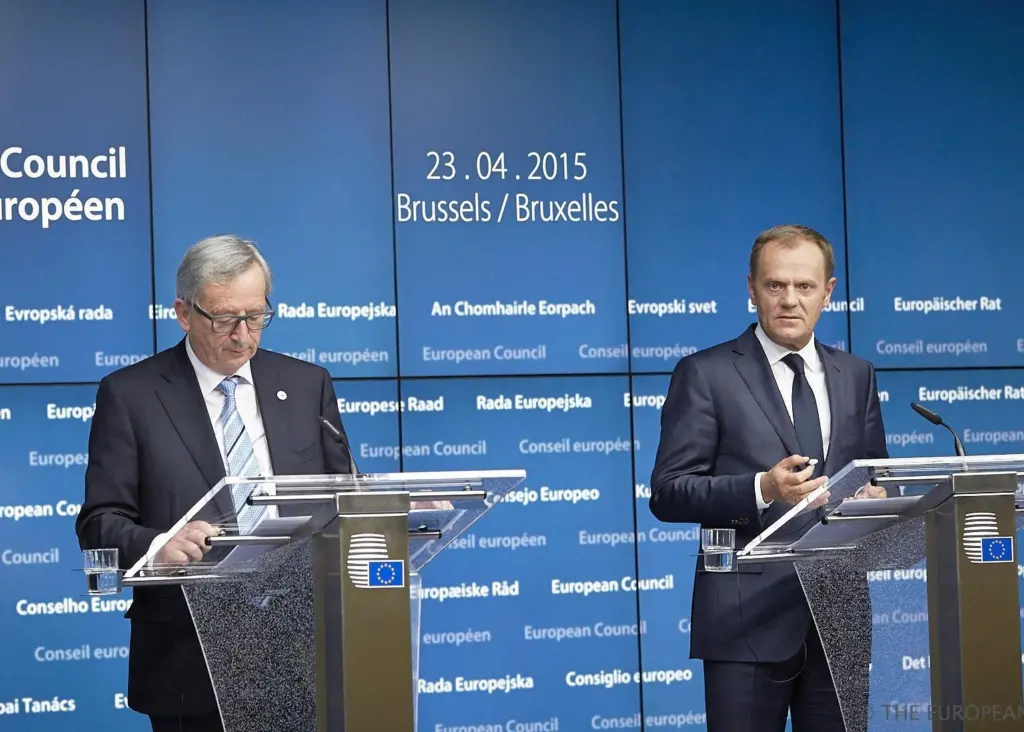
The decision, taken at an extraordinary meeting of the European Council recently, will see the European Union border agency Frontex SAR operations Triton and Poseidon being funded to the tune of €120m.
During the meeting, the Council also pledged to undertake systematic efforts to identify, capture and destroy vessels before they are used by traffickers.
Before the meeting President Donald Tusk said in a statement: “First, we need to crack down on the human smugglers. We have to break up their networks and undermine their business model. The best way to protect people from drowning is by ensuring that they do not get on the boats in the first place.”
He also pointed out the need for better cooperation with the countries of origin and transit, to limit illegal migration and to discourage people from putting their lives at risk.
Finally, and perhaps the most difficult aspect he said, is that a discussion needs to take place on how to reinforce European solidarity to difficult issues such as resettlement, relocation and processing of asylum applications.
Historically the EU’s Triton operation has focused on border control, only carrying out search-and-rescue operations if necessary. Initially employing five aircraft and seven vessels, it was launched last year to patrol a zone stretching just 30 nautical miles off Europe’s coast.
It has been running in parallel with Italy’s Mare Nostrum operation which sent patrols close to the Libyan coast, rescuing over 100,000 people over the past year. But this has now ended and human rights groups have expressed fear that the cessation of the operation could put even more lives in danger.
The Council meanwhile has proposed a summit in Malta over the coming months to among things, reinforce political cooperation with African partners to tackle the root cause of the migration problem. It will deploy European migration liaison officers in key countries to gather information on migratory flows, co-ordinate with national liaison officers and co-operate directly with the local authorities.
It’s also working on a European Agenda for Migration to develop a more systemic and geographically comprehensive approach to the problem, for which it expects to present a roadmap in June.
By Anne-Marie Causer
Related Articles
 ENVIRONMENT
 OTHER NEWS
 ACCESSORIES & EQUIPMENT