![MaritimeJournal[Seawork]](https://www.maritimejournal.com/wp-content/uploads/2026/09/MaritimeJournalSeawork.svg)


First hackathon from MacGregor
MacGregor’s first hackathon, Hack the sea, took place on 11-13 November at the Interschalt Maritime Education and Training Centre, in Schenefeld, Germany.
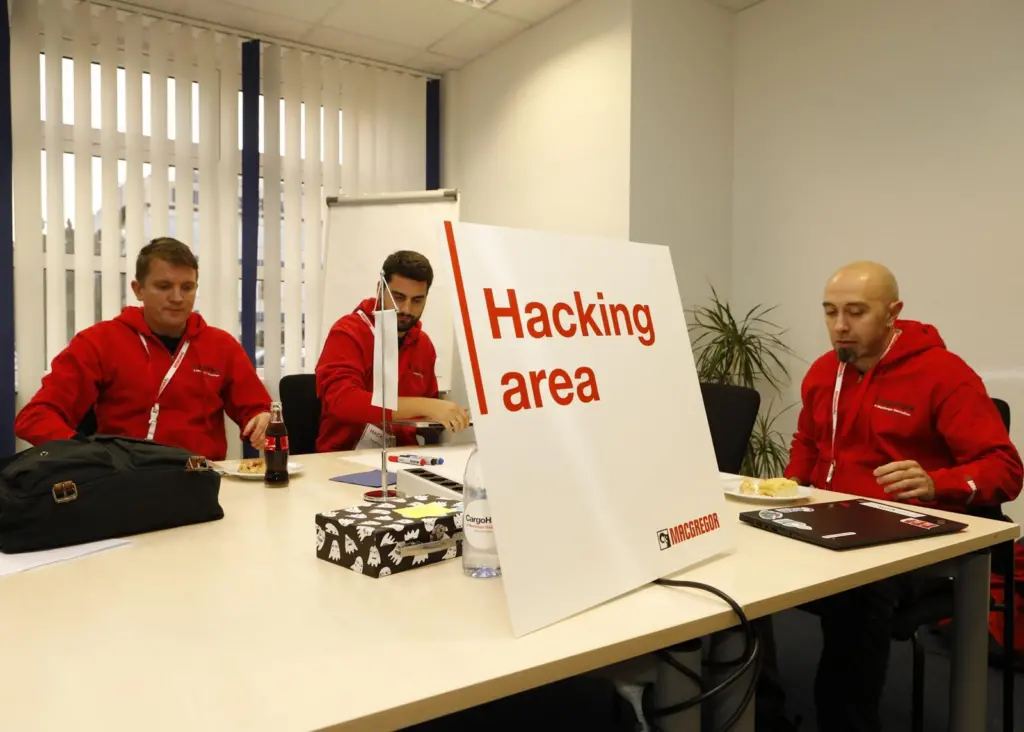
The event brought together over 70 participants, including 33 hackers in ten teams. The hackers worked intensively on given challenges and developed concepts that will help reducing the unnecessary waste in the maritime industry.
Alexander Nürnberg, senior vice president, technology and R&D at MacGregor, said: “The MacGregor hackathon was very successful and exceeded our expectations. The participants had brilliant ideas already in the beginning of the event, and the excellent quality of the outcomes surprised us.”
“In addition to exciting demonstrations with state-of-the-art technology, we saw many solutions that truly address our customers’ current challenges as well as their future needs. Many concepts have high potential to become real products.”
The teams worked on three challenge areas, safety – increasing safety on vessels; efficiency – increasing fleet efficiency through optimised maintenance of installed products; and environment – improving the vessel sustainability.
Each has access to MacGregor data sources and Application Programming Interfaces (APIs), as well as the use of the offshore crane operations simulator C-How and the vessel monitoring and reporting software Bluetracker.
“Creating new service and business concepts to meet our customers’ current and future needs is essential. In the hackathon, we experienced how these needs can be satisfied with novel technology solutions, for example, by utilising and analysing the data from different sources,” said Michel van Roozendaal, president of MacGregor.
He concluded: “It was delighting to see how many teams chose to develop safety related concepts, aiming at improving safety onboard the vessel as well as in the ports.”
“There were also interesting proposals which looked into general industry challenges, for example reducing waiting times in ports. Other interesting concepts aimed at visualising the vessel operations, crew locations and safe crane operating conditions.”
By Alice Mason