![MaritimeJournal[Seawork]](https://www.maritimejournal.com/wp-content/uploads/2026/09/MaritimeJournalSeawork.svg)



Furuno coastal monitoring
Japanese marine electronics giant Furuno has used its radar and electronic processing expertise to develop a land based radar coastal surveillance and monitoring package. This is aimed to meet the requirements of small harbours, private island owners, offshore wind farms and the military who need to be able to carry out monitoring of the sea areas they control to ensure both detection and security as well as routine monitoring of vessel movements.
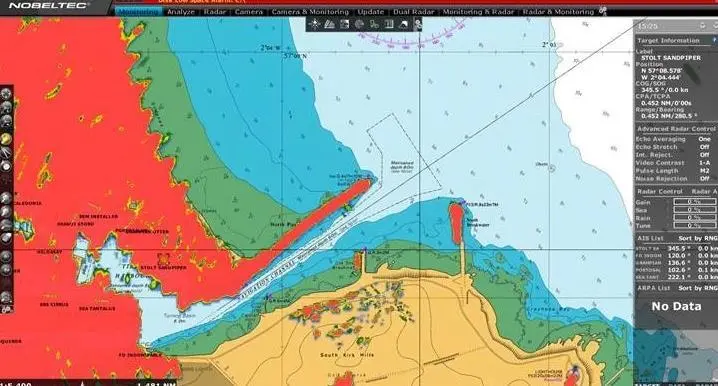
This coastal monitoring system is computer based using Furuno radars and sensors such as AIS, GPS and various types on camera. Currently the system has been developed using to radar antenna and the images from these radars can be merged together to form a composite radar picture of the area covered. From the radar information from the two units the Furuno system can then apply their advanced ARPA algorithms on to enable targets to be tracked on the display.
The system can be programmed to have an extensive number of built in alarms and actions which can be initiated when a target is detected. These can be related to boundaries and areas than can be established on the display. If a target is detected inside an exclusion boundary then this can be used to an action which can be simpler a warning beep from the computer through to focusing a camera on to the target. This can be a high definition daylight camera, an infra-red one or for night use and low light camera to help identify the target.
For harbour monitoring if a target is detected exceeding the speed limit inside a harbour an action can be triggered to track that target for future proof of the rule break. As currently developed the system can incorporate up to 12 cameras which can be programmed to hand over a detected target from one camera to another to provide continuous coverage and to provide complete video coverage of an area of sea.
The size and type of intruder detection will depend to a certain extent on the sea state prevailing at the time. Advanced signal processing can help to eradicated wave clutter returns but this can be of limited benefit for very small targets in rough sea conditions.
Two systems have been installed so far on private islands where security can be an issue for wealthy owners. These have provided full coverage of the waters around the islands. There has also been interest from the owners of large super yachts where there are the same type of security issues. Other applications where there is interest is from military installations for security purposes and from wind farm operators where there is a requirement to monitor exclusion zones. For smaller harbours where there is no call for a full VTS system this Furuno system can create a cost effective harbour monitoring system with costs in the region of £20,000 for a viable system.
By Dag Pike
Related Articles
 ENVIRONMENT
 OTHER NEWS
 ACCESSORIES & EQUIPMENT