![MaritimeJournal[Seawork]](https://www.maritimejournal.com/wp-content/uploads/2026/09/MaritimeJournalSeawork.svg)


Maximum fleet occupancy for Seacat Services
Cowes, UK-headquartered OESV operator, Seacat Services has announced that all 14 of its vessels will be under charter for periods of 2018, reflecting a shifting supply-demand balance in the OESV market.
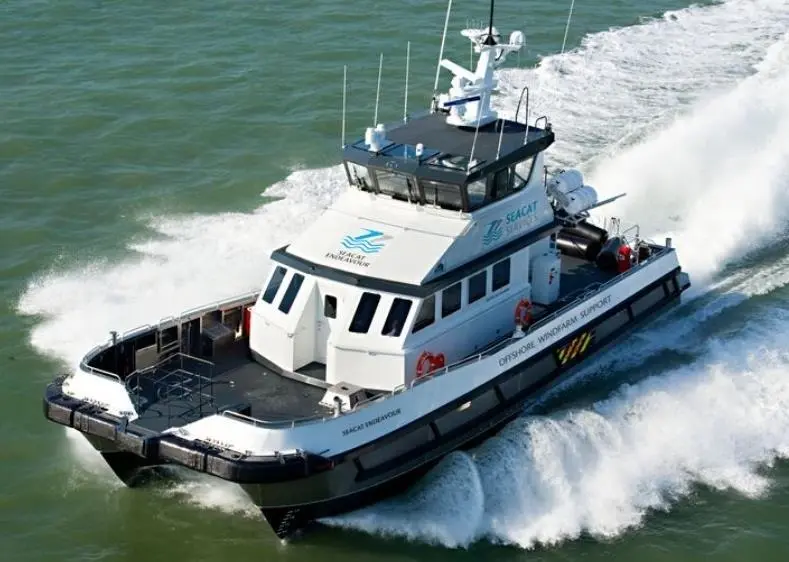
In an achievement that points to the strength and longevity of the company’s relationships in the offshore wind sector, periods of 2018 will see all of Seacat Services’ 14 vessels under charter, with some contracts extending until 2020.
Contract partners include leading players in the field, such as Ørsted and Siemens Gamesa Renewable Energy, and cover major projects such as Suffolk’s Greater Gabbard and Galloper wind farms, and Scotland’s largest offshore wind farm, Beatrice, in the Outer Moray Firth.
The milestone also points to a number of shifting market dynamics, as a long-expected period of stability arrives for the OESV sector. This comes following a time of growth but also one of volatility, as operators have sought to prepare for upcoming projects by investing in new build programs, while aiming to maintain fleet occupancy and sustainable charter rates during periodic lulls in new offshore wind construction.
Seacat Services says that an increase in work coincides with a slowdown in the number of new vessels entering the market, as operators come to the end of their immediate build programmes. The resulting shift in the supply-demand balance is likely to see offshore wind developers become increasingly reliant on strong relationships with OESV operators to ensure ongoing high-quality vessel support for projects.
The business is also actively engaging with other vessel operators via sub-chartering agreements that highlight the important role of supply chain collaboration in supporting increasingly ambitious projects. With larger turbines, new technologies and floating projects on the increase, demand for high-quality vessels to support these projects is expected to grow further in the coming years.
Ian Baylis, Managing Director, Seacat Services, said: “As occupancy increases across the OESV market and the supply-demand balance starts to shift in favour of vessel operators, the value of strong relationships between operators and offshore wind project owners is likely to become increasingly apparent. Good working relationships and a sustainable long-term approach to vessel chartering will be crucial for keeping projects on track during the busiest period of offshore wind activity to date.”
By Jake Frith