![MaritimeJournal[Seawork]](https://www.maritimejournal.com/wp-content/uploads/2026/09/MaritimeJournalSeawork.svg)



Megabucks barrage barges onto Severn shortlist
The British Government announced five shortlisted schemes this week to harness the tidal power in the Severn Estuary, the largest of which would cost at least £ 22bn.
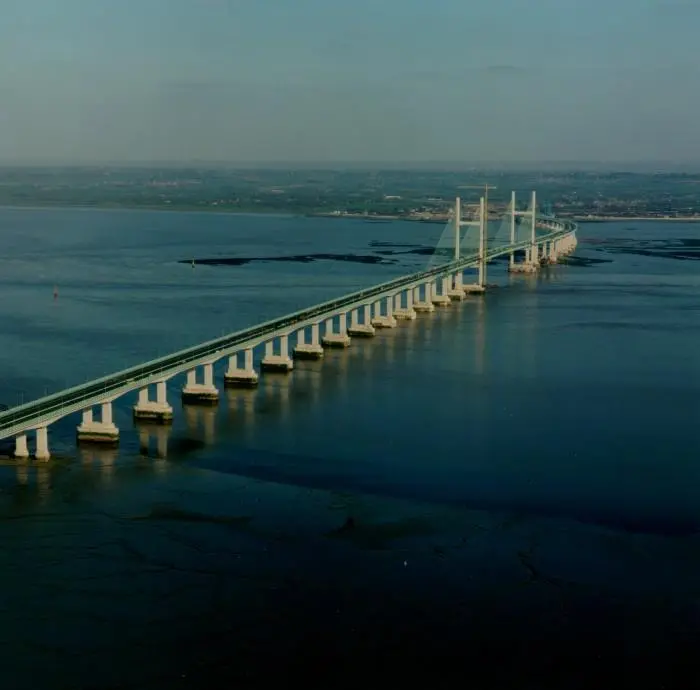
The ten mile barrage from Cardiff to Weston-Super-Mare could provide some 5% of the UK’s energy needs but would destroy 77 square miles of valuable wetland habitat whilst also costing 3,300 lost jobs in the fishing and port industries.
The other shortlisted schemes are the smaller, less expensive Shoots and Beachley barrages further up the Severn Estuary and two tidal lagoon schemes which would also generate hydroelectric power whilst running along the shoreline rather than crossing the estuary.
The Cardiff-Weston barrage would cost more than the other four schemes combined but would also produce the most electricity. It generates by far the most opposition from environmentalists and is also likely to breach EU habitat directives designed to protect one of the most valuable habitats for wetland birds in Europe. However, it is under the terms of an EU agreement to combat climate change that Britain must increase its energy contribution from renewable sources from 3% to 15% by 2020.
Government ministers admitted that the staggering cost of a Cardiff-Weston barrage would require public and private funding if it is ever to be built, whilst the other options could be built by private funds alone. The £22bn estimate could rise by 50% once more detailed costing is completed, at which point the barrage could match the £37bn of public funds spent on the recent first round of UK bank bail-outs.
UK Energy and Climate Change Secretary Ed Milliband said, ‘It would be wrong to rule it out at this stage simply on the grounds of cost. We have tough choices to make. Failing to act on climate change could see catastrophic effects on the environment and its wildlife, but the estuary itself is a protected environment. We need to think about how to balance the value of this unique natural environment against the long term threat of global climate change.’
The five shortlisted schemes will now move to second stage consultation. Additional funding of $500,000 was also announced for further study of experimental tidal reef and tidal fence technologies preferred by environmentalists as they would cause far less damage than barrages or lagoons. They may thus receive further consideration when a decision expected in 2010 is taken.
Speaking of their failure to make the shortlist, Gordon James, director of Friends of the Earth Cymru said, ‘Their exclusion from the Government’s shortlist is utterly incomprehensible and raises serious concerns about the consultation process. Ministers must abandon their fixation with the Severn barrage and invest in more effective and less damaging alternatives.’
Related Articles
 ACCESSORIES & EQUIPMENT
 ACCESSORIES & EQUIPMENT
 MARINE CONSTRUCTION