![MaritimeJournal[Seawork]](https://www.maritimejournal.com/wp-content/uploads/2026/09/MaritimeJournalSeawork.svg)






New JV launches floating power stations
Barge based power generation moved into a new dimension on Wednesday with the announcement of a new 82m Power Barge capable of generating 125MW from two aero-derived gas turbine gensets.
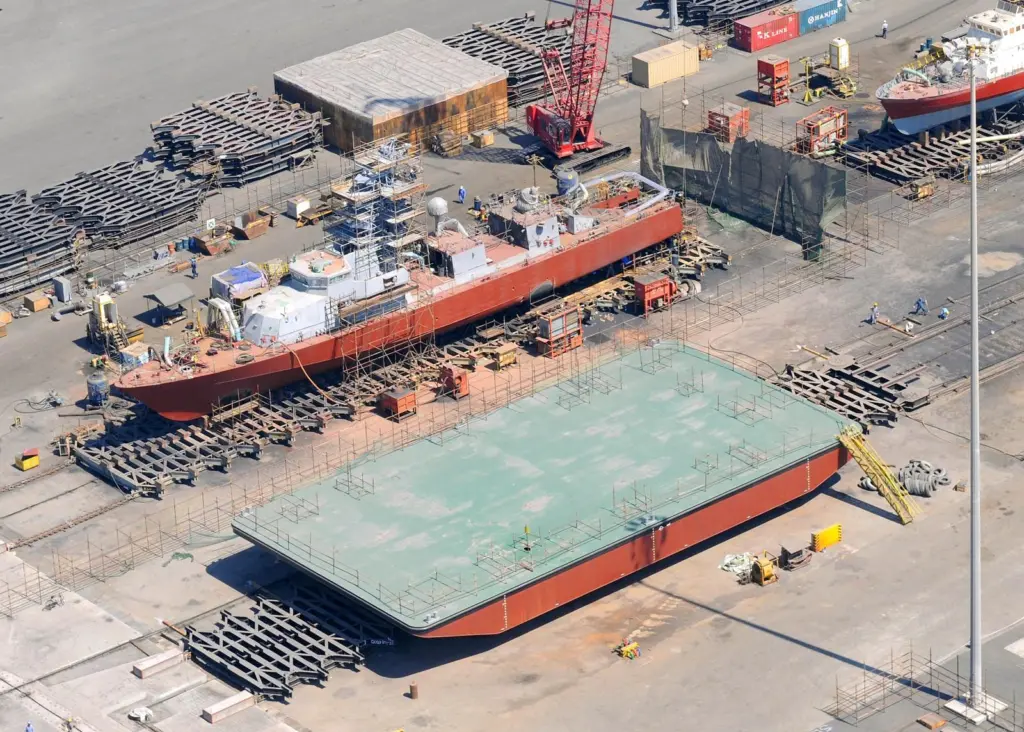
The Power Barge heralds the formation of the joint venture company, ASRY-CENTRAX Ltd, which brings together Bahrain based Arab Shipbuilding & Repair Yard Marketing Services Company (ASRY) and the British power generation packaging specialist Centrax Ltd.
The joint venture is set to equip a multi-application power barge utilising twin Rolls-Royce Trent 60 aero-derivative gas turbine powered generator sets with the aim of becoming a leading player in the production of barge mounted power stations. This will extend the range of power products offered by Centrax.
The TPB125 Power Barge has been jointly designed and developed by the partners over the last two years. ASRY has already built the first two floating self contained Power Barge hulls in a new dedicated production area at the yard. Devon UK based Centrax is currently packaging the first two Trent 60 gensets. As the operation in Bahrain gears up, with a £200m expansion of facilities underway, it is envisioned that six or possibly more Power Barges could soon be under build at one time
The Power Barges can be mobilised to port, river or sheltered coastal locations on heavy lift vessels or by ocean towage. Two barges could be stacked on a heavy lift vessel for a single delivery. The barge is designed to meet a broad range of power-generation requirements and provides the flexibility to be positioned rapidly.
Commercial applications include the provision of temporary power supplies during the construction phase of new land based coastal power stations, enabling plant operators to sell power well in advance of the new plant’s commissioning. The barge also ensures continuity of power supplies during major outages at existing power plants and could also back up supplies provided by renewable energy sources, especially wind.
Power Barges can also provide emergency power in times of need, with humanitarian and relief initiatives around the world potnetially benefitting enormously. The power system features inlet spray intercooling (ISI) to counter the drop off of turbine power in high ambient temperatures. ISI must use pure water, so there is an incorporated on board desalinisation plant which could also produce drinking water should the Power Barge be deployed to aid in a humanitarian crisis.
The high power density and small footprint of the twin Trent 60 packages enable the barge to be transported readily from the ASRY yard in Bahrain and positioned to areas of need rapidly and with minimal coastal resources, where it can begin to deliver its high power output immediately.
Two or more of these self-contained dual fuel units can be linked together and equipped with a tanker barge or barges configured for the storage of liquid or LNG fuels. The units can either be connected to the local grid or operated as stand-alone island plants, ready to run at 100% load within just 10 minutes from cold start.
The 82m LOA TPB125 Power Barge has a beam of 28m in width and a draft of just 4.5m, which will allow for easy positioning close to the shore line or towage up many rivers. The vessel’s double skin fuel and oil tanks, low emissions and low noise (80dBA at 1m) also ensure the highest environmental standards.
It is anticipated that many Power Barges will be deployed in hostile environments on a fixed term contract basis. When one contract is finished, a barge can be redeployed globally to carry on working steadily over an anticipated 40 year service life. At approximately $1m per MW, the Power Barge will not come cheap, but financiers will look favourably upon any non-fixed location asset which can be moved quickly at the first hint of political unrest in any host nation.
Related Articles
 ACCESSORIES & EQUIPMENT
 ACCESSORIES & EQUIPMENT
 MARINE CONSTRUCTION