![MaritimeJournal[Seawork]](https://www.maritimejournal.com/wp-content/uploads/2026/09/MaritimeJournalSeawork.svg)

Smit International help grounded bulk carrier
Despite attempts to contain the oil spill from the Chinese owned freighter Full City, it seems 200 gallons has been deposited on the beaches of Norway, devastating wildlife sanctuaries and resulting in the death of thousands of birds.
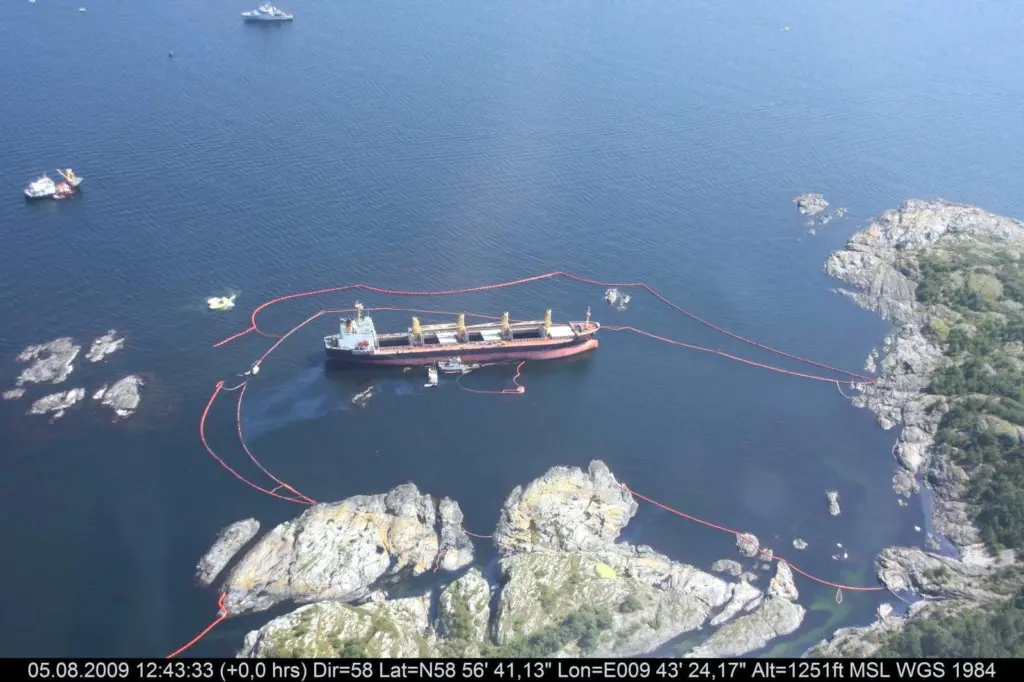
The captain of the 26,800 dwt bulk carrier which ran aground at Langesund off the southern coast of Norway in heavy weather on 31 July has now been charged with failing to warn the authorities the ship was in trouble. He has been released on bail.
Immediately following the incident, a Lloyd’s Open Form of salvage contract was agreed with leading salvage contractor Smit International, which mobilised a specialist team of salvage equipment and experts to deal with the situation. Leading pollution specialists, ITOPF, were also in attendance.
Jan Allers of the Norwegian Oil Spill Control Association tells MJ that seagoing operations were now focused on discharging the oil from the ship onto lighters.
However, the shoreline operations ‘are likely to go on for months,’ he adds. This side of the clean up is being organised by Norway’s municipalities, but there has been controversy about the culling of thousands of non-endangered seabirds that were thought not worth saving. The majority of seabirds caught in the spill are now dead, explains Mr Allers, although there have been examples from other regions of birds being successfully cleaned.
The main hope for the affected coastal areas is that operations can be concluded before winter sets in, but Mr Allers says that he expects the oil to ‘reappear’ next year with the return of warmer weather in 2010. ‘It gets trapped in the terrain between the rocks and seaweed for the winter, and then in a warm period, it drifts out.’ He guesses that although the remainder of the oil won’t present much of an environmental threat, it may well need further mobilisation from special units. ‘The challenge will be if this oil drifts out when people start swimming,’ he adds.
Investigations are being conducted into the cause of the grounding.
Related Articles
 ACCESSORIES & EQUIPMENT
 ACCESSORIES & EQUIPMENT
 MARINE CONSTRUCTION