![MaritimeJournal[Seawork]](https://www.maritimejournal.com/wp-content/uploads/2026/09/MaritimeJournalSeawork.svg)






The strengths of wave power
Scientists say that wave energy systems developed in America’s Pacific Northwest should be more dependable and better able to be integrated into the energy grid than other forms of alternative energy, including wind power.
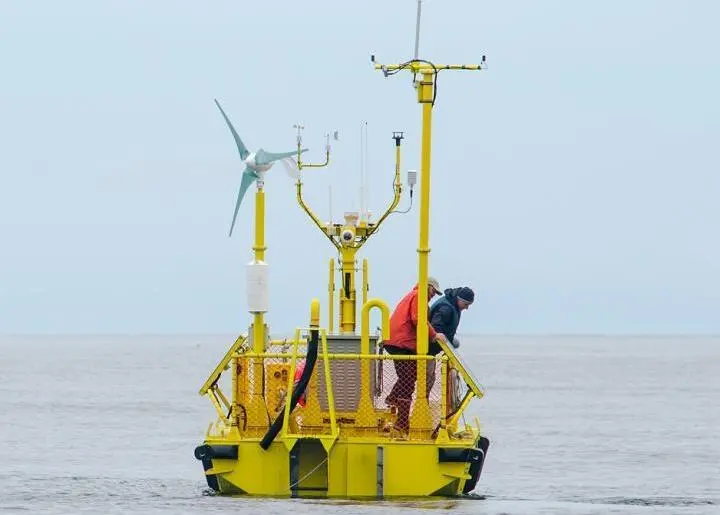
The findings, published in the journal Renewable Energy, suggest that wave energy may be more viable than some energy sources and that by balancing wave energy production over a larger geographic area variability can be even further reduced.
Ted Brekken, an associate professor and renewable energy expert in the College of Engineering at Oregon State University, said: “By taking advantage of the comparative consistency of the wave resource itself, it appears that wave energy integration should be easier than that of wind energy.”
Wave energy, still in the infancy of its development, is not yet cost competitive on an overall basis, but experts say its future potential is significant and costs should come down as technologies improve and more systems are developed.
One of its strengths is that its short-term generation capacity can be predicted with a high degree of accuracy over a time scale ranging from minutes to hours and with some accuracy even seasonally or annually.
The Pacific Northwest has some of the nation’s best wave energy resources, and as a result is home to the Northwest National Marine Renewable Energy Center, supported by the US Department of Energy.
By Anne-Marie Causer
Related Articles
 OTHER NEWS
 ACCESSORIES & EQUIPMENT
 ACCESSORIES & EQUIPMENT