![MaritimeJournal[Seawork]](https://www.maritimejournal.com/wp-content/uploads/2026/09/MaritimeJournalSeawork.svg)


The very civil engineer
“My wake-up call was a project that, from an engineering point of view worked beautifully,” says port consultant Howard Holt. “What I didn’t see coming was that it would make 10% of the workforce redundant, virtually overnight.”
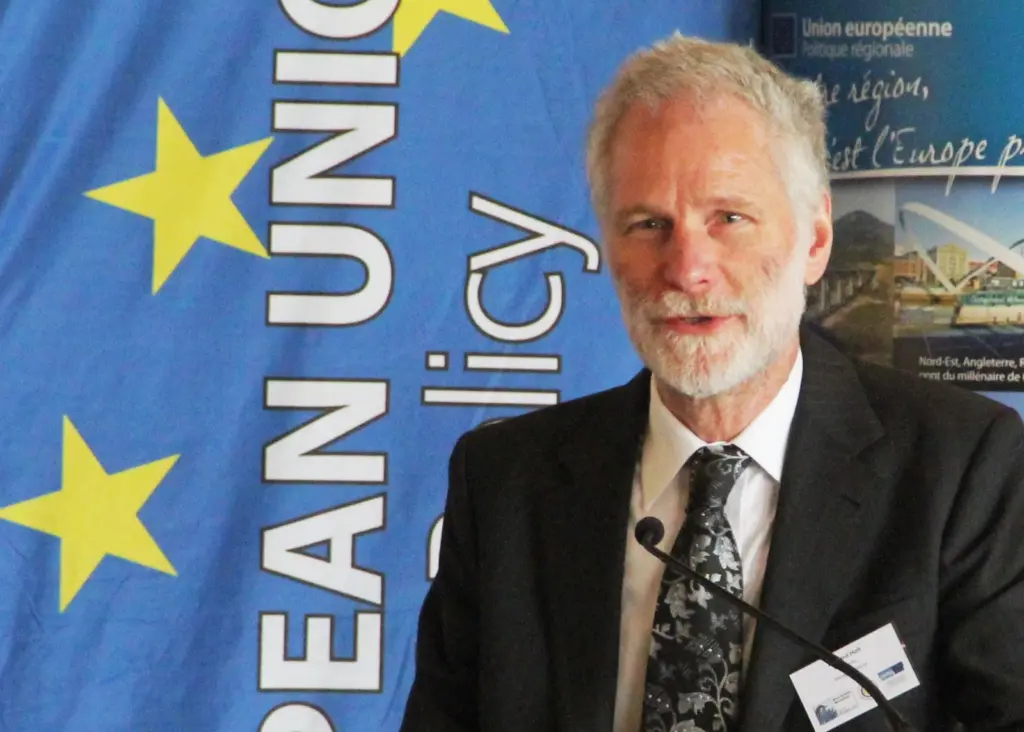
As a qualified chartered civil engineer with a marine bias, he had spent the early 90s working on a novel scheme for the Port of Dover’s Eastern Docks: traffic segregation and a new elevated roadway. “As a civil engineer I was very proud of it. It came in on time, on budget and, immediately, over 100 people were simply not needed.”
This, for Mr Holt, crystallised into a push away from being totally immersed in ‘hard engineering’ to getting involved in the softer, human face of European port operations. But it wasn’t his only wake-up call.
“I developed toward more people-oriented work, starting in Dover and eventually getting involved in the pieces of paper flying around Brussels. However, while still being a big fan of the European Sea Ports Organisation (ESPO) and the other big organisations, after a number of years I realised that they are inevitably arenas for the larger ports and even the unions are mainly concerned with the big facilities.”
“The problem I saw time and again was that while huge changes were being driven through Europe, many of the smaller ports couldn’t cope or worse, didn’t know what was happening, says Mr Holt. “They really needed someone to help.”
Offering his services has meant playing ‘midwife’ at the birth of the Association des Ports Locale de la Manche (APLM) plus assisting a number of European facilities on joint initiatives. “Often the only way these small to mid-sized enterprises can find a voice is to get together,” he points out.
However, he’s very clear this kind of thing isn’t just a talking shop, after all, these smaller operations can’t spare much time or manpower. “It’s the very real, sharp end of operations. Knowledge sharing means questions get answered like ‘how do you deal with waste’? Or ‘ships turning up with scrubbers?’”
But experience has taught him one thing. “Although sometimes it’s hard to get the ports who may be natural competitors to actually cooperate, if you don’t have that you fail. With one particular exchange between a French port and Belgian port, it was necessary to say, “leave your competition at the door, this kind of project needs a more strategic level of thought.”
Although he deals with a number of the bigger European initiatives, “much of my work is for the smaller continental ports where everything is being run by the harbour master and his dog, says Mr Holt.
“I am quite blunt about it. If I can see that a project can be or can’t be done, I tell them. What I try not to do is say, “Oh, we need a lot more studies before going ahead. It eats up money and I am still engineer enough to want to see something tangible come out at the other end.”
By Stevie Knight
Related Articles
 OTHER NEWS
 ACCESSORIES & EQUIPMENT
 ACCESSORIES & EQUIPMENT