![MaritimeJournal[Seawork]](https://www.maritimejournal.com/wp-content/uploads/2026/09/MaritimeJournalSeawork.svg)


Treasure ruling stirs up muddy waters
Ocean treasure hunting is going to be less a childhood dream and more of a problem for its practitioners as of last month.
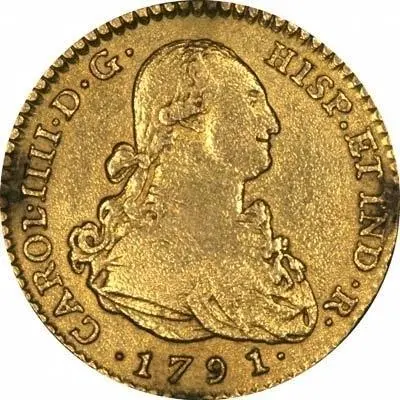
A Florida judge has ruled that the treasure found on what is assumed to be the wreck of the ‘Nuestra Senora de las Mercedes’, which the British sunk off of Portugal in 1804, belongs back in Spain, and Florida based Odyssey, the salvage company that brought it back from the Atlantic, has to give 500,000 gold and silver coins (worth roughly £300m) back to the Spanish government.
While wrecks of commercial vessels remain unaffected by the ruling, naval vessels like the ‘Nuestra Senora’ are deemed to be property of the originating sovereign state, even if they were on a commercial mission, as the Nuestra Senora possibly was when it sank.
Estimates put about 3,000 of these treasure laden shipwrecks at the bottom of the world’s oceans and the ruling is sure to stir up the waters. Odyssey is not letting go and is saying that key pieces of evidence were ignored or discounted by the judge.
These, say Odyssey, show the vessel was ‘clearly on a commercial mission when she sank and that the majority of cargo (coins) aboard the ship was owned by private individuals, not the government.’ The company concludes, ‘Returning the coins to the Spanish Government when they never owned them defies logic and reason.’
Making the situation even more complicated, Peru is presently engaged in a battle to reclaim its cultural and historical heritage. It is also putting together a case, saying it has ‘sufficient reasonable indications’ of its right to reclaim the treasure, as it is made from Peruvian metals originally taken by the Spanish.
As the identity of many wrecks can be disputed, it is possible that exploration teams in future might be tempted to abandon any evidence that compromises their position. Arguments are made both for and against maritime treasure hunts. On the one hand, archaeological sites are being plundered for profit, with concern for proper scientific study coming a poor second. Leaving the treasure where it is might mean preserving precious artefacts in better condition than bringing them up into the air.
On the other hand, archaeological exploration on land is permitted, and the cost of deploying divers and ROVs needs to be recoverable, as it is an expensive business. Detritus and industrial fishing is destroying many of the marine sites in any case, so the artefacts may be better preserved on land.
Related Articles
 ACCESSORIES & EQUIPMENT
 ACCESSORIES & EQUIPMENT
 MARINE CONSTRUCTION