

Foundations completed for Princess Elisabeth Energy Island
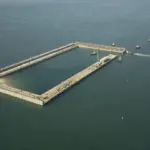
The foundations for Belgium’s Princess Elisabeth Energy Island have been completed following the successful installation of the 23rd and final caisson, 45 kilometres off the Belgian coast in the North Sea.
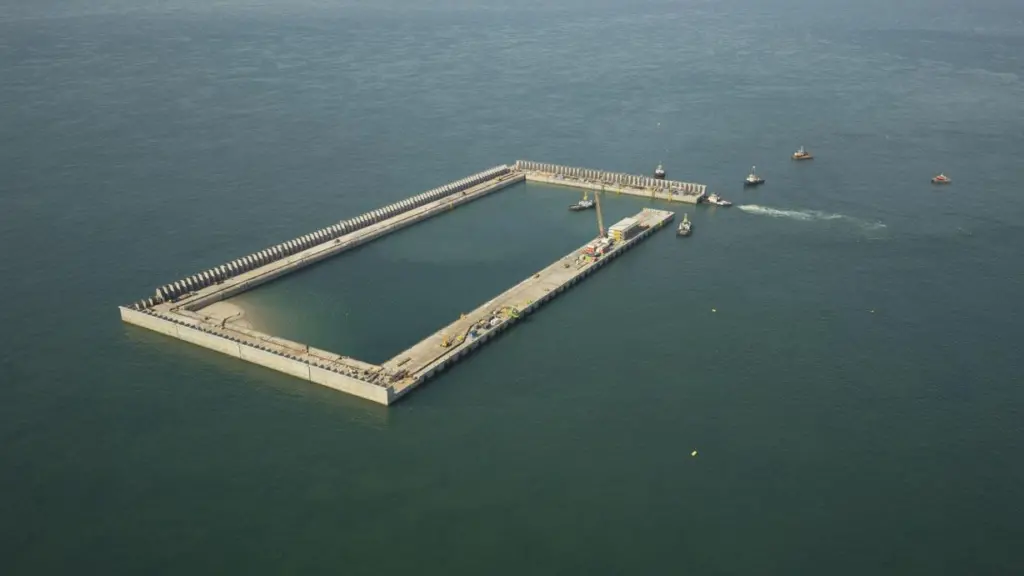
The foundations for Belgium’s Princess Elisabeth Energy Island have been completed following the successful installation of the 23rd and final caisson, 45 kilometres off the Belgian coast in the North Sea.
Jan De Nul, working with DEME as part of TM Edison and on behalf of Elia Transmission Belgium, said the milestone marks the completion of the island’s foundation works.
The 23 caissons form the protective outer shell of the future energy island. Construction began in 2024 with the installation of the first caisson, marking the start of a technically challenging phase that has now resulted in the completion of the island’s full foundation structure.
The project is designed to support the expansion of offshore wind capacity and enable a future energy connection with the United Kingdom. The island will connect Belgium’s second offshore wind zone and create opportunities for a future energy link with the UK.
The project will now move into its next phase, with sand reclamation inside the caisson structure continuing over the coming months. Cable connections to the mainland are scheduled for 2027 and 2028, while installation of the island’s electrical infrastructure is due to begin in 2029. Final completion is planned for 2031, when the island is expected to be ready to bring its first electricity ashore.
Jan De Nul said completing the foundation works within the planned timeframe will enable Elia to qualify for the €99 million European subsidy allocated to this phase. The company said the European support highlights the importance of energy independence and cross-border energy exchange.
The foundations have also been designed with biodiversity in mind. In collaboration with marine experts, the project team developed a nature-inclusive design intended to support and enhance biodiversity on and around the island.
As part of the Reefcovery project, rocks carrying young oysters were installed around the island at the end of July. The rocks are intended both to protect the island against erosion and provide the basis for a new oyster reef.
“Through the Reefcovery project, we worked with our partners to grow young oysters on rocks, which we installed around the island at the end of July,” said Bart Callens, Project Director for the Princess Elisabeth Island at Jan De Nul. “A win‑win: the rocks protect the island against erosion and form the basis for a new oyster reef. This installation builds on our expertise in restoring oyster reefs in the North Sea and reinforces our ambition to embed nature‑positive design in our core activities.”
The 23 caissons were built in Vlissingen, with around 300 people working on their construction each day. Each structure weighs approximately 22,000 tonnes, measures 58 metres long and 28 metres wide, and is between 23 and 32 metres high. Building a single caisson took approximately three months before it was transported to sea and installed, in an operation highly dependent on weather conditions.