![MaritimeJournal[Seawork]](https://www.maritimejournal.com/wp-content/uploads/2026/09/MaritimeJournalSeawork.svg)






Coastal defences boosted with sustainable dredging
Harwich Haven Authority (HHA) has launched a sustainable dredging scheme to reinforce coastal defence in the Stour Estuary while maintaining navigation at one of the UK’s busiest ports.
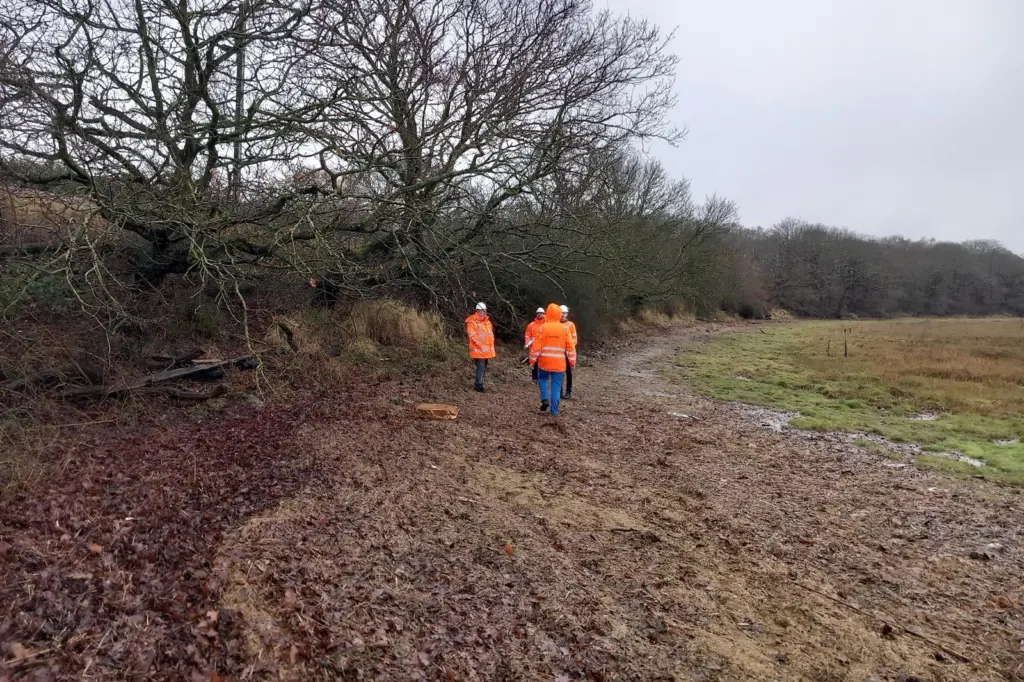
The Beneficial Use of Dredged Sediment (BUDS) project at Copperas Bay will reuse material from essential harbour maintenance to rebuild 76.5 hectares of saltmarsh.
“This project will safeguard the Haven’s vital navigation channel while turning routine dredging into a nature-positive opportunity,” said Jim Warner, harbour engineer at Harwich Haven Authority.
“Maintaining the Haven’s navigation channel is essential to the national economy and supports thousands of local jobs, whilst ensuring the smooth operation of one of the UK’s busiest ports.”
Coastal defence
During the project, sediment recovered through routine dredging will be pumped into prepared containment areas to stabilise shorelines and strengthen natural coastal defence, rather than being disposed of offshore.
Marine construction specialist Boskalis Westminster will undertake dredging operations, supported by site preparation works from Amicus Civil Engineering.
The initiative aligns sustainable dredging practice with long-term coastal defence objectives, protecting critical port infrastructure that underpins the national economy and thousands of regional jobs.
Saltmarsh is a rare and special habitat in the UK that teems with wildlife, but much has been lost due to sea level rise and change of land use.
Restoration of the habitat is expected to enhance shoreline stability, improve biodiversity and provide additional resilience against sea-level rise.
Furthermore, dredged sediment will help to restore eroded saltmarsh which regularly floods with seawater and creates the unique habitat found there. Work will also benefit many species of bird, some of which are threatened, by providing habitat rich in food for overwintering wading birds including Black-tailed Godwits and Redshank.
Researchers from the University of Essex will monitor ecological recovery and sediment behaviour at the site.
Dredging and sediment works will take place from between 20 February and 20 March 2026.
Related Articles
 INDUSTRY NEWS
 MARINE CIVILS
 MARINE CIVILS