![MaritimeJournal[Seawork]](https://www.maritimejournal.com/wp-content/uploads/2026/09/MaritimeJournalSeawork.svg)

Finland launches first industrial-scale offshore CCS scheme
Finland has joined the Carbon Capture and Storage (CCS) wave, announcing plans to kick off its first industrial-scale project at the Port of Helsinki.
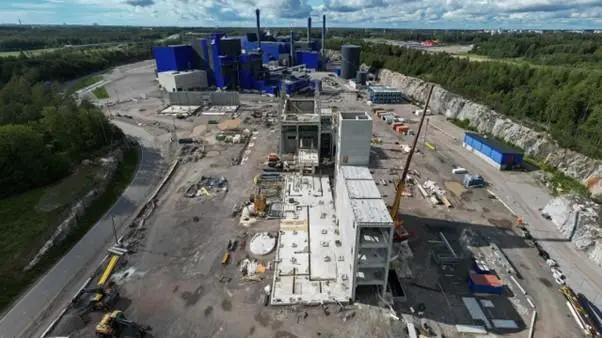
The Vantaa Carbon Capture project will go ahead at Vuosaari Harbour, where carbon dioxide captured from the Vantaan Energia thermal waste-to-energy treatment plant will be piped, liquefied, stored temporarily then shipped to its subsea destination.
Ships specifically designed to withstand the high pressures and low temperatures required for transporting CO₂ will carry the gas to permanent storage sites such as geological formations beneath the North Sea.
Vantaan Energia estimates that the project could capture up to 350,000 tonnes of fossil CO₂ a year, which is about a third of the city of Vantaa’s total emissions.
Once built, the terminal and shipping infrastructure will enable other operators to capture CO₂ ambitions extend beyond the company’s own operations, Vantaan Energia says.
Preliminary planning is expected to be done in early 2026, followed by detailed planning and investment decisions. The earliest possible commissioning date is 2030.
Spread of CCS projects
The Vantaa initiative is part of a broader shift toward maritime carbon capture and storage, with the EU targeting an annual CO₂ injection of 50 million tonnes by 2030, according to DNV.
“The need for CO₂ carriers and supporting maritime infrastructure is expected to grow significantly in only a few years,” it says. “Looking forward, CCS capacity additions are projected to more than quadruple to 270 Mt CO₂ /year over the next five years, with even stronger growth expected through to 2040 and 2050. This will need to be mirrored by growth in the CO₂ carrier fleet.”
Norway’s Northern Lights project is already storing CO₂, with the first volumes now injected some 2,600 metres below the seabed.
In march, project owners Equinor, Shell and TotalEnergies made a €638 million final investment decision to progress to phase two, which would see 900,000 tonnes of carbon dioxide being injected into the seabed every year for 15 years.
“That we are now able to progress the Northern Lights’ project second phase on a commercial basis, demonstrates the value of public-private partnerships to reduce risk and attract customers,” said Equinor CEO Anders Opedal.
Related Articles
 INDUSTRY NEWS
 MARINE CIVILS
 MARINE CIVILS