![MaritimeJournal[Seawork]](https://www.maritimejournal.com/wp-content/uploads/2026/09/MaritimeJournalSeawork.svg)




New dredging tax rule to destroy goals it aims to achieve
The UK waterways industry says axing a dredging tax exemption will increase emissions, stall clean-ups and directly contradict environmental ambitions.
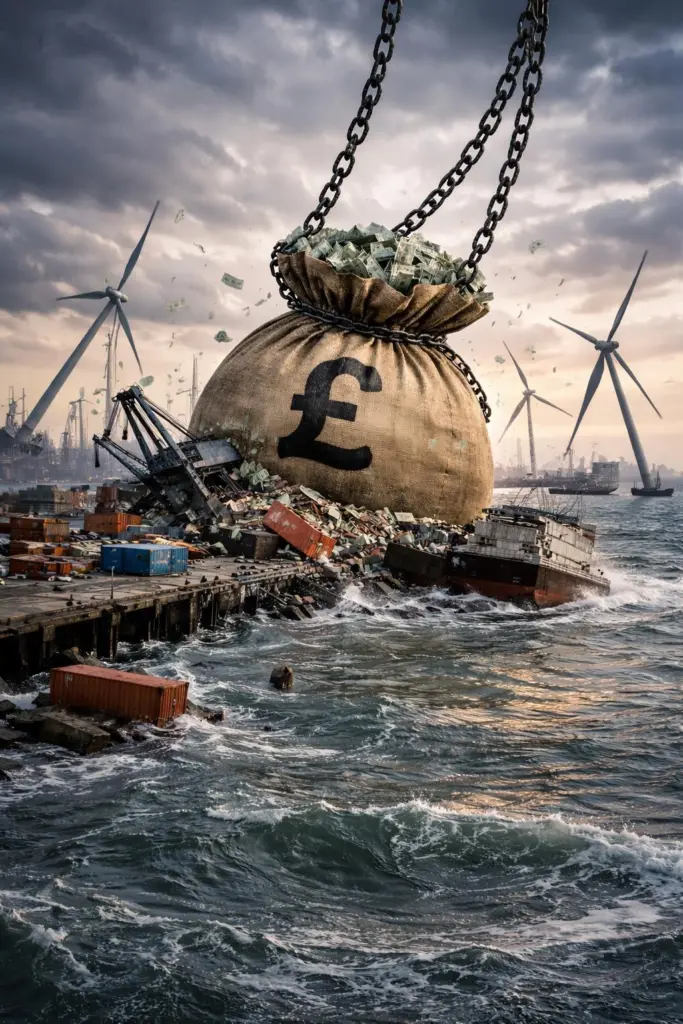
It could also sound the death knell for new port infrastructure that will be vital for the country’s ambitions to scale up offshore wind.
Ports, river authorities and waste-management firms have warned that the government’s plan to scrap a landfill tax exemption for dredging stabilisers could have environmental consequences that directly contradict its stated ambitions to clean up waterways, cut emissions and accelerate the transition to net zero.
It could add about £3 million (€3.4 million) to the cost of 10,000 tonnes of dredged material.
From April 2027, the Treasury intends to remove an exemption that currently applies to stabilisers used to treat contaminated dredged material from ports, rivers and canals. The change, confirmed in the government’s response to its landfill tax consultation, would mean stabilising materials are taxed in the same way as landfill waste.
Industry bodies argue the exemption exists precisely because stabilisation is an environmentally protective process, allowing hazardous sediments to be neutralised and safely stored. Without it, they say, operators may be forced into higher-carbon alternatives or delay essential dredging altogether.
In a cross-sector letter to the Treasury, led by the British Ports Association (BPA), signatories warned that the change could ‘delay the clean-up of our contaminated waterways, impair navigation of our waterways and potentially increase flooding risk’, while adding millions of pounds to project costs.
They say the tax reaped would be effectively wiped out by the cost to local authorities.
Richard Ballantyne, chief executive of the BPA, said the policy risked doing ‘the exact opposite’ of what ministers say they want to achieve.
“The consequences of this decision will badly damage the Government’s commitment to boosting growth, economic stability and its mission-led focus on infrastructure,” he wrote, warning it could make green energy and industrial projects in port areas non-viable.
Ballantyne said the measure had been ‘buried alongside the Budget’ and would force major port and waterways schemes to be ‘delayed, scrapped or reviewed’ because of the additional financial burden.
According to the letter, removing the exemption could encourage the use of ‘high-carbon virgin raw materials such as lime and cement’, instead of recycled stabilisers derived from energy-from-waste and biomass plants, undermining circular-economy principles the government says it wants to promote.
The Treasury has estimated the reform would raise around £25 million (€28.6 million) a year. Industry groups argue that figure is marginal compared with the wider costs, warning that local authorities could face additional bills of at least £20m annually and that the tax could wipe out investment in flood protection, river restoration and offshore renewable infrastructure in port regions.
Signatories to the letter include the Canal & River Trust, Forth Ports, Land & Water, Augean, MVV Environment and Ebsford Environmental, all of whom are urging ministers to reconsider before secondary legislation is introduced.
At the time of writing, Maritime Journal had not received a reply to requests for comment from the UK Treasury.
What are stabilisers in dredging – and why are they used?
In many historic and industrial waterways, dredged material is contaminated with heavy metals or hydrocarbons.
Stabilisers are materials added to this sediment to chemically bind contaminants and reduce their mobility. Common examples include ash residues from energy-from-waste and biomass plants, which can neutralise pollutants and improve the physical stability of dredged materials. Once treated, the material can be placed in specially engineered containment facilities designed to prevent leaching into the environment.
UK regulators have long recognised stabilisation as a form of environmental protection rather than disposal.
Guidance from environmental authorities describes stabilisation/solidification as a best-practice technique for managing hazardous dredged material where reuse or sea disposal is not appropriate.
Industry groups warn that taxing stabilisers could discourage this approach, leading either to reduced dredging activity or greater reliance on virgin construction materials, increasing emissions and environmental risk rather than reducing it.
Related Articles
 INDUSTRY NEWS
 MARINE CIVILS
 MARINE CIVILS