![MaritimeJournal[Seawork]](https://www.maritimejournal.com/wp-content/uploads/2026/09/MaritimeJournalSeawork.svg)




World’s longest immersed tunnel delayed 18 months
Project leaders of by far the world’s longest immersed tunnel have told Maritime Journal that the 18km Fehmarnbelt tunnel linking Denmark with Germany will be delayed by 18 months.
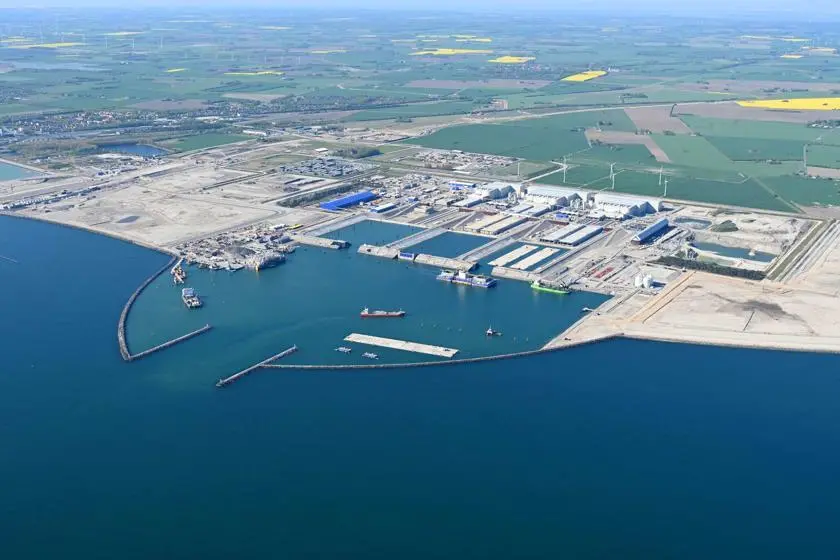
The tunnel, which is being planned, built and operated by Denmark’s state-owned company Femern A/S, under Sund & Bælt, was originally planned to be open in 2029.
When finished, the tunnel will contain two electrified railway tracks in separate tubes and a four-lane motorway with two in each direction in a separate tube. Travelling by train will take seven minutes at 700km/hr, and by car, 10 minutes at 110km/hr.
The works are being carried out on a construction site the equivalent size of 300 football pitches, which is the largest in Europe.
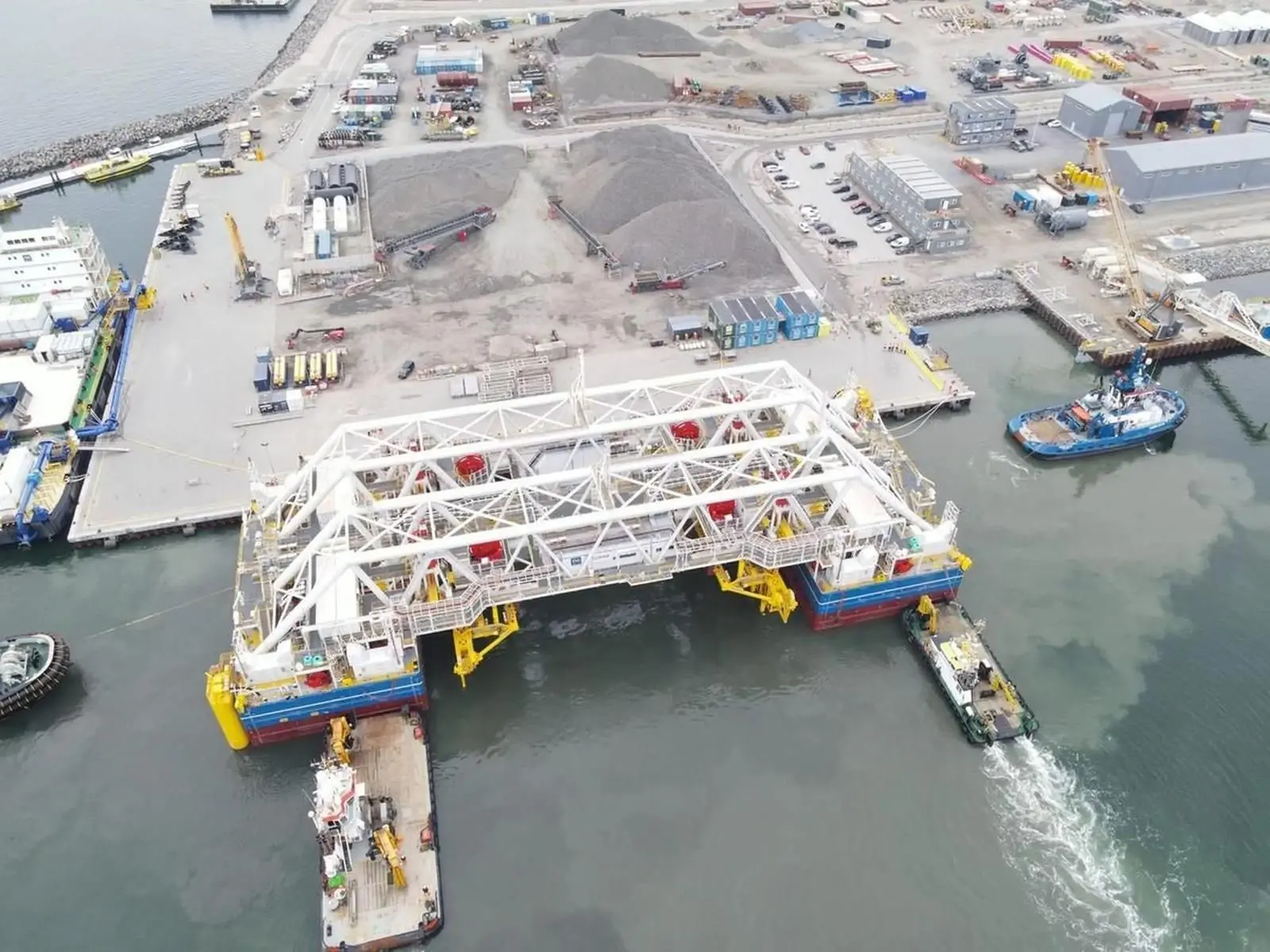
Among reasons for the delay are the late arrival of the IVY1 and IVY2 pontoons (often both referred to as ‘IVY’), which have been specifically engineered to handle the positioning and immersing of the tunnel elements, said a spokeswoman for Femern (the Danish spelling).
“IVY is a prototype with highly complex mechanical and electronic systems,” she said. “In addition to the extensive technical and mechanical ship equipment, the software must also function smoothly.
“The pontoons arrived later than planned, have been further equipped in the work harbour in Rødbyhavn and have required an extended period for testing and certification. This has delayed readiness of the pontoons by more than 1.5 years. Therefore, it becomes every day that passes more unrealistic to open the Fehmarnbelt tunnel in 2029.”
BAM subsidiary DMC designed the pontoons, which have a length of 100 metres, a width of 45 metres and a lifting capability of 8,000 tonnes using 66 synchronised winches. They were built at the Crist shipyard in Poland.
“When the 217-metre long elements leave the factory, they are light enough to float,” says Sund & Bælt. “However, prior to the immersion process, several thousand tonnes of additional ballast concrete will be added to make the elements heavy enough to be immersed in the dredged tunnel trench on the seabed. From here the tunnel element will only be supported by the two immersion pontoons, which will serve as the tunnel element’s ‘bathing wings’.”
Approval and certification
The late arrival of the IVY pontoons means that approval, which has to be carried out by the Danish Maritime Authority (Søfartsstyrelsen), has also been delayed.
“The approval is a process between the contractor Femern Link Contractors (FLC) and the authorities, as IVY is within FLC’s area of responsibility,” said the Femern spokeswoman.
“The certification is progressing and must be completed to commence immersion. Given the vessels’ complexity, approval is not straightforward and must be conducted with appropriate diligence. Safety and due diligence take precedence here; the test and approval phase cannot and will not be shortened.”
The pontoons, she said, have undergone ‘intensive testing’ and are in the final stages of this approval process.
“Our focus is to start immersions as soon as the vessels are approved and, together with the contractors, to implement feasible acceleration measures while meeting all safety and environmental requirements,” she said.
“As with the casting of the tunnel elements, we also anticipate a learning curve during the immersion phase, during which processes can be optimised and accelerated. We will therefore reassess the schedule after the first elements have been immersed.”
Initial proposals for a link between Denmark and Germany were for a bridge, until feasibility studies came out in favour of the tunnel option.
The planned opening date has been revised several times, beginning with 2021 set in 2012, in 2014 pushed back to 2024, in 2015 revised to 2028 and in 2020 updated to 2029.
Works so far
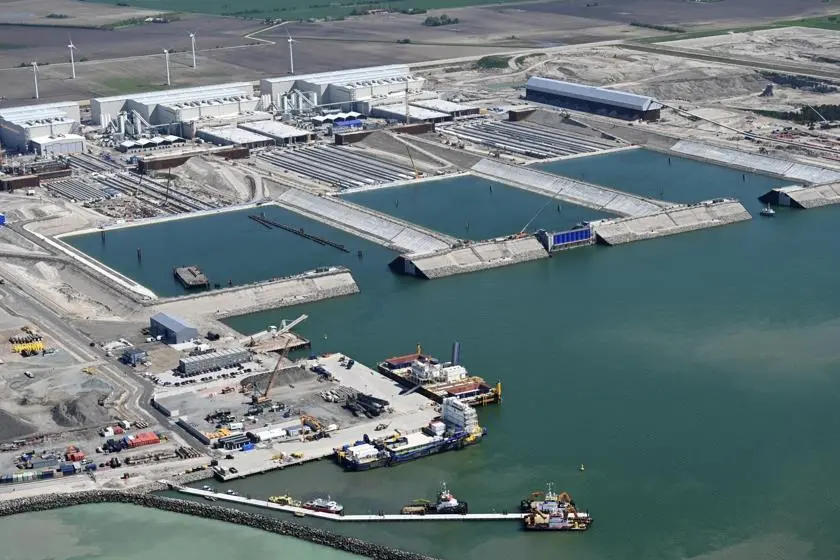
Despite the delays, the spokeswoman was keen to point out works already completed, including the dredging of the entire length of the 18kn tunnel.
All concrete works have been completed at the Danish tunnel portal in Denmark, and more than 80% of them at the German portal at Fehmarn.
“On both sides, the interface for docking the first immersed element is under water and ready,” the spokeswoman said.
Elements are produced segment by segment at the factory on Lolland, with each 217m element comprising nine elements, weighing more than 73,000 tons.
“Thirteen of 79 standard elements hand three of 10 special elements have been cast as of the end of 2025,” she said. “Seven standard elements have been floated in the basins; five of these have been moved to the work harbour.
“The first elements have been floated and moved through the basins into the work harbour. Extensive preparations are under way for the first immersion off the Danish coast.”
Other potential delays could be caused by requirements such as underwater noise limits and sediment spill for work vessels being agreed with the German side, however the teams are ‘in ongoing dialogue with the German authorities to find practical solutions for meeting the requirements’, she said.
“The contracts also pre-date Covid-19 and the war in Ukraine, which have affected market conditions and supply chains.”
Related Articles
 INDUSTRY NEWS
 MARINE CIVILS
 MARINE CIVILS