![MaritimeJournal[Seawork]](https://www.maritimejournal.com/wp-content/uploads/2026/09/MaritimeJournalSeawork.svg)


Bibby HydroMap AUSV extends survey capability
UK-based survey specialist Bibby HydroMap has successfully completed testing of an eight metre Autonomous Unmanned Survey Vessel (AUSV) developed to provide a true extension of survey capability from inshore waters to a full offshore environment.
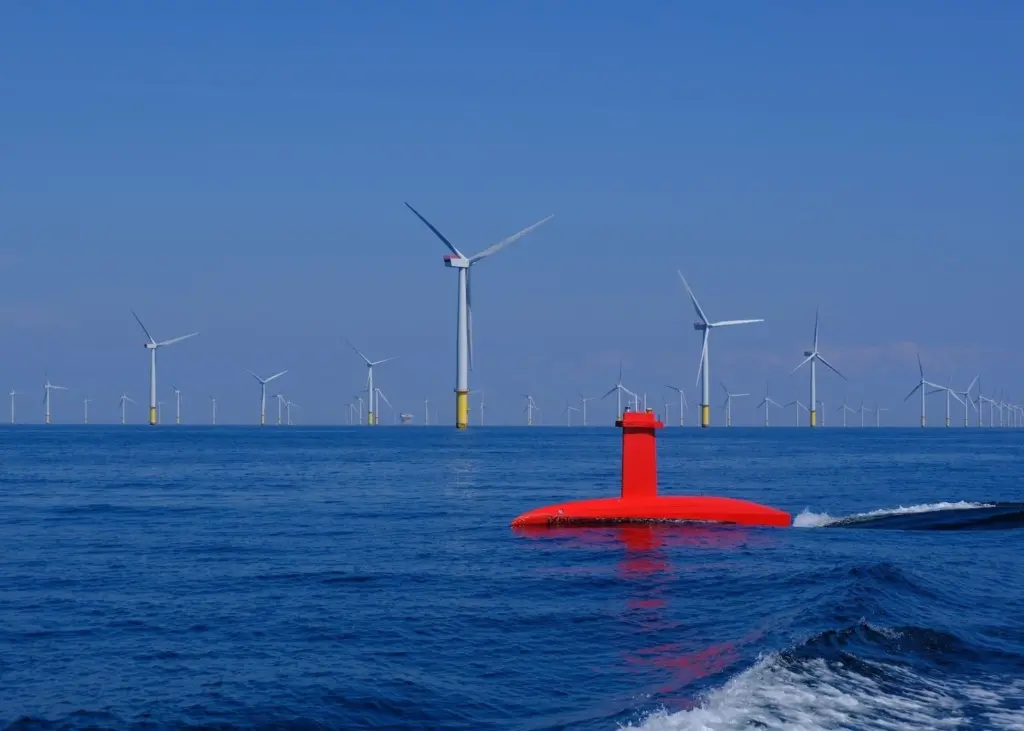
DriX,designed by iXblue, is a new breed of AUSV that has the ability to accommodate a hydrographic and geophysical survey payload and to aid positioning of underwater vehicles, facilitating data collection on a variety of marine projects.
“DriX has far exceeded our expectations in terms of data quality and performance and we are delighted to be able to pass this level of quality on to our clients,” said Tom Davenport, operations manager at Bibby HydroMap
“The level of manoeuvrability both in open water and when in close proximity to fixed structures enables excellent productivity, dramatically reducing acquisition time.”
Rigorous testing
The key purpose of the trials, covering a five-day period, was to rigorously test the performance and survey capabilities of DriX in an ever-demanding marine environment.
Testing took place in and around the Gwynt Y Môr offshore windfarm off the coast of North Wales.
Fitted with a Teledyne RESON Seabat IDH T50 multibeam echosounder, the system was able to acquire unprecedentedly clean bathymetry at speeds greater than eight knots, remaining on the intended survey line in cross-tides in excess of 1.5 knots.
During the trials, a significant improvement was realised when compared to the conventional deployment methods seen with the majority of vessel mounted multibeam echosounder systems.
During operations QPS’s Qimera Live was running on board DriX enabling the fully-processed multibeam echosounder data to be downloaded straight from DriX at the end of each mission.
Bibby HydroMap feels confident that DriX has the potential to significantly reduce survey and operational costs for asset owners and operators in the future, whilst reducing the exposure of offshore staff to unpredictable and challenging marine environments.
By Anne-Marie Causer
Related Articles
 ACCESSORIES & EQUIPMENT
 INSURANCE, LEGAL & FINANCE
 EQUIPMENT