![MaritimeJournal[Seawork]](https://www.maritimejournal.com/wp-content/uploads/2026/09/MaritimeJournalSeawork.svg)




IALA Conference conclusions
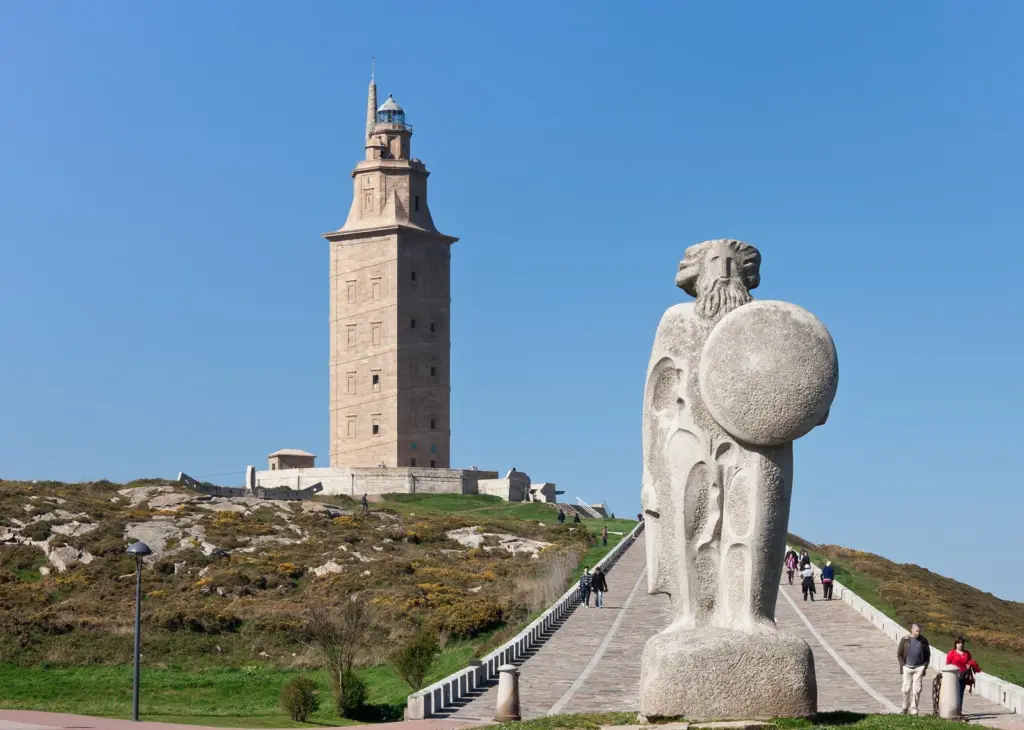
The 18th IALA (International Association of Marine Aids to Navigation and Lighthouse Authorities) Conference was held from May 25 – 31 2014 at La Coruña, Spain, attended by 413 delegates.
A series of 79 presentations were given under five broad headings:
- Aids to Navigation Provision
- E-Navigation and beyond
- Global navigation
- Management
- Heritage
In order to increase the participation of technicians in the Conference, a best practice initiative was included as a way of sharing organisations’ experiences that solve a specific technical problem and / or save significant resources.
A pre-conference capacity building seminar on Aids to Navigation Knowledge and Innovation dealing with training and certification of AtoN and VTS personnel was held on May 24.
Her Royal Highness, The Princess Royal attended sessions on 30th May to celebrate the 500th anniversary of the granting of the charter to the UK’s Corporation of Trinity House. The Princess Royal, as well as being Master of Trinity House, is a keen sailor who sails her Rustler 44 yacht regularly from a berth on the west coast of Scotland.
A number of additional meetings were held during the Conference including the IALA Council, the Iberio group of Spanish speaking countries, the group of French speaking countries, VTS2016 Steering Committee and the IMC.
The Conference identified nine conclusions:
1. IALA should consider providing guidance on anomalous behaviour recognition to improve VTS operations and ship monitoring.
2. An evolving mix of communication systems is needed to convey maritime safety information and e-Navigation services. The need for protection of radio frequencies will continue.
3. There is an emerging consensus to adopt the Maritime Cloud concept as a logical infrastructure for e-navigation, with communications standardisation and resilient PNT.
4. Apparent Intensity compared to Effective Intensity may be more suitable for characterising the range of Marine Signal lights and requires further study .
5. Shore based authorities should recognise that there is a significant population of smaller and non SOLAS vessels that is not equipped to take advantage of all aspects of e-Navigation services.
6. Recognising the IMO/IALA zero accident campaign, there is a need for standardised reporting, investigating and analysing vessel near misses.
7. The need for training and capacity building was recognised to ensure correct assessment, specification, delivery and quality assurance of AtoN. This should include safe maintenance practices and the use of personal protective equipment.
8. Marine Spatial Planning could have a significant economic benefit if successfully implemented. Maritime authorities should take account of route topology modelling and the analysis of risk using the IALA risk management toolbox.
9. Comprehensive planning for the protection of aids to navigation from significant weather or environmental events (e.g. hurricanes, tsunamis or earthquakes) is an effective risk mitigation strategy.
The full 160 page conference paper is available as a free download on the IALA website.
By Jake Frith
Related Articles
 VESSELS
 MARINE CONSTRUCTION
 VESSELS