![MaritimeJournal[Seawork]](https://www.maritimejournal.com/wp-content/uploads/2026/09/MaritimeJournalSeawork.svg)



£3bn challenge to boost wind power revenue
The UK’s Carbon Trust has announced a shortlist of 13 concepts for optimising the maintenance of offshore wind farms, increasing turbine availability and thus cost competitiveness for the sector.
The project aims to improve the economics of offshore wind by keeping turbines generating electricity in the harshest sea conditions to increase revenues by as much as £3bn for the next generation of the UK’s offshore wind farms.
Through its Offshore Wind Accelerator programme, the Carbon Trust is leading an industry collaboration of eight UK wind farm developers; E.ON, DONG Energy, Mainstream Renewable Power, RWE Innogy, ScottishPower Renewables, SSE Renewables, Statkraft and Statoil, to dramatically reduce the costs of offshore wind.
A technically rigorous process was used by the co-funded industry collaboration to select 13 designs from 450 submissions. The technical merit of these 13 concepts suggests they have the best chances of successfully driving down cost.
Today’s offshore wind farms are typically less than 25km offshore in relatively benign sea conditions, and consist of up to 100 turbines. Maintenance is possible in boats about 90% of the time when wave heights are up to about 1.5m. The new Round 3 offshore wind projects will be as far as 300km offshore in rougher sea conditions, and may consist of as many as 2,500 turbines. At these sites, today’s access systems would only allow transfers about 210 days a year. The aim of the competition is to find concepts that can be commercialised to make transfers possible for a minimum of 300 days a year.
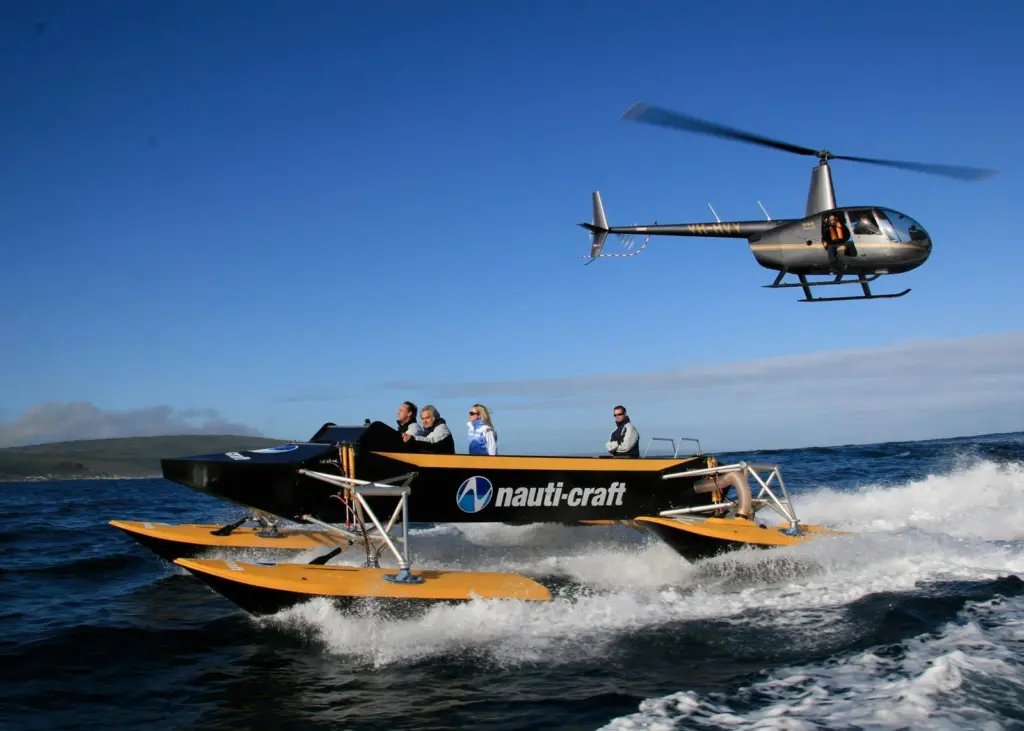
Among the 13 designs shortlisted are a giant robotic arm for transferring engineers and equipment to the turbine base; a boat that uses suspension inspired by Paris Dakar-winning rally cars to remain stable for the transfer; a ‘seahorse’ vessel consisting of a towering keel that minimises movements in the ocean swell; and a giant harbour mother ship that would act as a base for engineers for weeks on end, dispatching smaller daughter craft to access the turbines.
Technologies developed for sectors as diverse as the navy, industrial manufacturing, motorsport, diving and ship maintenance are now being adapted to the harsh conditions of the North Sea. The designers range from a university student to established offshore wind maintenance vessel operators, and come from the UK, Norway, Germany, Netherlands, Canada and Australia.
Benj Sykes, Director of Innovation at the Carbon Trust said, “We’ve trawled the globe looking for revolutionary new ideas that can transfer engineers safely in the huge swells around the UK’s coasts. People have been building boats for thousands of years, but we’ve seen some truly radical departures from what you would think a boat should look like. These designs could significantly improve the economics of offshore wind and keep our engineers safe far out to sea. Our analysis shows offshore wind is a huge green growth opportunity which could create up to 230,000 jobs in the UK by 2050.”
UK Climate Change Minister Greg Barker added, “The UK is leading the world in offshore wind power generation which is creating a huge market here in design, innovation and new technology. These projects represent some of the best ideas to overcome the challenges of working in deeper water to create a cleaner, more cost effective power supply for the future and a greener economy in the UK.”
The competition aims to increase turbine availability by 4% through the development of these new technologies. This in turn could cut turbine down-time, saving £3bn of lost generating revenue over the lifetime of Round 3 wind farms, and help to reduce the levelised cost of offshore wind. This improvement in availability would also save an extra 1.3 m/t of CO2 per year.
The global market opportunity for these wind turbine access solutions is estimated to be worth over £2bn by 2020 and according to Carbon Trust research, the UK market alone could account for up to 50% of that.
Each of the successful applicants to the competition will benefit from funding of up to £100,000 to support the design and development of their concept, as well as technical support from the eight developers in the Offshore Wind Accelerator. The competition has selected 13 designs in three categories to receive funding. They are:
Transfer systems – To transfer personnel and equipment from vessel to turbine, potentially with motion compensation:
- Autobrow, South Boats
- MOTS, Momac GmBH
- Wind Bridge, Knud Hansen
- TAS2, BMT Nigel Gee / Houlder
Vessels – Vessels for transporting personnel and equipment from permanent bases or mother ships to turbines, incorporating a transfer system:
- Pivoting Deck Vessel, North Sea Logistics
- Nauti-Craft, Nauti-Craft
- Fjellstrand Vessel, Fjellstrand
- SES Vessel, Umoe Mandal
- SolidSea, University of Strathclyde
- TranSPAR, Extreme Ocean Innovation
Launch and recovery systems – Systems fitted to the permanent bases or mother ships for launching and recovering daughter craft from the sea:
- Launch & Recovery, Offshore Kinetics
- Z Port, Z Technologies
- Launch And Recovery System, Divex
The Carbon Trust released analysis earlier this year showing that that the global offshore wind sector is set to grow by up to 10% per year, with the UK expected to capture around a 10% share of this market, which is estimated to be worth up to £170bn per year by 2050. The new data also concludes that offshore wind could create up to 230,000 jobs in the UK by 2050. Exports from the UK offer significant growth potential, generating up to 80% of total jobs out to 2050.
Related Articles
 OTHER NEWS
 FEATURES & VIDEOS
 MARINE CIVILS