![MaritimeJournal[Seawork]](https://www.maritimejournal.com/wp-content/uploads/2026/09/MaritimeJournalSeawork.svg)






AJ Woods seizes offshore windfarm opportunities
As offshore wind has developed, one of the features that can perhaps be underestimated by the casual observer is the broad spectrum of requirements, in the way of support services, for those at the business end of the supply chain.
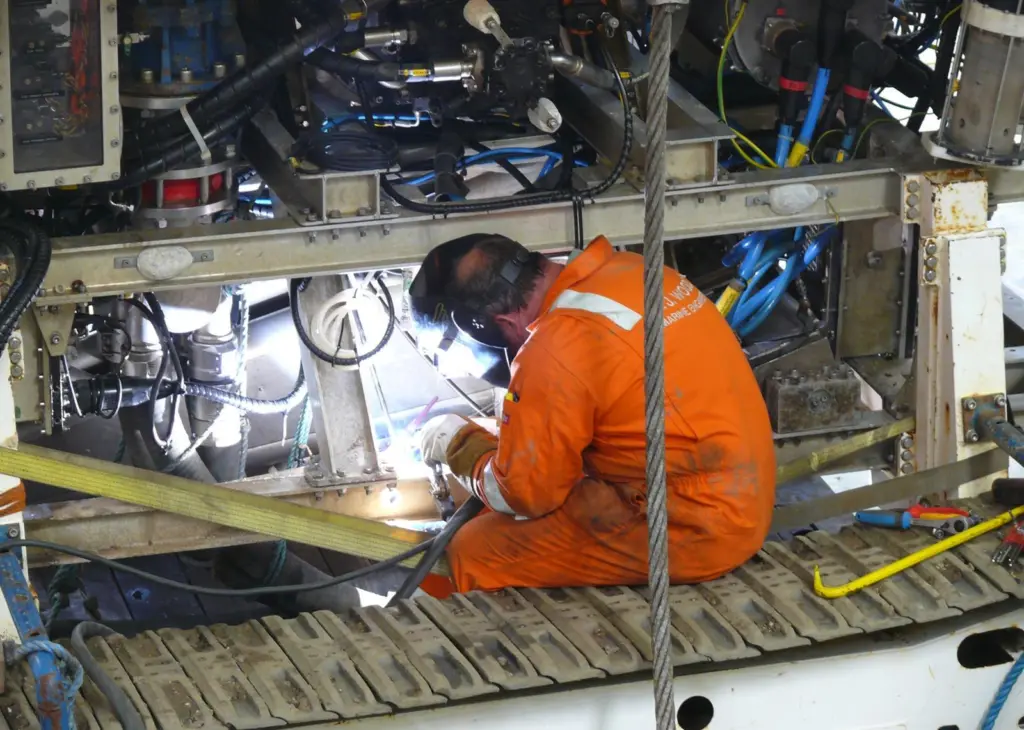
For instance, these can be especially acute for the contractors actually installing the turbines and laying the cables.
AJ Woods Engineering, based in Harwich, Essex UK is clearly aware of the opportunities in this support sector, and is now poised to expand further as it follows the trail of forthcoming projects to the North East of England with plans to open up for business in the Port of Sunderland.
AJ Woods has been established in the world of both marine and general engineering for many years but significantly, the experience it has gained with the rapid growth of offshore wind, particularly in the waters adjacent to its location, has put it in the position to grow, in anticipation of even greater potential opportunities from the UK Round 3 programme, while at the same time satisfying the demands of an equally busy offshore oil and gas industry.
The location of Harwich has been key to AJ Woods’ growth, with five Round 1 and 2 windfarms between just eleven miles (Gunfleet) and 30 miles (Thanet), at their furthest point as the crow flies from Harwich, delivering an eventual total of 1.7MW of energy from nearly 500 turbines. And this does not include Round 2 extensions and, for example, the potential London Array Phase 2 scheme and the four planned Round 3 zones between East Anglia Array in the south and Firth of Forth in the north.
With the current lack of coastal based turbine manufacturing facilities in the UK, a situation that could potentially change in years to come, existing arrangements involve turbine components being transported, for example, with barges and ships loaded with components to suitable ports as close as possible to the site, then either assembled or loaded separately onto installation vessels for transport to the site.
It is this element that has seen significant amounts of activity take place at Harwich. AJ Woods’ increasing involvement in this area has presented the company with a number of diverse opportunities it has grasped and, in turn, now puts it in the position to not only expand existing and established activities but to take a wider look at providing related services within the offshore wind industry.
DIVERSE AMBITIONS
The company’s marine activities includes rapid response engineering services both onshore and offshore, an area seeing particular activity with offshore wind. All aspects of vessel remobilisation and demobilisation are undertaken, for example, with modification and construction of cable laying equipment, fabrication and installation of large transfer ladders along with specialist storage and bunded fuel containers. On completion of charters it is again on hand to return ships to their original condition.
An interesting example of Woods’ diversification is the establishment in 2011 of an innovative sea ambulance and rescue service for offshore windfarms. While established emergency services can and do respond to medical and other emergencies offshore, the unique features of height and confined spaces require specialist skills alongside the usual emergency medical response requirements and the company’s trained first aiders can provide extra support and assistance when things go wrong offshore. Twenty-four hour offshore windfarm re-fuelling facilities are located at Harwich, a service provided in particular for the Greater Gabbard project.
With an eye to the opportunities further to the north, the company recently acquired a 6,000m² factory unit at the Philadelphia complex in Durham. Using locally sourced personnel, the manufacturing of large steel fabrications including blade racks, cable chutes and reels, platforms, boarding ladders, mezzanine decks and grillages has already started. The manufacturing unit is close to the Port of Sunderland where AJ Woods is basing its operations in the North East. It has now acquired offices, stores and workshops strategically located near the quayside. Interestingly, as well as its traditional ship mobilisation services, it is now able to offer a turnkey package of services that include berthing and pilotage.
Robert Day, business development manager with AJ Woods said, “The company is pleased to be associated with The Port of Sunderland, which together with Sunderland Council has been extremely helpful. We are looking forward to a mutually beneficial long term working relationship with both the Port and Local Authority. The area is ideally suited for our expansion due to its strategic location and infrastructure and there is a highly skilled and willing pool of local labour available.”
GROWTH FOR SUNDERLAND
For the Port of Sunderland, the arrival of the new business in the form of AJ Woods will add to the eclectic mix of services that are on offer at this strategically located port. The location is very much part of Sunderland’s success, being central to Scandinavian and Continental sea routes, with good road and rail links to regional and national networks and two international airports located nearby.
Sunderland has a growing portfolio of trade including forest products, non-ferrous metals, steel, aggregates, agricultural limestone, chemicals and refined oil products. It is however, its long history in supporting the North Sea oil and gas industries, including for world-class subsea engineering and construction companies, that will no doubt have been an important factor in attracting AJ Woods to the area for expansion of its own business, in both oil & gas and the burgeoning offshore wind industry.
Two main working areas make up the Port of Sunderland. Three berths with over 550m of quay and 39,000m² of open storage are located on the River Wear. The main area of activity however centres on the South Docks, comprising the Hudson and Hendon Docks, able to accommodate ships up to 141m LOA, 18.9m beam and 8m draught. Over 1,700m of quay and 52,000m² of open storage areas are available and facilities include a ro-ro ramp, ship repair facilities, oil berths and a lay-by berth. Fifteen shipping agents and ten road hauliers work in partnership with Port of Sunderland to provide services to the industries that use the port. On the support services side, Sunderland offers ship repair, marine engineering and dry-docking facilities both within the South Docks complex and upriver at Pallion.
Matthew Hunt, port director at Port of Sunderland said, “Port of Sunderland is well suited to meet both the current and future demands of the North Sea oil and gas and the offshore renewable industry sectors. AJ Woods Engineering Ltd’s decision to expand their business within our Port area is a great coup for the city, as not only will we see an increased volume of offshore and subsea vessels on site, which in turn increases the use of the port’s cargo and marine services, but it is set to create wider opportunities for local employment within the community.
“Sunderland is fast growing its reputation as a leading port of call, both for the subsea engineering and growing offshore renewable energy sectors and it’s great to share AJ Woods Engineering Ltd’s vision for growth within the North East.”
Talking to MJ, Mr Day from AJ Woods speaks candidly about the differences in the response to potential opportunities from offshore wind by the various UK coastal local authorities they deal with, but it is clear that the relationship with the Port of Sunderland, the UK’s second largest municipally owned port, is a positive one.
Returning to AJ Woods’ vision of the future, as offshore wind develops, a clearer picture is emerging of what the industry expects from the various ports and harbours, big and small, without whom nothing will progress. In turn, the effects that this new-found area of activity has on the ports themselves and, importantly, the surrounding community, is also emerging.
It is here that AJ Woods has identified two clear elements. The workforce, both crew and contractor personnel surrounding the small crew transfer vessel fleet, is largely based ashore and requires local ‘hotel’ services and local marine support infrastructures to keep the fleet working to what are invariably intense schedules. In contrast, the larger installation and cable laying fleet, for example, is mostly self-contained, with personnel living aboard, still needing shore based support of course but not to the same frantic daily pace as the smaller boats. AJ Woods has some exciting plans in the pipeline for involvement in coordination of this small craft element of the industry and it is a case of ‘watch this space’.
An example of the company’s forward looking vision is its recent opening of the Miranda Renewable Energy Centre in the building that was formerly headquarters of Trinity House at Harwich. In the nascent days of the industry, communities of Portakabins sprung up in undeveloped corners of ports to accommodate the various contractors both large and small but as the industry has grown in size and gained confidence about future prospects, more permanent facilities are being sought and the Miranda Renewable Energy Centre development is intended to help satisfy that demand, as various international companies look to establish themselves in the ‘hot-spots’ emerging in the offshore wind industry. Siemens Transmission & Distribution Ltd and Dalby Offshore Renewables Ltd are two early tenants for the Miranda centre.
By Peter Barker
Related Articles
 OTHER NEWS
 FEATURES & VIDEOS
 MARINE CIVILS