![MaritimeJournal[Seawork]](https://www.maritimejournal.com/wp-content/uploads/2026/09/MaritimeJournalSeawork.svg)



Artificial island for wind energy storage
Belgian authorities have developed plans to create an artificial island off their coastline as a scheme to store wind energy power.
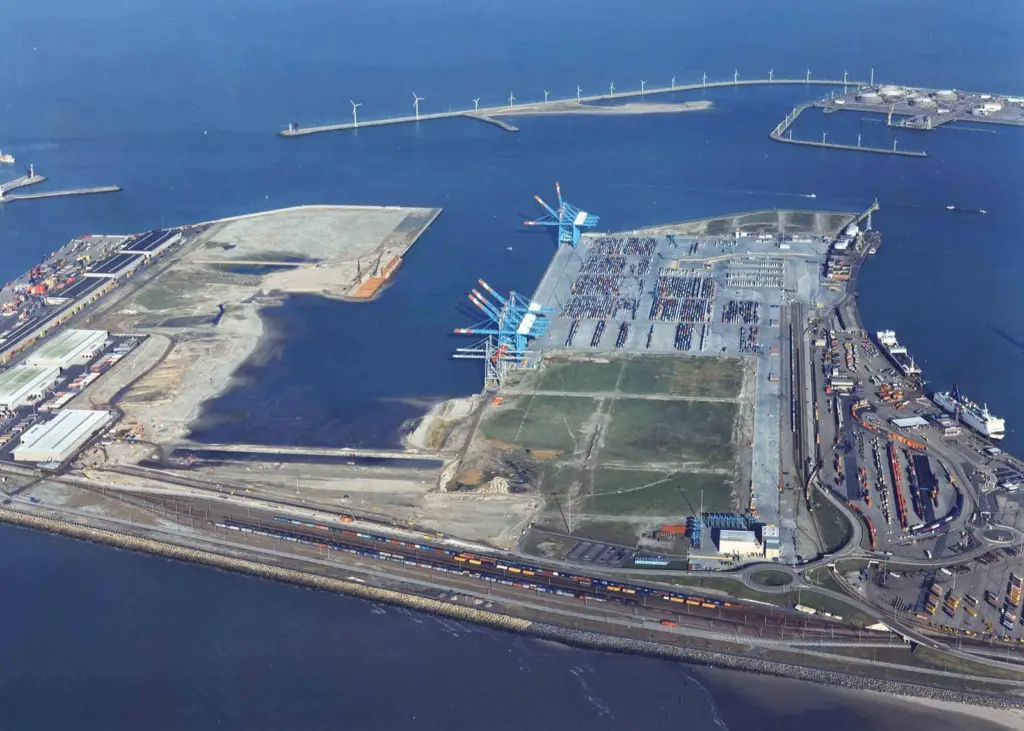
A government spokesperson said, “Belgium has plenty of energy generated by wind power but much of this can get lost during periods of low demand. The concept developed with this artificial island project would provide a means of storing this surplus energy for future use.”
The plan for this artificial island was announced by Johan Vande Lanotte, Belgium’s North Sea Minister during a visit to the port of Zeebrugge. It is part of a plan to compensate for the potential closure of nuclear power stations in Belgium which have developed faults. Currently Belgium generates about 4% of its energy requirements from wind power but there is the potential to expand capacity to over 4,000MW by 2020.
The proposed artificial island would be located 3km off the coast of Belgium and would be constructed from sand dredged from the seabed and excavated to form the lower level centre. It would be doughnut shaped with the hollow centre being capable of holding the water that would create the means of storing the energy. In times of surplus wind power energy the water in this centre area would be pumped out by reversible electrically powered turbines and then much of this power could be recovered by allowing water back in via a pipe system which would drive turbine generators in reverse to generate electricity.
Once the go-ahead is given for this major construction project it is expected to take five years to plan and build the island. This energy storage plan developed in Belgium could provide a blueprint for other regions where wind farm energy is being developed. The ability to be able to provide a temporary storage system for the wind farm energy could create a means of making wind energy more viable to meet consumer demands and help to alleviate the variable nature of wind energy. Such schemes will create considerable work for dredging companies and the islands created for this system could also be used as a base for wind generators, thus shortening the supply route for the energy.
By Dag Pike
Related Articles
 OTHER NEWS
 FEATURES & VIDEOS
 MARINE CIVILS