![MaritimeJournal[Seawork]](https://www.maritimejournal.com/wp-content/uploads/2026/09/MaritimeJournalSeawork.svg)





Breaking waves project helps turbine design
Two collaborative R&D projects are taking place that aim at better understanding and predicting breaking waves in order to optimise the design of offshore wind turbines.
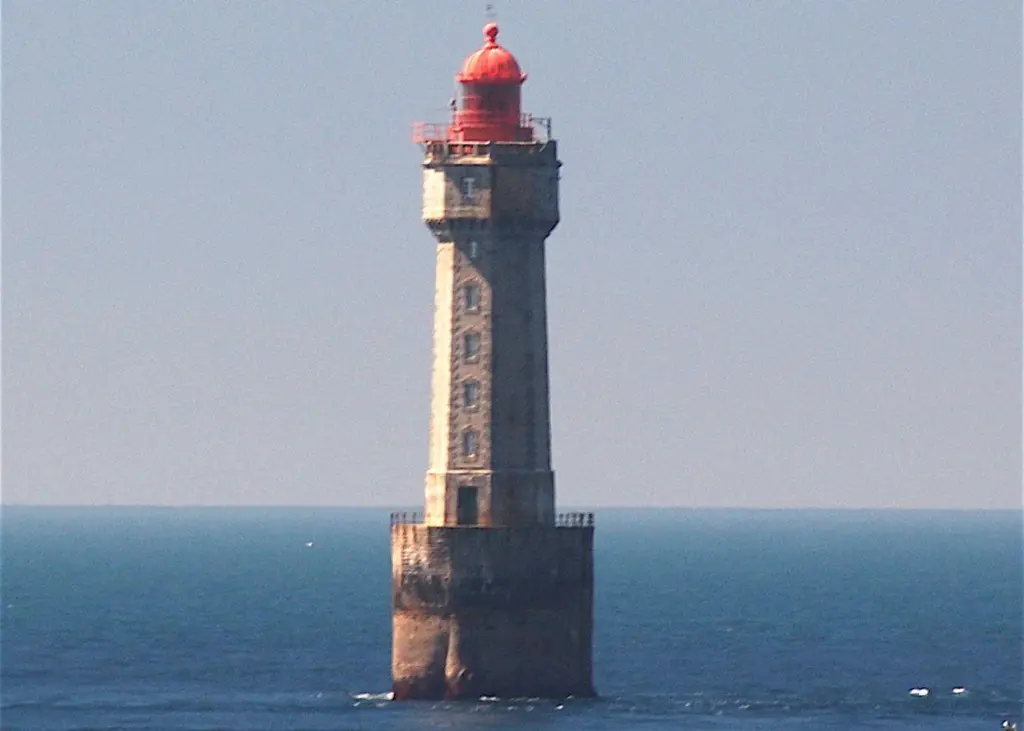
France Energies Marines is coordinating the DIME and DIMPACT projects that focus on the creation of breaking waves offshore observatories and bring together a total of 27 academic and private partners.
The DIME project, initiated in 2017, includes an unprecedented experiment carried out on and around La Jument lighthouse near Ushant island, off the North West coast of France.
A current profiler located at the foot of the building and a wave buoy anchored 2km to the west provide in-situ information on waves and surrounding currents. Accelerometers quantify the movements of the building and three pressure sensors installed on its façade determine the forces exerted by the waves.
At the top of the lighthouse a stereoscopic camera system allows the three-dimensional shape of the waves to be reconstructed, and a radar allows the wave field to be mapped on a larger scale. A measurement campaign has been conducted every winter since December 2017.
During the second winter measurement campaign, a giant 24.6m high breaking wave was observed in three dimensions using a stereo-video camera system. It was also possible to correlate it with the acceleration of the structure: a world first. The fourth and final data acquisition campaign has now begun and conclude with a major analysis of the data collected to help improve the predictability of high amplitude breaking waves.
The DIMPACT project, initiated in 2020, will conduct a new experiment on the Unitech Zefyros floating wind turbine, deployed off the Norwegian coast.
By Rebecca Jeffrey

Related Articles
 OFFSHORE RENEWABLES
 OFFSHORE RENEWABLES
 ENVIRONMENT