![MaritimeJournal[Seawork]](https://www.maritimejournal.com/wp-content/uploads/2026/09/MaritimeJournalSeawork.svg)




Can offshore wind farms benefit marine life?
A new report published in the peer-reviewed journal ‘Environmental Research Letters’ has suggested that offshore wind farms may be beneficial to marine life ecosystems in the long term.
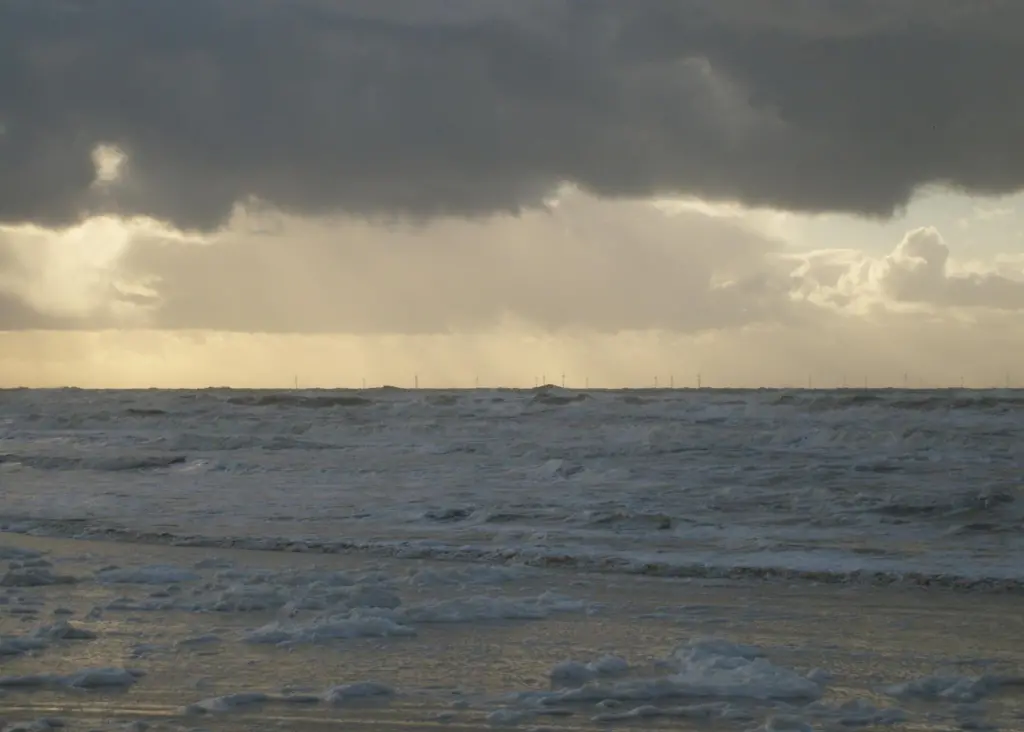
Researchers studying the offshore OWEZ wind farm near Egmond aan Zee, off the coast of the Netherlands, say that the site has created a new marine habitat as well as providing a sanctuary for marine life from shipping traffic.
“Overall the wind farm acts as a new type of habitat with a higher variable biodiversity”, the study concludes.
The report called, ‘Short-term ecological effects of an offshore wind farm in the Dutch coastal zone; a compilation’, found that the foundations of the wind farm provide a rocky shelter for species such as mussels and crabs.
The researchers, made up of a consortium consisting of IMARES, Koninklijk NIOZ and Bureau Waardenburg, believe that marine life may be congregating near the wind farm to avoid shipping lanes.
Since commercial fishing is not present around the turbines, the wind farm has been found to act as a kind of marine preserve for certain types of fish including cod and pouting. There has been an increase in sole, whiting and striped red mullet recorded in the study. A large number of porpoises have been heard in the area and it is also believed that they may also be using the site as a ship-free sanctuary.
The study also found that the wind farm did not pose a serious threat to birds, being located far enough off the Dutch coast so that coastal bird fly-through is minimal in comparison to other locations.
Initially there was inevitable damage caused to the ecosystem on the sea floor when the windfarm was created owing to the massive foundations required for 180 foot turbines. But this study seems to indicate that although destructive in the short term, they may be beneficial to the ecosystem in the long term.
The report is the result of a two-year monitoring programme in place at the Egmond aan Zee wind farm which is made up of 36 Vestas wind turbines situated between 10 and 18 km off the Dutch coast.
The research was funded by NoordzeeWind, a joint venture of Nuon and Shell Wind Energy.
Read the full report at: http://iopscience.iop.org/1748-9326/6/3/035101/
Related Articles
 OTHER NEWS
 FEATURES & VIDEOS
 MARINE CIVILS