![MaritimeJournal[Seawork]](https://www.maritimejournal.com/wp-content/uploads/2026/09/MaritimeJournalSeawork.svg)




Developing offshore wind to coexist with nature
The UK’s main seabed owner and manager will invest over £12million in new research to help protect the UK marine environment.
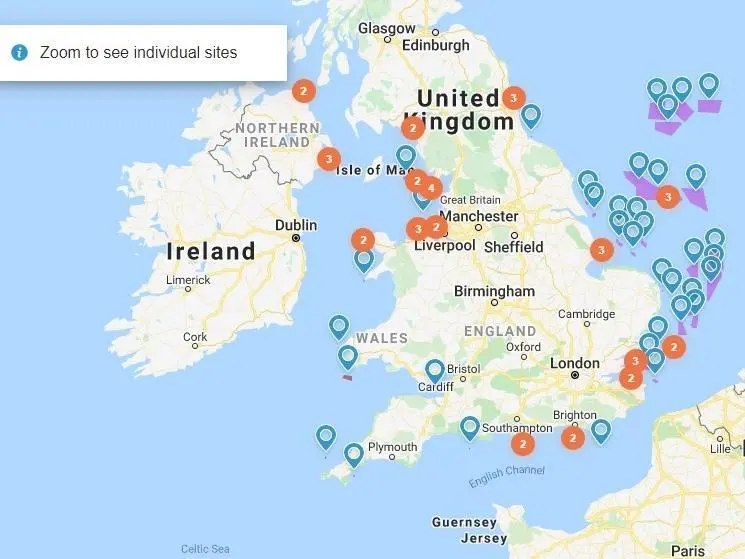
The Crown Estate is partnering with a range of UK-wide expert bodies to launch three significant research projects that will help to enable the coexistence of offshore wind farms with a thriving marine environment. Over £12 million is being invested in these collaborative projects as part of the Offshore Wind Evidence and Change programme which is supporting the UK’s drive to reach net zero by facilitating the sustainable and co-ordinated growth of offshore wind.
POSITIVE CHANGE
Led by Natural England, Scottish Government and the Royal Society for the Protection of Birds, the projects will be delivered and supported by many other public, private and charitable organisations. They will explore a wide range of environmental issues, identify evidence-gaps and inform how the industry can collectively implement positive change by improving understanding among key decision-makers of how offshore wind deployment could affect marine habitats and wildlife in combination with other activities. This will ensure the maximisation of the opportunity of UK offshore wind power while protecting and enhancing marine biodiversity.
The projects comprise:
• POSEIDON (Planning Offshore Wind Strategic Environmental Impact Decisions) – led by Natural England, this four-year project will improve the knowledge of environmental risks across UK waters and provide tools for future offshore wind planning.
• PrePARED (Predators and Prey Around Renewable Energy Developments) – a four-year partnership led by Scottish Government’s Marine Scotland directorate and co-funded by Crown Estate Scotland that will help improve understanding of how seabirds, marine mammals and fish respond to offshore wind farms.
• Remote Tracking of Seabirds at Sea – the Royal Society for the Protection of Birds will harness novel tracking techniques over a five-year period to fill critical knowledge gaps in the movements and populations of seabirds, such as puffin and kittiwake.
The Offshore Wind Evidence and Change programme is being delivered in partnership with the Department for Business, Energy and Industrial Strategy (BEIS), and the Department for Environment, Food and Rural Affairs (Defra), working closely with Scottish, Welsh and Northern Ireland government bodies, regulators, NGOs and a broad range of industry representatives that play a role in planning for the future of offshore wind.
FUNDING
So far, 25 projects have been awarded funding, with three completed and 13 underway, gathering data and evidence that will help to find space in a busy seabed, enable better understanding of how offshore wind affects the environment and habitats, and inform decision making and understanding around environmental benefits and provision of compensation.
The programme focuses on four overarching themes, identified through collaboration with stakeholders, which are:
– Spatial co-ordination and co-location
– Understanding environmental effects
– Looking at Habitats Regulations, protecting UK’s most important habitats and species, in the context of offshore wind growth
– Delivering marine net environmental gains
It is a five-year programme that will play a pivotal role in achieving the environmental aspirations of the Offshore Wind Sector Deal alongside other strategic delivery programmes.
Related Articles
 OTHER NEWS
 FEATURES & VIDEOS
 MARINE CIVILS