![MaritimeJournal[Seawork]](https://www.maritimejournal.com/wp-content/uploads/2026/09/MaritimeJournalSeawork.svg)





Exploring energy potential in the Bristol Channel
A discussion document has been published addressing the challenges for offshore wind, wave and tidal energy in the Bristol Channel, described as the single largest resource area for renewable energy in the UK.
Harvesting energy from the Bristol Channel has been talked about for decades. Complications including hydrodynamic systems, a range of marine habitats, marine communities and economic interests along with being a major sea transport route into the UK heartland mean however that ambitions are easier said than done.
Bristol Tidal Energy Forum and South West Marine Energy Park together with input from economic and environmental stakeholders are proposing an alternative “balanced multi technology approach”. This differs from previous large scale schemes which have stalled through the cost of the energy and environmental and socio-economic impacts. The document explores the theory of deploying multiple technologies over time, achieving a balance between generating significant energy, and gaining economic benefits while also considering the environment and other marine users.
Four regions are considered: Severn Estuary, Inner and outer Bristol Channel and Atlantic Approaches. A 14m tidal range makes the areas’ potential clear to see but a large scale project is currently not a strategic priority for the UK government, other low carbon options seen as representing a better deal for taxpayers and consumers.
Barrage schemes impounding water behind a dam between two coasts, and lagoons that impound water along a coastline and generating energy through water movement from tides are technologies regularly considered for the Bristol Channel. Although new technologies, including low head turbines have economy of scale advantages, the document points out their effects on high water range. It is considered such technology should be fully proven and their environmental impacts understood.
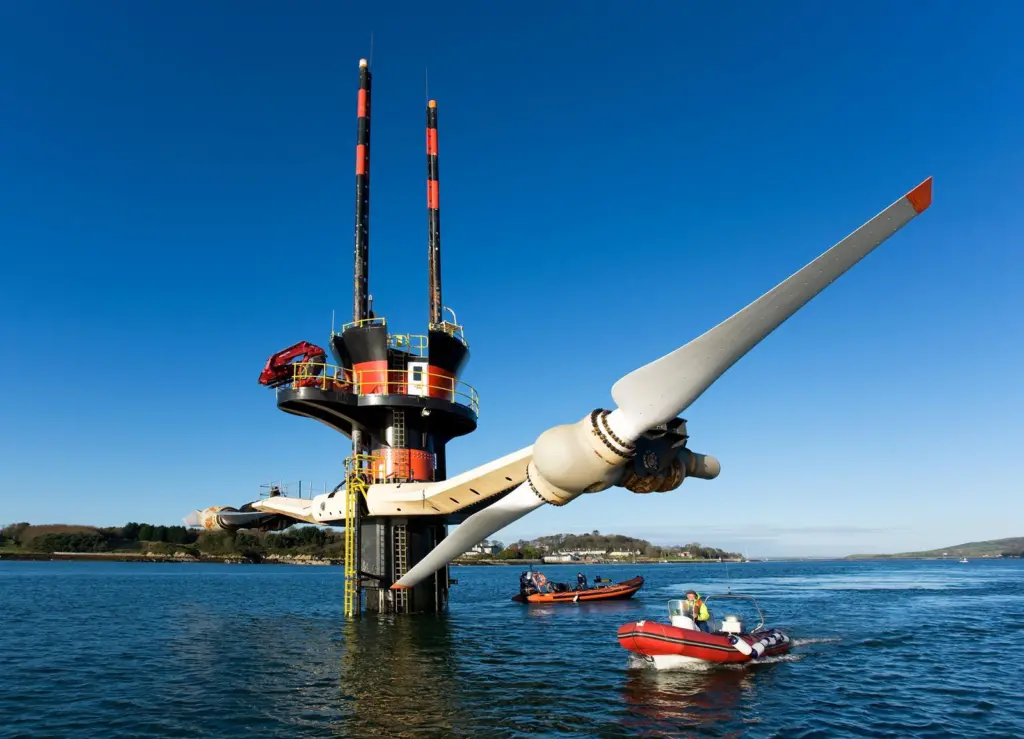
Tidal stream flow rates may be less than in the Pentland Firth and the Channel Islands but it is pointed out the Bristol Channel covers a larger area. Studies suggest total resources of 1.1GW are available, 0.7GW in the outer and inner Bristol Channel. Full scale prototypes are now in operation, including innovative tidal ‘fence’ designs, the first arrays forecast before 2020.
Considering offshore wind, mention is made of the UK’s Round 3 Atlantic Array project in the Bristol Channel. Also relevant, while covering an area to seaward the nearby Atlantic approaches are seen as a primary location for wave energy deployment in the UK.
The document also addresses sustainability and environmental impacts of various technologies along with the cost of the energy and factors including job creation. In summary, the balanced approach calls for the Bristol Channel to be treated as a holistic energy system with a range of resources within each spatial area, new technologies introduced once proven, their risks understood and costs reduced.
By Peter Barker
Related Articles
 OTHER NEWS
 FEATURES & VIDEOS
 MARINE CIVILS