![MaritimeJournal[Seawork]](https://www.maritimejournal.com/wp-content/uploads/2026/09/MaritimeJournalSeawork.svg)




Financing go-ahead given for innovative Dutch offshore windfarm
A consortium of banks have agreed financial closure for the Dutch Westermeerwind windfarm, giving a green light to a project taking up the challenge of cost reduction through innovation.
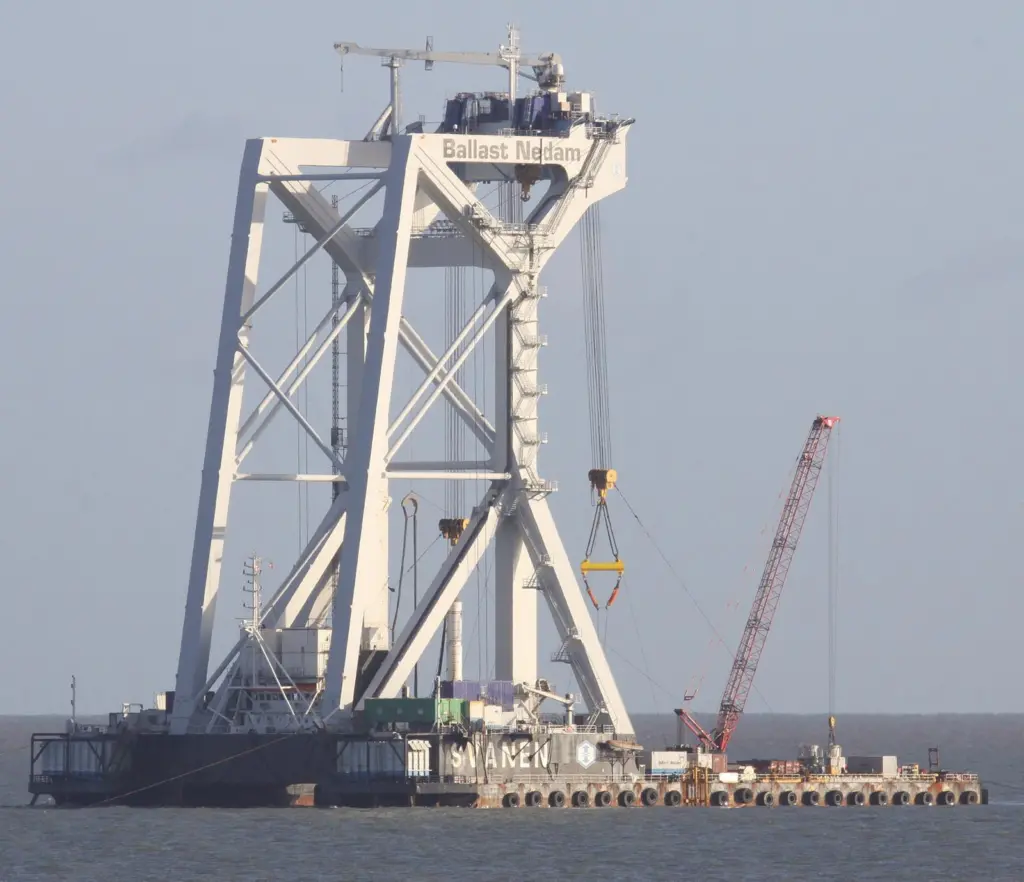
The deal involves a total funding of approximately €320m for the turn-key construction of Westermeerwind in Ijsselmeer, agreed with a consortium of banks headed by ING and Rabobank. Westermeerwind partners are Ventolines, Koepel Windenergie, Siemens and TenneT. Companies contributing to the project include Ballast Nedam and Mammoet for foundation and turbine installation with VSMC responsible for cabling and the electrical substation. Energy company Enerco will purchase electricity from the windfarm for 15 years. The windfarm itself is being developed by Siemens.
At a time when windfarms are tending to move further offshore, Westermeerwind is notable in that it is a near-shore project, comprising 48 3MW Siemens turbines between 500m and 1,100m from the dikes of the Noordoostpolder in water between 3m and 7m deep. The site is considered one of the windiest and therefore most energy-efficient locations in the Netherlands.
The monopile foundations, manufactured by SIF Group in Roermond will be 5m in diameter with an average length of 40m and weighing between 250t and 300t each. The turbine towers themselves will have a direct flange connection with the monopile with no transition piece. The driving operation (using an IHC Hydrohammer) will be performed on the flange. Following pile-driving a concrete maintenance platform will be attached and the wind turbine installed. Ballast Nedam will design, deliver and install the 48 foundations with Mammoet transporting and installing the turbines themselves. Installation work is scheduled to commence in March 2015 with first energy produced by the end of the year.
What is described as “intensive collaboration” with Siemens allowed an integrated approach to the project’s design from an early stage: an approach that not only optimised costs, but achieved certification of the windfarm design prior to financial close. An important aspect here is that it represented a significant advance in the control of risk and failure costs.
Ballast Nedam and Mammoet complement each other with their respective experience and knowledge in the skills and challenges of the offshore wind scene, a consequence being the ability to provide turn-key solutions. Ballast Nedam have contributed to specific requirements including the handling and installation of heavyweight foundations. Their heavy lift vessel Svanen, originally built to assemble heavy concrete bridge sections has proved particularly well suited for this role. Similarly Mammoet are no strangers to the offshore wind industry with experience in load-outs, transport, weighing and transhipment. Their history with heavylift projects provides a natural extension of the skills required to optimise the logistical process associated with the large and heavy components involved with the offshore wind industry.
By Peter Barker
Related Articles
 OTHER NEWS
 FEATURES & VIDEOS
 MARINE CIVILS