![MaritimeJournal[Seawork]](https://www.maritimejournal.com/wp-content/uploads/2026/09/MaritimeJournalSeawork.svg)



German offshore wind reaches subsidy free milestone
The German electricity grid regulator has approved bids to build what will be the first offshore wind farms that depend entirely on market prices for viability rather than government support and subsidies.
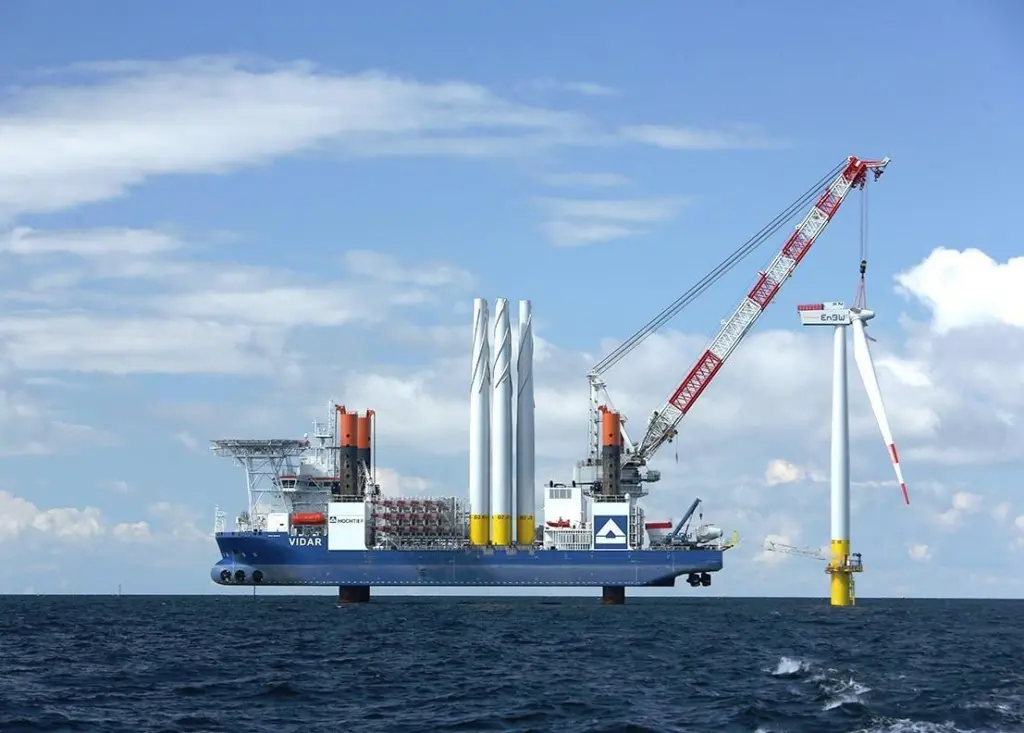
The decision by the Bundesnetzagentur (BNetzA) grants power purchase agreements for 1,490 megawatts of wind farms to be built in the North Sea. Developers have promised to supply power from the new farm at a record low weighted average of €4.40 per megawatt-hour, which is less than a tenth of the previous offshore wind deal.
BNetzA President Jochen Homann commented, “The bids were far below expectations and were below the market price for power in Germany.” BNetzA had anticipated bids in this round of about €55 per megawatt-hour and a recent record low bid came from Vattenfall AB at €49.90 per megawatt-hour.
Developers led by Energie Baden-Wuerttemberg AG and Dong Energy A/S are hoping that they can sell the electricity they produce from the wind farms at a profit even before government support. At least one bidder, EnBW, confirmed offering electricity at zero additional cost to the grid, suggesting that they may already have a buyer lined up for the power.
This auction process is a new feature of Germany’s renewable energy market, which started booming more than a decade ago when the government offered feed-in tariffs granting a fixed power price for all developers who qualified which led to a proliferation of wind and solar farms. The government has since restructured its support mechanisms as an auction where developers bid for power purchase agreements, making them compete against each other to supply at the cheapest rate possible.
The largest of the wining projects is EnBW’s 900 megawatt He Dreiht facility with a subsidy bid of zero euros per megawatt-hour. This could put pressure on bidders in subsequent rounds to keep offering lower prices. EnBW said in a statement said it plans to commission the wind farm in 2025 and will benefit from the rapid progress of technology development.
“The bid’s underlying power price assumptions are moderate,” said Dirk Guesewell, who heads the utility’s generation expansion. “The expected return is significantly above our capital costs.” The other winning bids were from Dong Energy and include their projects at Borkum Riffgrund West, Gode Wind 3 and Northern Energy OWP West.
The next German offshore wind auction is planned for April 2018 with a volume of 1.55 gigawatts and by 2020 the generation target will be 6.5 gigawatts. Currently it is estimated that wind farms cover just 1% of the potential offshore wind capacity of the North Sea which leaves plenty of room for expansion. Germany’s Offshore Wind Foundation said that the results of the first auction were so low as to justify the government raising its target for total capacity beyond 15 gigawatts by 2030.
By Dag Pike
Related Articles
 OFFSHORE RENEWABLES
 OFFSHORE RENEWABLES
 ENVIRONMENT