![MaritimeJournal[Seawork]](https://www.maritimejournal.com/wp-content/uploads/2026/09/MaritimeJournalSeawork.svg)






Grid connection contracts awarded for BorWin3
A number of important contracts have been awarded covering cabling and offshore platform construction associated with the BorWin3 grid link connecting offshore windfarms in Germany.
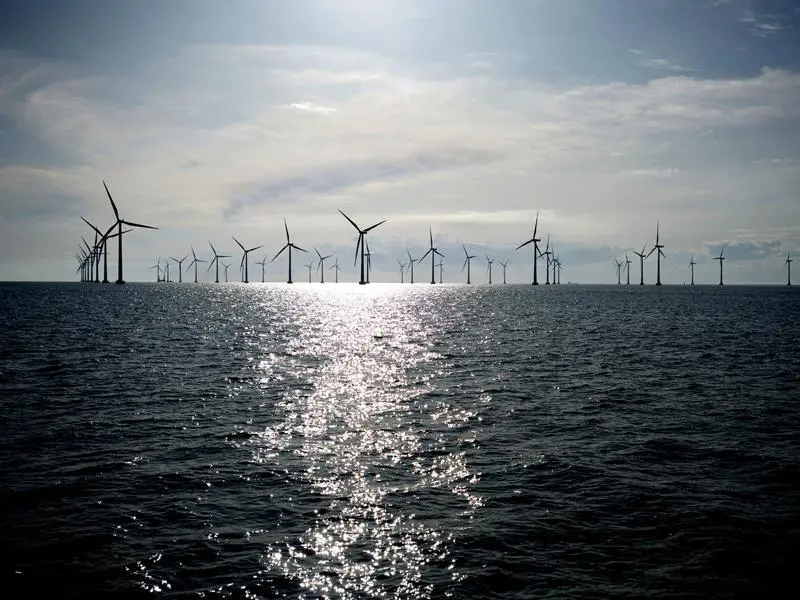
Grid connections for offshore windfarms in Germany are provided by two transmission system operators, TenneT TSO and 50Hertz. TenneT TSO is responsible for connections in the North Sea with 50Hertz the provider in the German Baltic Sea. These offshore grid connections are planned by the Federal Maritime and Hydrographic Agency, transmission system operators and the Federal Network Agency in a multi-stage process.
A consortium comprising Petrofac, an international service provider to the oil and gas industry and Siemens have recently been awarded a contract by TenneT for the North Sea grid connection from BorWin3. Petrofac will be responsible for construction and installation of the convertor platform with Siemens supplying the associated AC to DC conversion equipment. The HVDC station will have a capacity of 900MW with commercial operation scheduled to commence in 2019.
Petrofac now have considerable experience in the field. Since January 2009 they have also been providing manpower, maintenance and support services to the adjacent Borwin alpha platform, also operated by TenneT and housing a 400MW HVDC system. In 2010 the company began supplying engineering, design, construction and project management services to the DolWin1 HVDC platform and in 2012 established Petrofac Deutschland GmbH, based in Hamburg.
CABLE CONTRACT
Meanwhile, energy and telecoms cable provider Prysmian Group have been awarded a contract in excess of €250m by TenneT covering supply, installation and commissioning of a 320kV HVDC extruded subsea and land bipole, 900MW rated power connection and associated fibre optic cable system. The cable will cover a 29km land and 130km sea route running from the convertor station at Emden Ost in Lower Saxony to the BorWin Gamma convertor platform in the BorWin cluster around 120km north of the German coast. The BorWin3 project will be executed from Prysmian offices in Hamburg, using production from its manufacturing centres in Pikkala (Finland) and Gron (France). Subsea cable installation will be carried out by the recently upgraded DP2 cable-laying vessel Cable Enterprise. The upgrade makes it particularly suitable for the growing offshore windfarm connection market in Northern Europe. Completion of the HVDC system installation is scheduled for October 2017.
The cables route takes it through environmentally significant natural areas both on land and sea, including the Ems estuary. This is the second grid connection contract awarded by TenneT following the same route, directly parallel to the DolWin3 project (Prysmian was awarded this contract in 2013).
Prysmian have developed a wide range of state-of-the-art products and technologies for the renewable energy sector and state they are acquiring a pre-eminent role in development of HVDC power transmission cables. This project is the seventh awarded by TenneT to Prysmian in recent years involving six DC projects (also containing AC cable connections), and one AC only project. Energy transmission systems used in the world of German offshore wind differs from, for example UK arrangements whereby the distances involved with German windfarm clusters is greater than typical UK Round 1 and 2 projects. Increased distances generally dictates the use of HVDC systems rather than AC and the German approach of developing integrated progressive grid connection networks has led to a significant sector of the industry, running in parallel to actual windfarm construction.
Prysmian are providing complete systems for projects in all of the four clusters designated by TenneT in the North Sea. Following BorWin2, HelWin1, SylWin1, HelWin2 and DolWin3, the BorWin3 example is at the highest level for TenneT projects using extruded cables operating at the highest commercially available voltage level of ± 320kV DC.
By Peter Barker
Related Articles
 OTHER NEWS
 FEATURES & VIDEOS
 MARINE CIVILS