![MaritimeJournal[Seawork]](https://www.maritimejournal.com/wp-content/uploads/2026/09/MaritimeJournalSeawork.svg)




HelWin2 convertor station safely installed
Siemens has completed installation of the HelWin2 offshore platform, part of the German DC grid connection project for German–Dutch grid operator TenneT.
A feature with German North Sea offshore windfarms is their increased distance offshore compared, for example with UK Round 1 and 2 projects. The increased distance has led to adoption of HVDC technology over AC for transmission of energy from windfarms to shoreside connections and the land grid.
In order to make best use of economies of scale and adopt the most efficient options for integrating individual windfarm clusters, huge DC convertor stations are now being installed. As a result of this platforms are significantly larger than their AC substation cousins and present new requirements for increased lifting capacity for transport and installation.
The HelWin2 platform is located 35km north of the island of Helgoland, 55km from the mainland and directly adjacent to the HelWin1 platform, also installed by Siemens, in August 2013. They have also erected the BorWin2 platform off the coast of Borkum. In total, Siemens are building five North Sea grid connections for TenneT, the first four of these due to begin commercial operation progressively over the second half of 2014 and first half of 2015.
These four will provide transmission capacity of over 2.9GW. The fifth connection, ordered earlier this year is for the BorWin3 platform, scheduled to be ready for operation in 2019. HelWin2 will have a rating of 690MW and connect the Amrumbank West windfarm with the mainland. Together with Meerwind and Nordsee, Amrumbank West makes up the North Sea cluster HelWin.
As mentioned, the scale of the new breed of HVDC convertor platforms is significantly larger than AC equivalents and Dutch engineering giant Heerema have been heavily involved in both construction and installation of the HelWin2 platform. The platform topside weighs in at 10,300t and is positioned on a jacket weighing 4,500t. The topside is 111m long, 45m wide and 28m high. Both jacket and topside were designed and built for Siemens by Heerema Fabrication Group, who were responsible for the engineering, procurement, construction, and installation (EPCI) of the platform, designed and built according to robust and predictable methods, proven during Heerema’s 50 years of experience in the oil and gas industry in the North Sea.
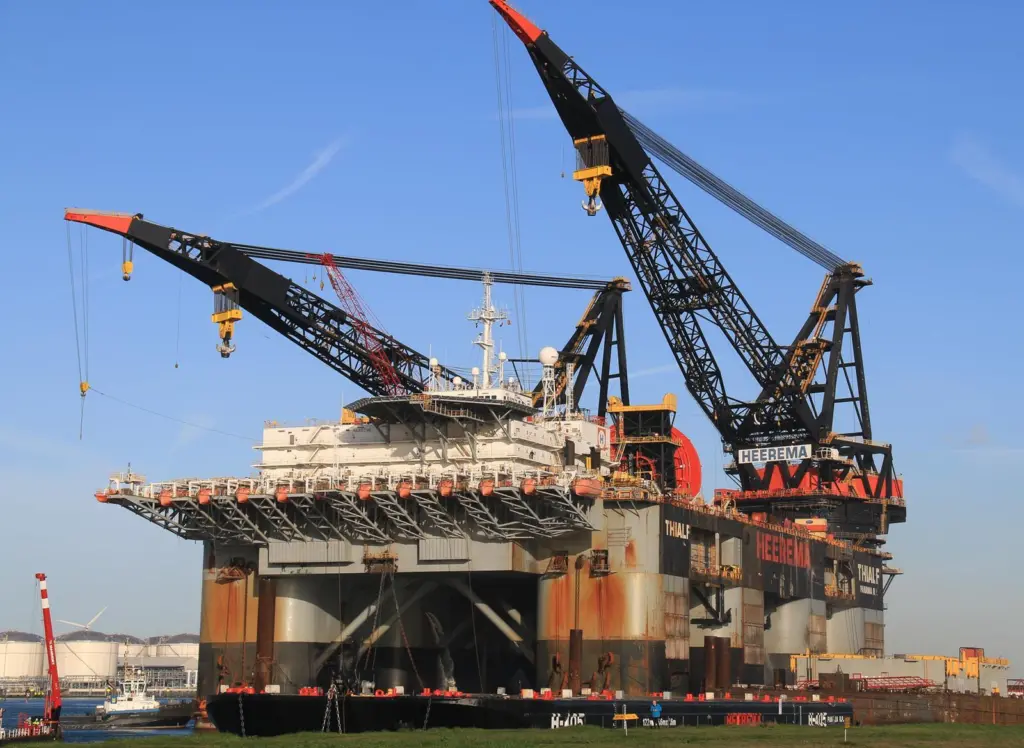
Heerema Marine Contractors were entrusted with installation of both jacket and topside and they turned to their giant deepwater construction vessel Thialf for both assignments. Built in the hey-day of rapid expansion of the offshore oil and gas industry, particularly in the North Sea, Thialf’s tandem crane lift capacity of 14,200t (the largest in the world) was ideal for offshore oil and gas platforms of that era and also now for the offshore wind industry, perhaps a form of employment that would have been unforeseen when considering the potential markets for the vessel.
By Peter Barker
Related Articles
 OTHER NEWS
 FEATURES & VIDEOS
 MARINE CIVILS