![MaritimeJournal[Seawork]](https://www.maritimejournal.com/wp-content/uploads/2026/09/MaritimeJournalSeawork.svg)






Kentish Flats offshore windfarm extension approved
The Department of Energy & Climate Change has given the go-ahead for the Kentish Flats offshore windfarm extension, part of the UK Rounds 1 or 2 extension programme, aimed at maintaining momentum between Rounds 2 and 3.
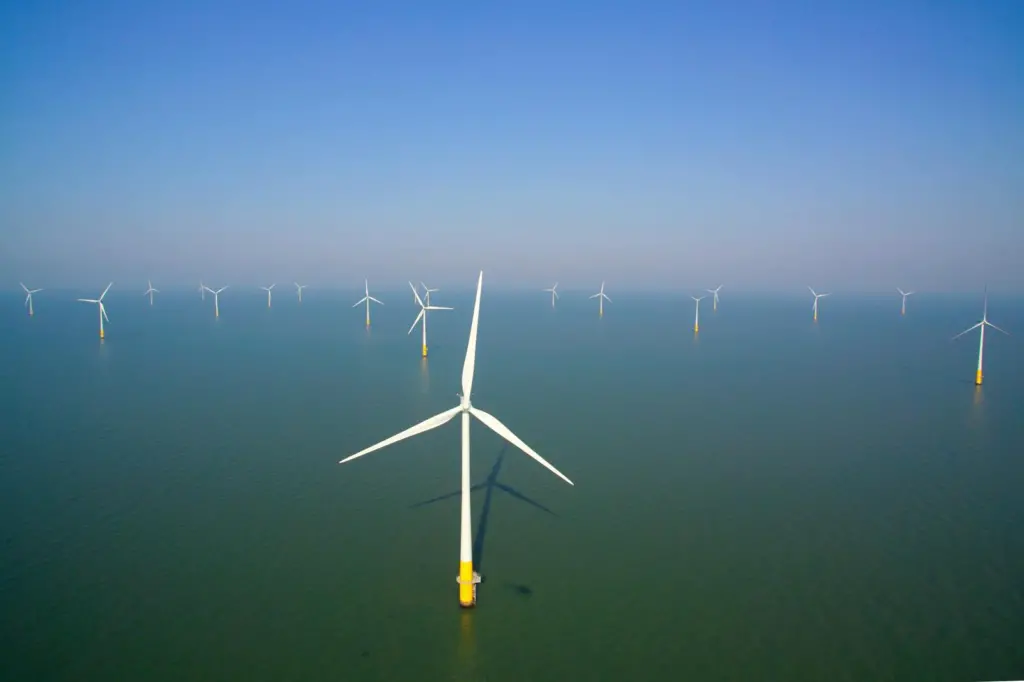
Around 10km off the north Kent coast, Kentish Flats was one of the earliest UK Round 1 offshore windfarms commissioned in 2005. The installation comprises 30 3MW Vestas turbines, a particular characteristic being the absence of an offshore substation, energy being exported directly via three buried cables.
Kentish Flats started out as a development by GREP, a subsidiary of Danish turbine manufacturer NEG Micon (now Vestas). In 2003 the project was sold to Danish power company Elsam and later came under the wing of Swedish utility Vattenfall who now own and operate the windfarm. Vattenfall’s interests in the UK’s offshore wind programme includes the Thanet and Ormonde Round 2 windfarms and, together with ScottishPower Renewables, development of Zone 5 East Anglia, part of Round 3.
In 2010 The Crown Estate announced the awarding of development rights to extend geographical areas of seven Round 1 and 2 sites contributing potentially a further 1.8GW capacity to the UK’s offshore wind portfolio. Included were two of Vattenfall’s sites, Kentish Flats and the nearby Thanet Offshore Windfarm. Vattenfall subsequently cancelled their plans for the 50% increase at Thanet citing tight timescales and limited access to the grid, importantly however they did not rule out returning to the project sometime in the future.
The planning for the Kentish Flats extension continued, proposing to extend the existing site along its western and southern edges by between 10 and 17 turbines (dependent on turbine size). The development consent order from the UK Energy Secretary has now agreed up to an additional 17 turbines with the potential of 51MW additional capacity on top of the 90MW of the original scheme. Dependent on actual turbine numbers, total cost of installing the extension is put at GB£150m.
In the almost three years since the plans were announced, Vattenfall have been busy carrying out feasibility studies and engaging with local authorities and statutory consultees. An indication of the positive effects for local communities is where Vattenfall reveal they have already engaged with over 100 local companies over the plans.
Particular features for the extension include up to two additional export cables in an area that is something of a ‘Clapham Junction’ of subsea cables with the London Array windfarm and BritNed Interconnector cables located nearby. Vattenfall are also working closely with Manston Airport to address the effect of wind turbines on the airport’s radar system. Assuming Vattenfall make the final decision to go ahead with the extension, construction is expected to commence in 2015.
Related Articles
 OTHER NEWS
 FEATURES & VIDEOS
 MARINE CIVILS