![MaritimeJournal[Seawork]](https://www.maritimejournal.com/wp-content/uploads/2026/09/MaritimeJournalSeawork.svg)



PLAT-O steps closer to commercially viable tidal energy
Sustainable Marine Energy (SME) has successfully completed its first round of sea trials in the UK with its tidal energy platform, PLAT-O. The tidal energy industry has struggled with high costs for installation and maintenance, but SME claims that, by using its innovative platform which is moored under the surface of the water, these costs can be significantly reduced.
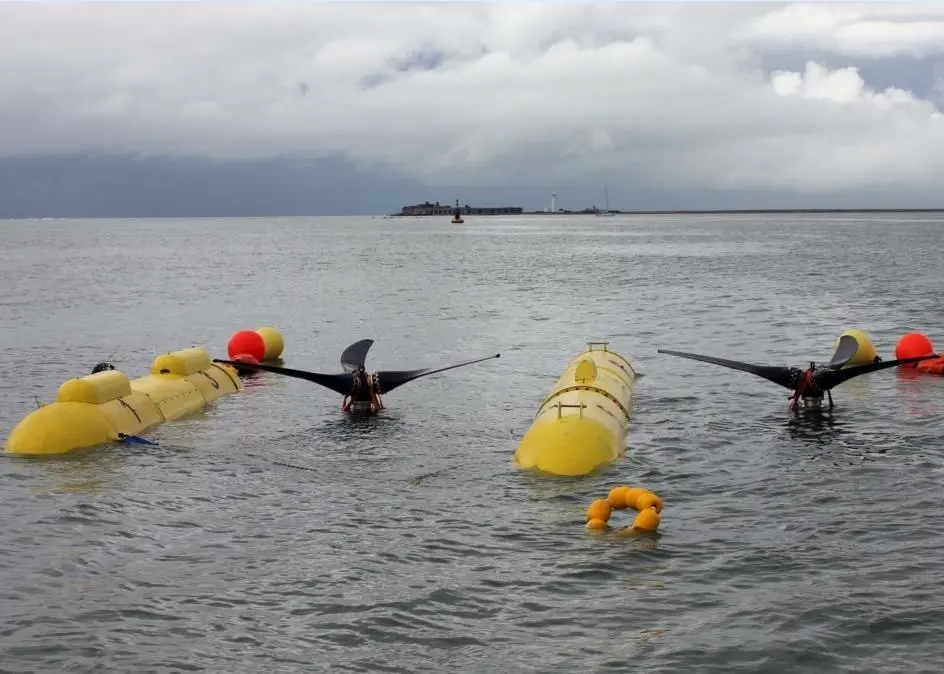
PLAT-O was launched from the company’s facility in Venture Quays, East Cowes, Isle of Wight and towed to the test site at Yarmouth. Once at the site PLAT-O was submerged to installation depth and a series of tests were run. PLAT-O was then successfully resurfaced and towed back to East Cowes, where it will be prepared for its next series of trials.
The marine operations were run using small vessels, demonstrating that a step change reduction in the cost of installing tidal energy devices can be achieved. The results of the sea trials provide increasing confidence in the potential for tidal streams to provide a commercially viable source of renewable energy.
Jason Hayman, Managing Director of SME, told Maritime Journal: “After this operation I am confident that PLAT-O provides the industry with a new approach which reduces the costs and risks associated with delivering tidal energy considerably. Over the next few months we will be ramping up the time that PLAT-O spends at site, and running a series of tests which will culminate in the installation of PLAT-O at a more aggressive tidal site and generating power to the grid.”
SME is in the process of delivering its first demonstration project, working with the leading marine propulsion supplier and tidal turbine manufacturer, Schottel. PLAT-O is a buoyant platform that is taut moored to the seabed using a bespoke anchoring solution that has also been developed by SME. It sits under the surface of the water and offers a number of other benefits including enhanced yield and survivability due to its position in the water column, which also ensures that surface vessels can pass safely overhead. Besides a surface marker buoy, the system is not visible on the surface.
SME’s team of fifteen is based in East Cowes on the Isle of Wight, an area well known for delivering innovation across the maritime sector. SME has been supported by investment from private investors, the Low Carbon Innovation Fund, the Angel Co Fund, and grant funding from the Department of Energy and Climate Change, Innovate UK, the Low Carbon KEEP Programme, the Solent Offshore Renewable Energy Consortium and Future Solent’s Green Growth Fund.
By Jake Frith
Related Articles
 OTHER NEWS
 OTHER NEWS
 FEATURES & VIDEOS