![MaritimeJournal[Seawork]](https://www.maritimejournal.com/wp-content/uploads/2026/09/MaritimeJournalSeawork.svg)

PODCAST: Charting offshore wind with Chartwell
After a year marked by political uncertainty, supply-chain strain and uneven global momentum, the UK offshore wind sector entered 2026 with a much-needed shot of confidence. Chartwell Marine’s Andy Page talks to Maritime Journal about where he sees the industry heading.
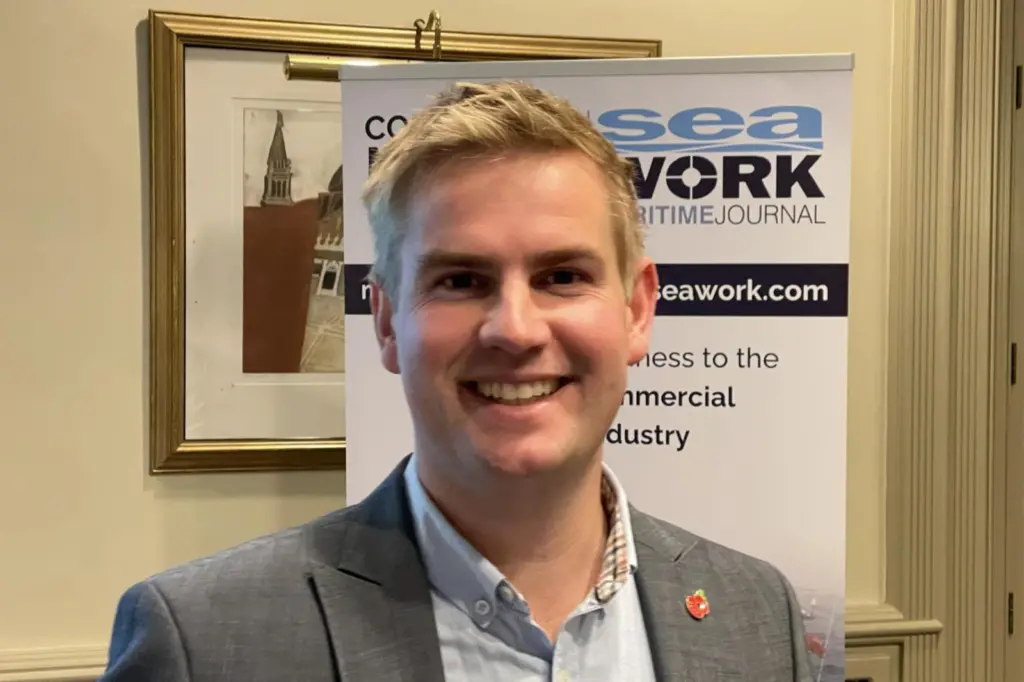
Record-breaking contract awards totalling 8.4GW at the start of the year have sent a clear signal to developers, vessel owners and shipyards alike that offshore wind remains central to the UK’s long-term energy strategy.
“Everyone’s been looking forward to this,” says Andy Page, managing director of Chartwell Marine. “We’ve had rounds where bidder participation dropped off, where the value proposition for developers was under pressure. So to see that level of investment come back into the UK market is really positive.”
It gives shipyards and vessel owners the certainty they need to invest, he says – whether that’s in new-build programmes, stock vessels, or skills and jobs across the UK supply chain.
Bumps in the road
Cancelled or delayed projects in Europe did last year cause concern that offshore wind might be losing momentum, but that’s normal, Page believes. Having spent more than 15 years in the offshore sector, he views such fluctuations as cyclical rather than existential.
“There have been political and economic uncertainties posed on the industry over the last 12 months in particular. But we go through these ups and downs and you ride them out: when one section’s down, often another is up.”
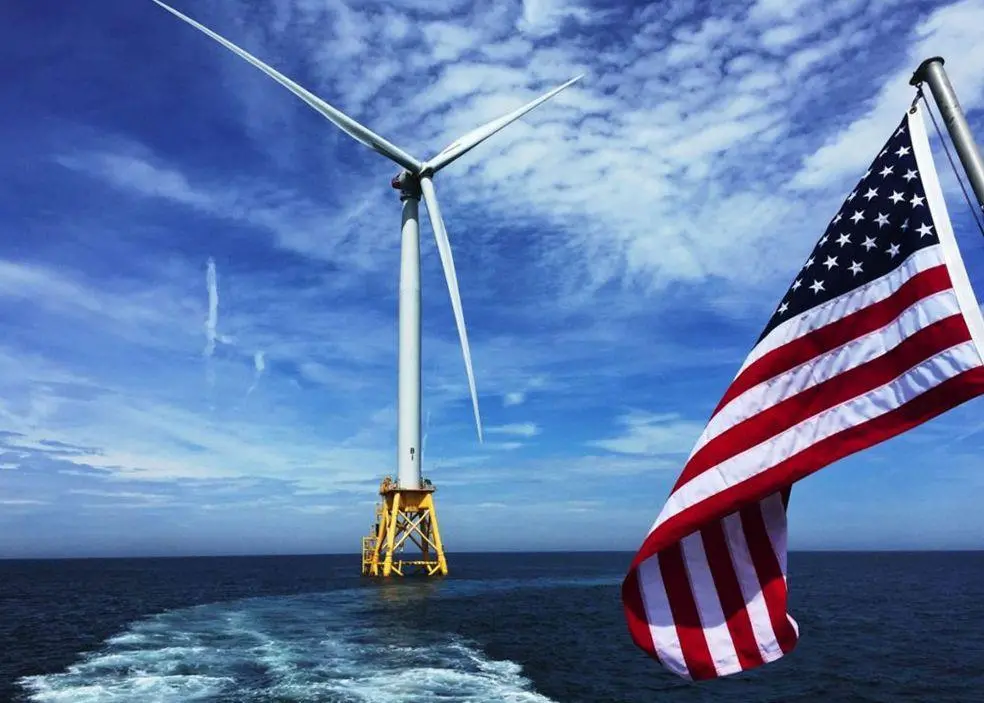
Few markets illustrate that volatility better than the United States.
Chartwell Marine delivered its first offshore wind crew transfer vessel (CTV) to the US in 2014, marking the country’s first purpose-built offshore wind farm boat. In the years that followed, six more vessels were delivered, and hopes were high that the US might one day mirror the scale of the North Sea fleet.
“We’ve got over 300 assets in the North Sea and there was a hope that it would be similar States side, but it was a slow momentum, and there were many political as well as technical challenges which which prevented it really scaling up.
“Then the new administration obviously declared quite clearly they’re not keen on it, don’t believe in it and think money could be best spent elsewhere. So from our perspective, we delivered our last offshore wind asset just before Christmas. That was for a joint venture between Crowley and Esvagt called Crest and that’ll be it in offshore wind, certainly for this administration and probably the next.”
But the story does not end there: offshore wind may have stalled, but US boat-building has not. Chartwell currently has two non-wind commercial vessels under construction in the US, with another two set to follow.
“There’s still a lot of boatbuilding to be done,” Page says. “The US still very much likes working with UK naval architects. It’s still a great market.”
Asia-Pacific momentum
While the US presses pause, Asia-Pacific continues to move forward. Chartwell has four vessels under construction in Singapore, alongside a recently delivered unit now operating in Taiwan. The Taiwanese market, Page says, has its own challenges, particularly as supply and demand rebalance after a period of rapid expansion.

But the longer-term outlook remains positive, with projects continuing to come online.
Beyond Taiwan, South Korea is a major near-term opportunity, while Japan is firmly on the horizon, he says.
Chartwell’s approach there has been deliberately measured. Rather than rushing to build, the company is working closely with Japanese shipbuilders through consultancy and technology-transfer support, helping them understand how offshore wind vessels are designed, built and operated.
“We’re in the country as a team three times a year, helping with understanding how you build that kind of asset in Japan, what technology transfer there is. Obviously we’ve got a huge amount of Japanese equipment such as Furuno Radar, Yanmar generators and engines. So there’s a lot of cross technology transfer. Our hope is that we’ve supported with a good level of consultancy, and hopefully we’ll be ready for construction as and when they are.”
Offshore wind lifecycle
As the offshore wind fleet matures, attention is also quietly beginning to turn to decommissioning, with some of the earliest projects approaching end of life, particularly along the UK’s east coast.
“There’ll be work for all types of workboats from CTVs to multipurpose vessels like powered barges and underwater survey craft,” says Page. “There’s plenty of work throughout the whole offshore wind lifecycle.”
For Chartwell Marine, offshore wind accounts for around 40% of revenue. Across the UK, Page estimates there are more than 10 offshore wind vessels currently in build, with values ranging from £2 million to up to £7 million.
“It means a lot to UK maritime,” he says. “The port services gain as a result, all the consultancy services, engineering services, blade repairs, vessel operation.
It certainly does mean a lot to UK maritime UK revenue and engineering talent coming through.
“My journey would have been entirely different if it weren’t for offshore wind. I graduated just after the recession and I was working for Oyster Yachts. If it wasn’t for this pokey boat yard on the Isle of Wight building offshore wind farm boats, there wasn’t actually much other work around at the time and it wasn’t something I expected when I studied naval architecture. But it’s great, a wonderful industry for a lot of people.”
Alternative fuels: realism over rhetoric
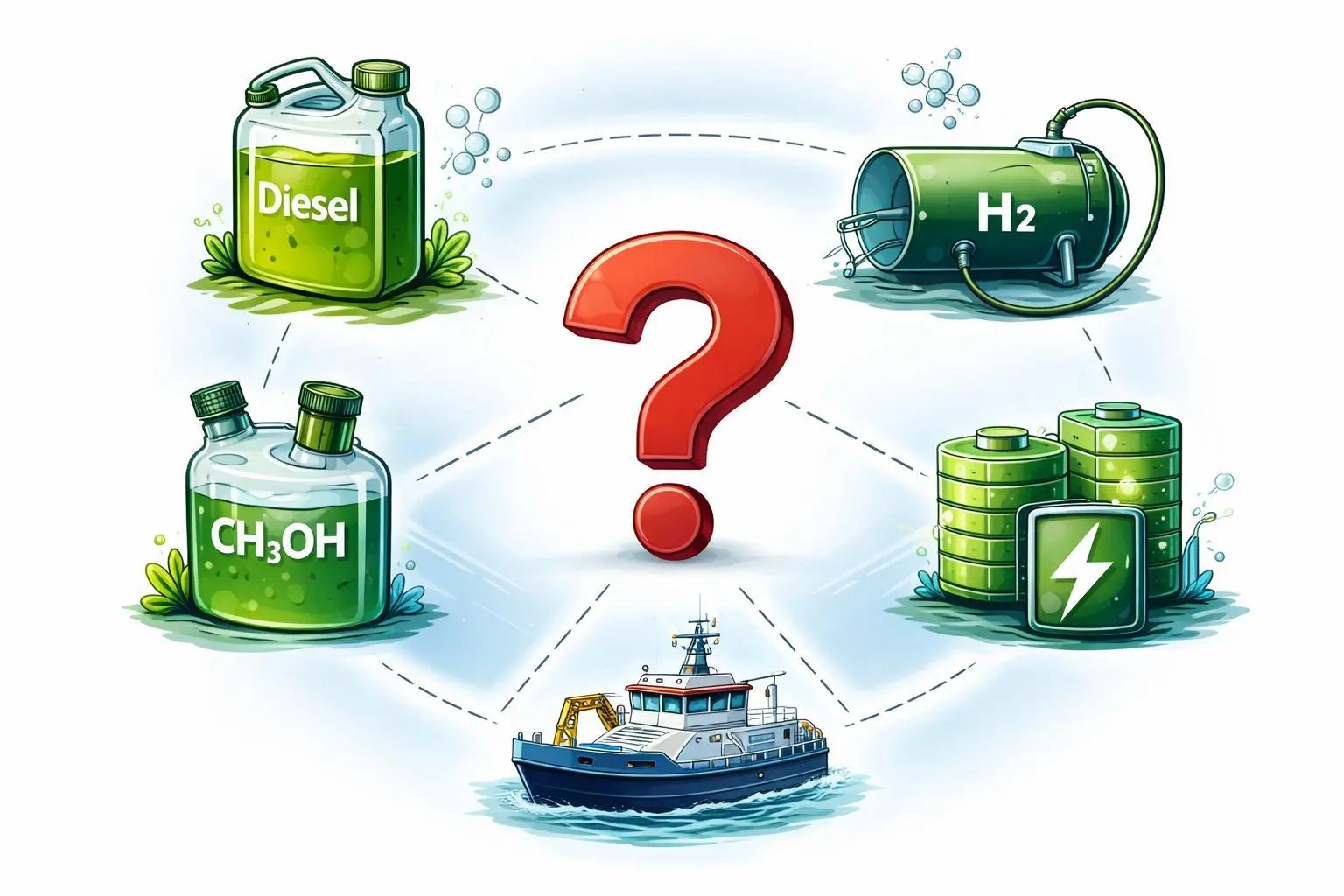
One balance that has to be made is between ambition and reality when it comes to alternative fuels.
After a burst of innovation several years ago, Page believes the sector has entered a more cautious, cost-focused phase. “Economics takes precedence,” he says. Reliability and value for money now dominate procurement decisions.
For most working vessels, compliance with IMO Tier III regulations and the use of hydrotreated vegetable oil (HVO) have become the norm.
Fully hybrid systems are only more common in ferries and research vessels, including university projects, where operational profiles better suit battery use.
That said, Chartwell is continuing to invest in innovation – often at its own expense.
One such initiative is the Methanol Pathfinder project, being developed with Archipelago Yachts. Housed in a compact container, the system combines a methanol reformer, hydrogen buffer tank, fuel cell and electric motor, to demonstrate how methanol could be used as a feedstock for low-pressure hydrogen generation onboard.
The aim is to explore safer, more practical pathways to alternative fuels without the storage challenges associated with compressed hydrogen.
Demonstration trials are scheduled for this spring.
Learning from what’s already afloat
Innovation, Page stresses, must be grounded in operational reality. Chartwell’s hybrid CTV HST Ella, delivered in 2021, is one case study.
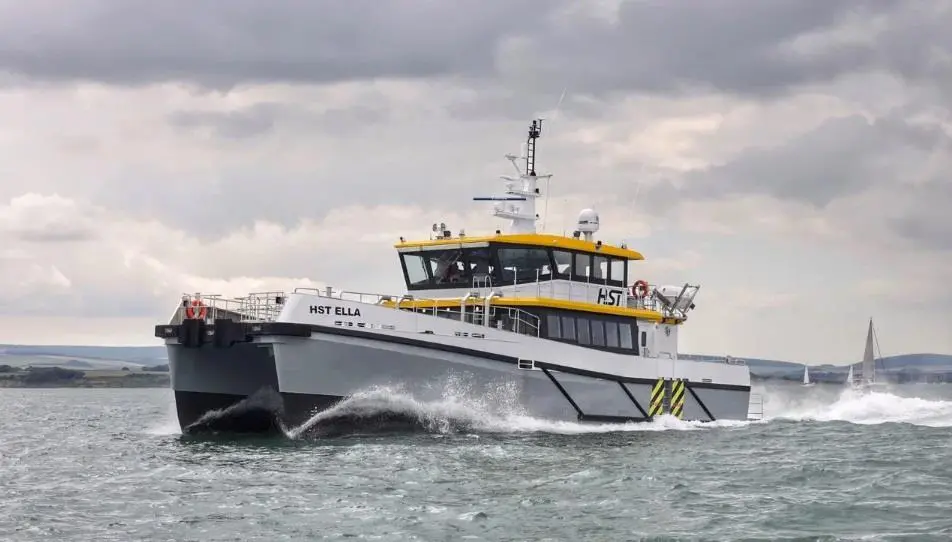
After nearly five years in service, its battery systems, inverters and electric motors have proved highly reliable, with engines logging more than 15,000 hours and performance remaining consistent, Page says.
“Insurers and financiers ideally want proven product,” he says. “We’ve got to keep innovating and testing and wherever there’s a customer that has the right project, we will work with them. But we still need to keep delivering the reliable products day to day for our ship owners.
Recent international decisions, including the IMO’s rejection of a global carbon tax for large vessels, have sparked debate about whether regulatory momentum is slowing. Page would have welcomed the tax, seeing it as a driver for innovation and a boost for UK technology developers. Still, he remains confident that the industry will adapt.
“The sector always finds a way,” he says. Whether through wind-assisted propulsion, alternative fuels or incremental efficiency gains, innovation will continue, particularly when it has to because of regulation.
“Reliability is everything. If a boat breaks down, we’re probably causing more of a negative impact on our sustainability programme because if it’s a fantastic boat that doesn’t burn or use much energy, if it can’t support the offshore renewable energy infrastructure that it’s been built for it’s pointless.
“We need to keep the wind or tidal energy facility going. If we can do that in a more efficient way or use less energy, wonderful. But reliability has to come first.”
Related Articles
 OTHER NEWS
 FEATURES & VIDEOS
 MARINE CIVILS