![MaritimeJournal[Seawork]](https://www.maritimejournal.com/wp-content/uploads/2026/09/MaritimeJournalSeawork.svg)





Renewables and red-tape
“Usually, the big vision is there but the technology is lagging, but here it is the paperwork,” Nick Medic of RenewableUK recently told the UKs House of Lords Select Committee on EU Regional Marine Cooperation.
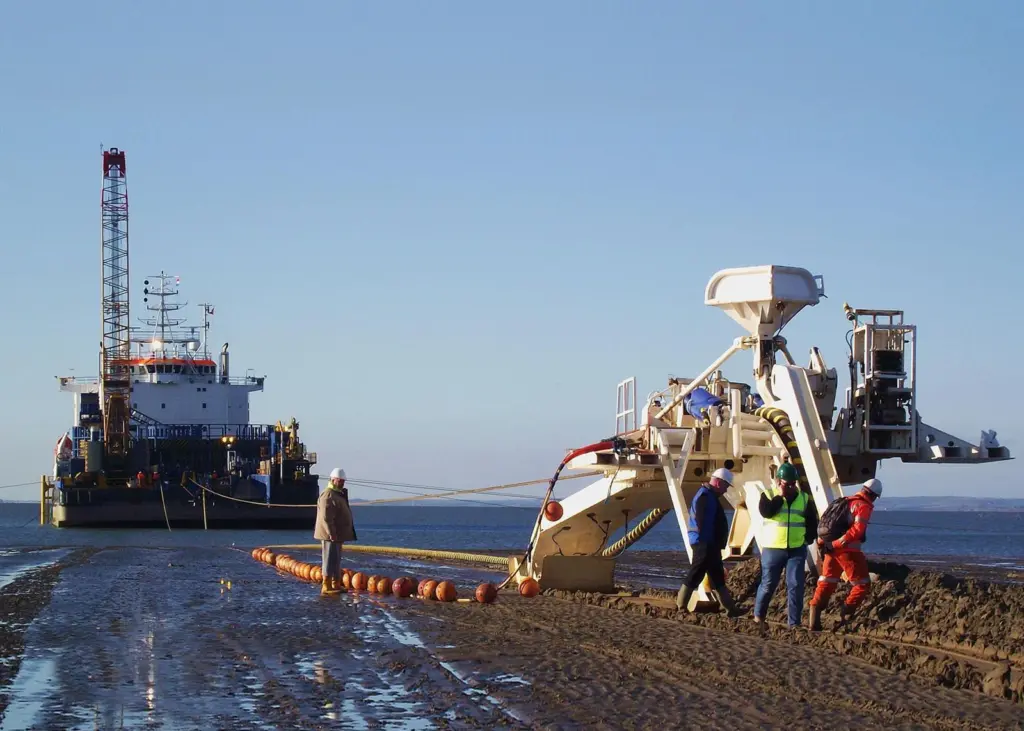
He was talking about the potential for a North Sea supergrid to connect up windfarm arrays, one of the points highlighted in these evidence-collecting sessions that is tasked with investigating how gain more from the UK’s ‘blue economy’. Mr Medic explained that although Europe has single point to point connections, it doesn’t make sense to route the electricity back to the home country if there’s export opportunities. Further, exporting energy would provide a number of benefits including providing a self-levelling playing field across the linked countries – and better prices for the UK market.
Jacopo Moccia of the European Wind Energy Association explained: “When electricity is expensive on the continent, the electricity would flow that way and when it is expensive in the UK it would flow towards the UK.” Further, there should be a natural ‘phasing’ of demand due to different time zones.
Mr Medic added a supergrid has “such a wide socioeconomic benefits to all the countries involved – in that it reduces the cost of power and it speeds up decarbonisation – that there is no reason that every country around the Atlantic arc, from Norway down to Portugal, should not back it”.
Unfortunately, the main stumbling block “is the Ofgems of this world” says Mr Moccia, who don’t have a mandate to look outside their own country for efficiencies. “If we solve that, the technology and the political push will follow.”
Other areas could also deliver more: Marine Spatial Planning for example is central to renewable development but as Mr Medic explained, it could also help ease the path for developers who are faced with heavy front-loaded and risky costs while still having “no certainty whatever that [they] will actually win a contract”. He added: “In those circumstances, perhaps a spatial planning model could be the answer, where you say, ‘here is a site and that site already has a lot of the consenting and environmental impact assessments done’.”
This pre-approval concept may also allow for ‘cable corridors’ similar to Germany’s, Mark Pearce of the National Grid explained; cabling inside these areas benefit from a “streamlined process”, while routing elsewhere would mean demonstrating both need and environmental impact.
Still, faced with all the legislative demands, becoming “formalist and prescriptive” is also a big risk said Mr Medic, especially as innovation could provide relief. For example monopile driving was identified as a potential hazard to marine life but supported by a number of initiatives, technologies such as vibro-piling have been developed which, he explained “could actually drive a monopile without any noise whatever”.
By Stevie Knight
Related Articles
 OTHER NEWS
 OTHER NEWS
 FEATURES & VIDEOS