![MaritimeJournal[Seawork]](https://www.maritimejournal.com/wp-content/uploads/2026/09/MaritimeJournalSeawork.svg)





Safe transfer solutions for offshore wind farms
Offshore wind farms constantly require ongoing maintenance, for routine and non-routine purposes, such as, equipment failures.
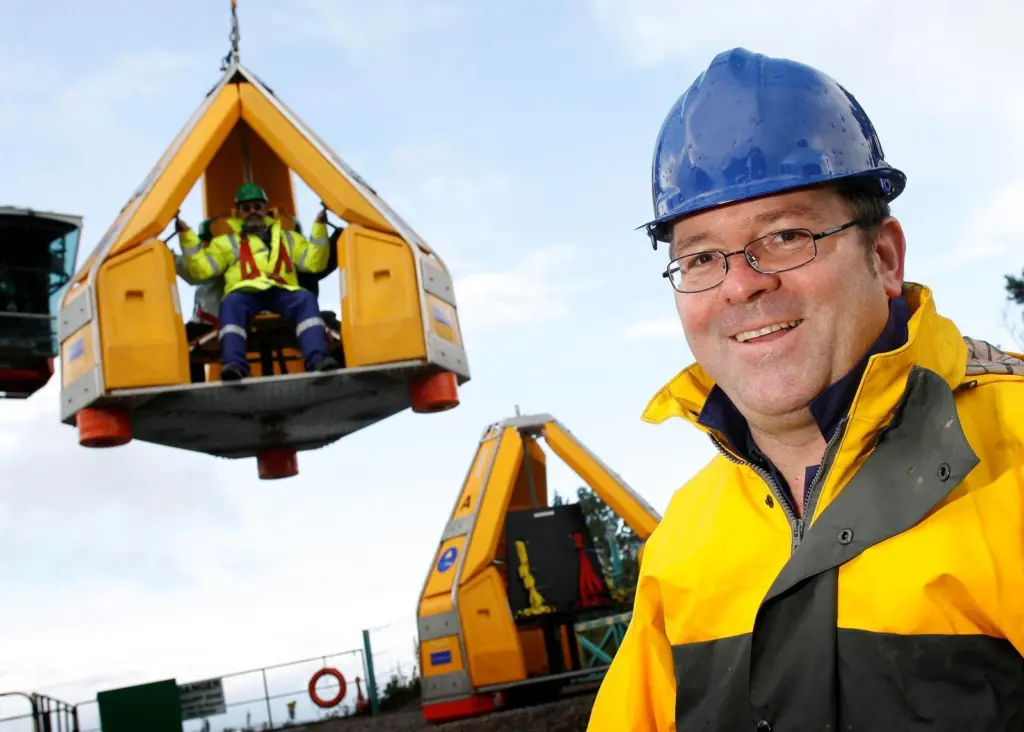
As the industry matures, these requirements become more evident and predictable. Rightly, offshore operators realise that ensuring safe, reliable, weather capable access is likely to be a key pillar in ensuring the viability of offshore wind farms, writes Philip Strong, CEO of Reflex Marine.
As wind developments move further offshore they are likely to operate hub and spoke logistics. The main current choices for personnel transfer in the offshore wind industry are ladder access, bridge systems, crane or winch operated systems. At present, ladder access is used predominantly in the operating phase of the projects and crane transfers during the construction phase.
Reflex Marine is a global leader in safe marine transfer solutions and performs millions of crane-based transfers every year in the global oil and gas industry through its FROG and TORO personnel transfer devices. It also helps operators to assess risk, to plan access strategies, to train personnel and to evaluate their operations.
The company is developing a range of solutions for wind turbine access .The Rubicon, a step-over access system, compensates for vessel heave and other motions, providing a safe environment, minimising the risk of falls and injury during the critical step-over. The TranSpar guided access capsule uses buoyancy to synchronise with vessel motions and then is docked with the bow of the vessel for transfer. The SeaSpider winched access system is a further development of an already established concept, to winch a transfer capsule off the deck. A previous key concern for this method was the need for costly, high maintenance winching systems on each wind turbine. Reflex Marine has overcome this issue by designing a deployable winch system allowing the key plant to be transported with the vessel. Finally, its Single Person Access (SPA) concept also uses winch based access.
The choice of system will depend on prevalent weather, the operational scenarios and operator preference. These are bespoke systems, but very adaptable and modular in nature, easily being redeployed between vessel and structures, with minimal set-up time at each location and fast and efficient transfers. The TranSpar and SeaSpider in particular, are designed to be used in harsh weather, operating safely in significant wave heights of greater than 3m.
Winch (or crane) based access is very well established in the offshore petroleum section and an estimated 5 to 10 million passenger transfers are performed each year. They offer a very safe alternative to helicopter transfers and with the introduction of modern equipment and operational controls, many operators around the world consider this to be the lowest risk method for accessing offshore installations. Such operations are performed in a range of climates including many harsh weather environments.
Major advances in technology and culture around marine transfer in the past decade, have led to a growing confidence in this area and impressive safety track records have been built. Operators are also becoming increasingly diligent in the evaluation of risk and the acquisition of operating data, which has led to very favourable comparisons between helicopter operations and marine transfer methods. At a time when the offshore aviation sector has been through a difficult period, and faces major challenges in rebuilding confidence, improvements in the safety and capability of marine transfer solutions have never seemed more important.
Related Articles
 OTHER NEWS
 FEATURES & VIDEOS
 MARINE CIVILS