![MaritimeJournal[Seawork]](https://www.maritimejournal.com/wp-content/uploads/2026/09/MaritimeJournalSeawork.svg)





Decommissioning: Bottleneck or opportunity?
Decommissioning could be the UK’s next infrastructure crunch – logistics firms hold the key to success, says Nigel Kent, Head of Group Strategic Projects (Project Cargo) within the Peel Ports Group.

One of the main challenges of the UK’s energy transition, often overlooked in the conversation around the offshore sector, is the question of tackling decommissioning.
While conversations seem largely focused on how best to store, distribute and regulate the rapidly growing capacity of renewable energy, close attention must also be paid to how we break down old infrastructure to make way for the new.
OEUK’s 2025 Decommissioning Report lays out clearly that the UK is entering a new phase of offshore activity: 2024 saw more than £2bn (€2.3 billion) spent on decommissioning across the UK Continental Shelf. What’s more, that figure is expected to reach an annual average of almost £3bn throughout the decade.
Recognising the scale of the challenge
With wells accounting for almost half of expenditure, and tens of thousands of tonnes of subsea infrastructure due to come onshore by 2034, these trends point to a decommissioning boom that will test far more than offshore engineering capability.
What’s more, the first generation of offshore wind farms are also approaching their end-of-life stage, adding a cross-sector element to the mix. Significantly, these findings present a not-so-distant issue for ports, but rather, a live industrial challenge.
Decommissioned assets are large, heavy and irregular, which, in the offshore context of deep seabeds, are advantageous traits. Once platforms, jacket, cables and other equipment are removed though, the proper transportation and handling must support their arrival onshore. They require ports with the adequate quayside strength, water depth, heavy-lift capability, storage space – the list goes on.
Crucially, it also requires a skilled workforce capable of managing complex decommissioning operations. Breaking down offshore infrastructure is, fundamentally, a logistics challenge. Moving oversized and out of gauge cargo from A to B requires specialist expertise and advanced logistics networks capable of managing high-value cargo under time pressure.
Logistics networks will be the missing link
This is where cargo expertise becomes increasingly important, and innovative logistics networks can provide a solution to the large-scale challenges.
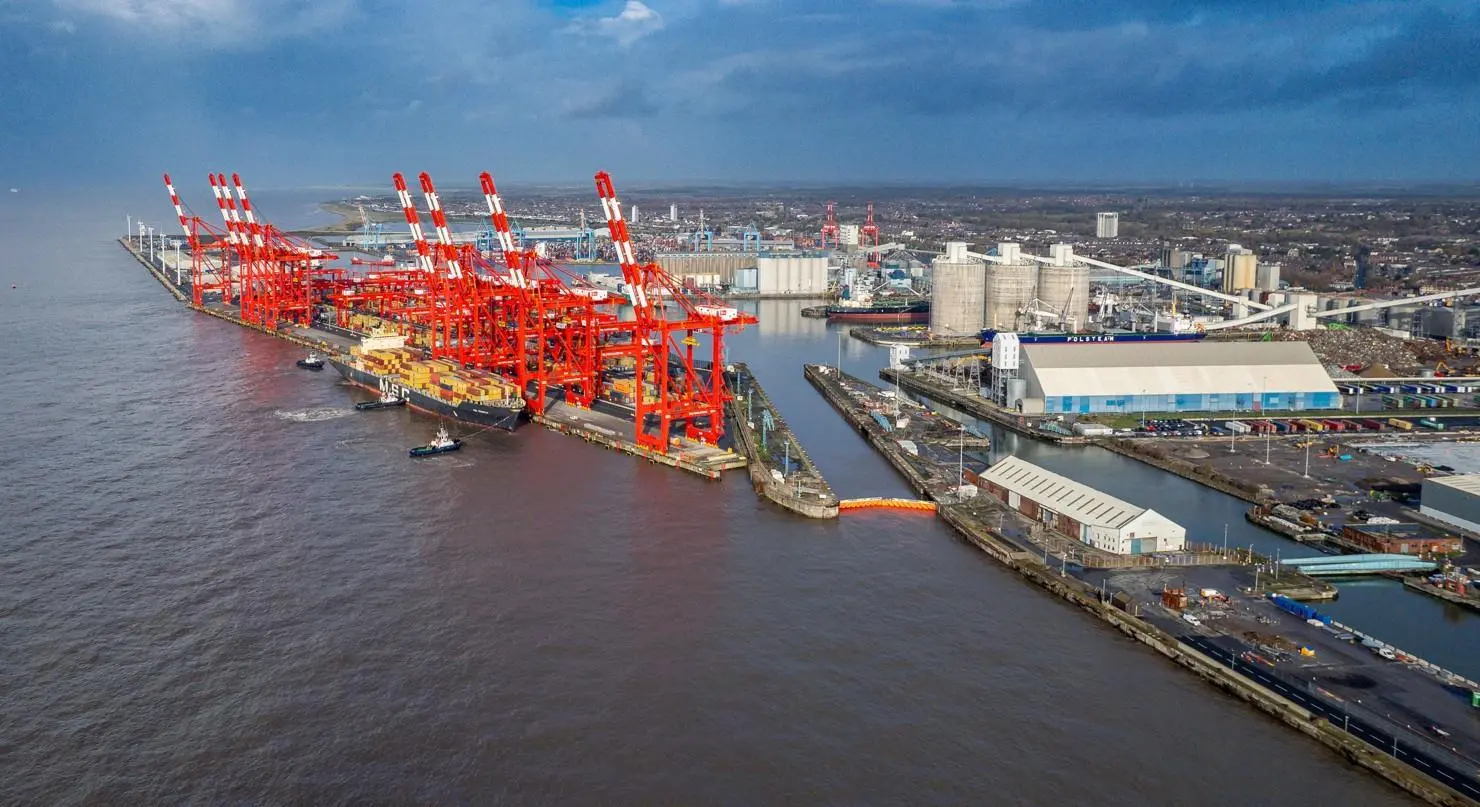
Across the industry, ports are already adapting to support larger and more technically demanding cargoes, making substantial investments into infrastructure and specialist handling capabilities.
For example, as a group, we’ve invested millions into infrastructure across our port estates to significantly enhance our capabilities. Our Port of East Anglia upgrades have been essential to this, offering improved deep-water capabilities, heavy-lift capacity and large laydown areas to support even the most complex cargo requirements.
Cross-sector collaboration is essential
On top of the proper infrastructure, the stringent coordination between operators, contractors, regulators and recyclers must be considered. Without this carefully orchestrated sequencing, required on a macro scale, the UK risks endangering its own policy framework and falling into a capacity crunch, leading to higher costs and lost value.
Conversely, a properly organised handling of decommissioned assets offers several opportunities, supporting skilled jobs, attracting investment in coastal communities and helping retain value within the UK supply chain. Much of the incoming materials can also be reused or recycled, boosting the circular economy.
Ports will be central to ensuring these opportunities are captured. They provide the bridge between offshore activity and onshore processing – but the expectation cannot be on them to invest ahead of demand without a clear understanding of project pipelines.
Meanwhile, the added complexity of early offshore wind farms reaching their end-of-life simultaneously with the retirement of oil and gas platforms will produce competition for vessels, skills and port capacity, especially the use of port land banks.
This unprecedented scale in the next stage of decommissioning will place new demands on industry. Early and focused collaboration will be essential, meaning operators, ports and regulators alike will need to plan together from the outset.
Planning for the full lifecycle of energy assets
The UK’s focus thus far on building the next generation of offshore energy infrastructure has set the country on the right course, but success in the next stages must equally account for our end-of-life assets.
Decommissioning cannot be an afterthought, ignored until assets reach the end of their lifecycles. Instead, it must be considered right from the planning stage, before a single foundation is laid or a monopile driven into the seabed.
Because when that early engagement happens, decommissioning becomes a source of growth and resilience for the UK. Where is does not, ports risk becoming the bottleneck that holds project delivery back, and that’s exactly what the industry must work together to avoid.