![MaritimeJournal[Seawork]](https://www.maritimejournal.com/wp-content/uploads/2026/09/MaritimeJournalSeawork.svg)



Next-generation ships need next-generation talent
For decades, centuries even, the UK has held an enviable reputation for its marine engineering capability – whether that’s building grand ocean liners or designing naval ships.

It is a proud heritage that continues today and can be seen in the way marine engineers are adapting to meet new challenges such as the United Nations Sustainable Development Goals (SDGs) to accelerate change in the sector.
And while it’s true that sustainability is a key focus for commercial marine, those working in naval ship design are now starting to incorporate sustainable technology, alternative fuel solutions and green design practices into their thinking as well – with the goal of minimising the impact of naval ships on the environment.
But to achieve maritime 2050 sustainability targets, it’s going to take a whole sector approach – and a key enabler of this will be investing in the next generation of engineering talent, giving them the space to learn, grow, ideate, challenge and innovate – whether for commercial or naval ships.
The talent/innovation quotient
Forward-thinking marine programmes are taking an incubator approach to innovation and developing marine talent. A good example of this is Expleo’s Vision 202X design challenge – a project that takes early-career engineers and gives them the opportunity to complete an end-to-end ship design process working through concept to design and naval architecture to systems engineering. And to keep things flexible, the team use a design spiral methodology to maximise exposure to the complexity of ship design principles.
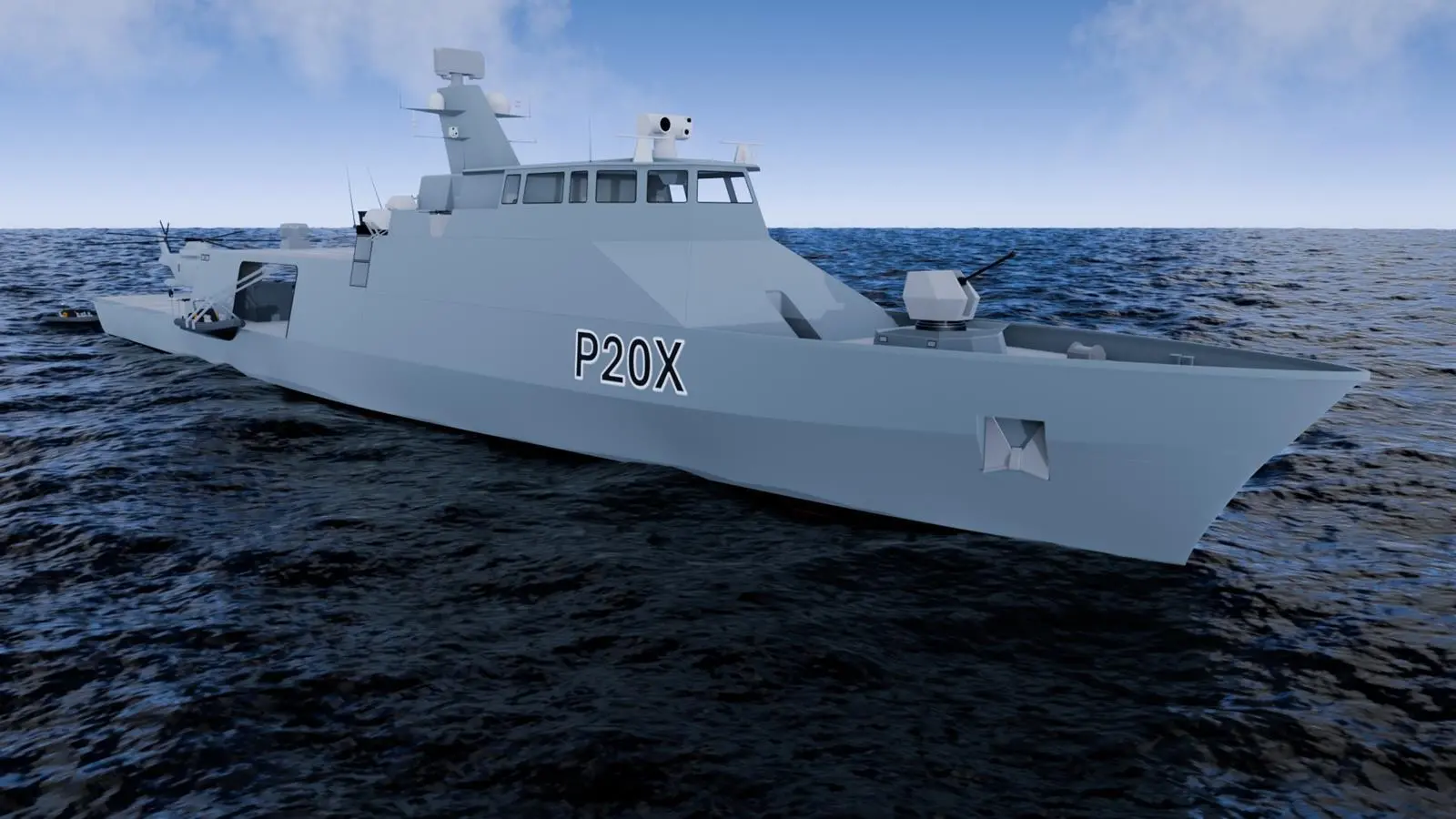
This challenge required the team to design an offshore patrol vessel (OPV), a ship that is most often associated with coastal defence scenarios but has an adjacent application in commercial contexts by, for example, offshore renewable energy operators.
By choosing an OPV, the team opened opportunities to identify synergies between naval and commercial design thinking, exploring technology that is more commonplace in the commercial market, like energy-efficient propulsion, electrification and CO2 reduction.
The resulting outcomes can be applied in both sectors, allowing experimentation with architecture and system integration to help unleash cross-fertilisation and learning without constraint.
Taking cues from commercial
The ambition to decarbonise the maritime industry is most closely aligned to the commercial sector, where regulatory pressure from the International Maritime Organisation (IMO) sees well-established emissions targets guiding development across the sector.
The IMO’s goal of reaching Net Zero emissions by 2050 means commercial operators are looking at fuel diversification and emission reduction technologies along with circular waste management systems.
Although legislation is not currently driving decarbonisation in naval, changes in the commercial sector are beginning to influence ship design – not least because of the efficiency and cost pay-offs that green technology offers. In addition, it’s becoming increasingly apparent that the next generation of engineers want to be part of the industry’s collective push to decarbonise the sector, and it was with this in mind that Vision 202X also considered environmental constraints and opportunities as part of the design process.
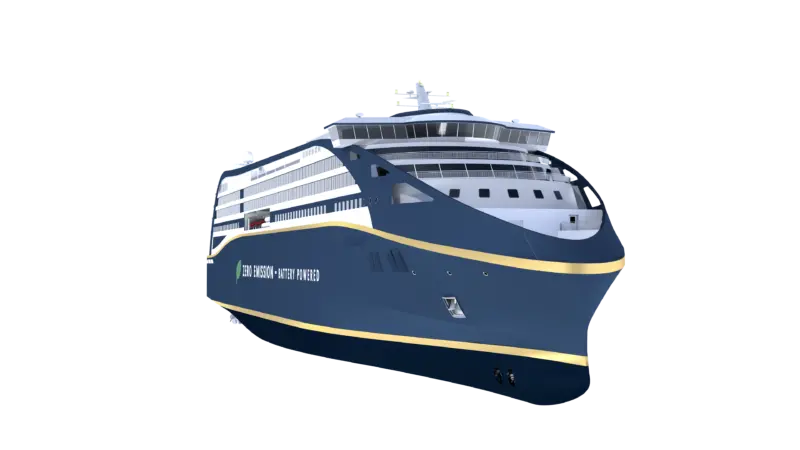
For example, the team spent time exploring various efficient battery technologies and overcoming risks associated with using such alternative power sources on-board naval vessels – due to the effect on the ship’s weight and highly complex safety considerations. The Vision 202X engineers were able to define a solution that proposed replacing ballast with batteries, while ensuring they were safely and accessibly integrated into the ship’s design.
The engineers also scoped the propulsion and power generation system to deliver an all-electric zero-emission capability, enabling operational flexibility in environmentally sensitive regions without compromising normal operating performance.
Flexible platforms it for the future
By starting with a modular approach to the platform, engineers created a defence ship concept that could be adapted for humanitarian aid, fishery protection, or as a service operation vessel (SOV).
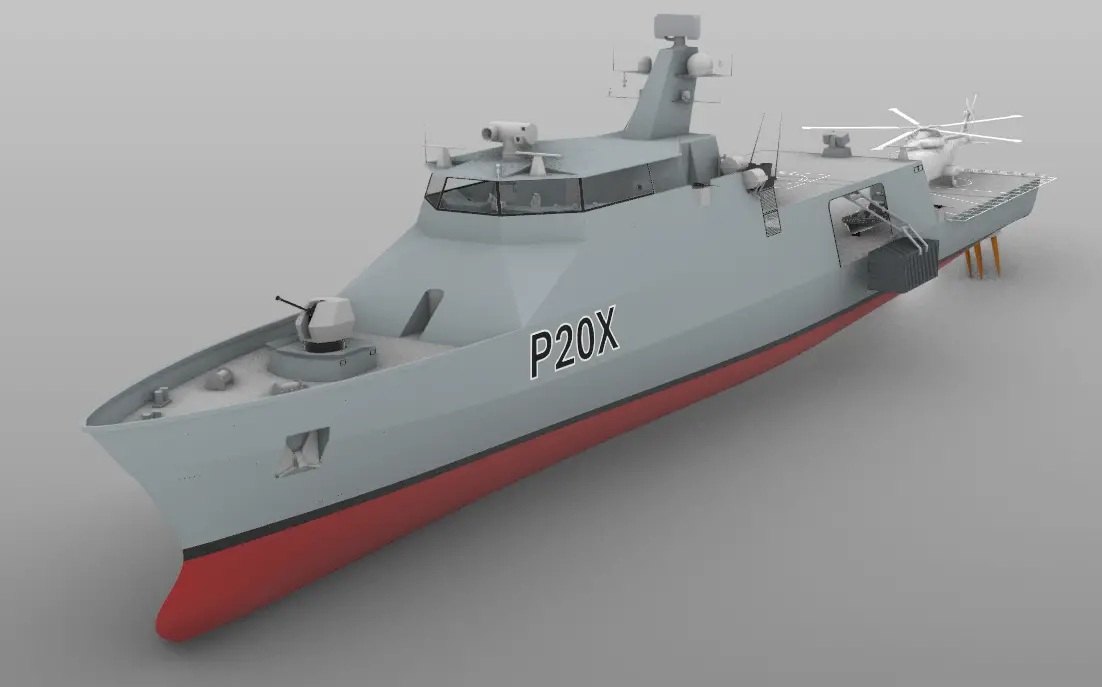
They also worked to align with commercial classification standards to ensure the ship would be viable across sectors.
The design spiral methodology made intelligent trade-offs visible, as engineers could map out interdependencies to assess how changes in one area impacted others. This method is applicable to both commercial and naval and allows for agile iterations. In addition, Vision 202X factored in commercial construction timelines which often outpace naval build cycles. While it can take 5-10 years from first steel cut to launch in naval due to scale, complexity and security, it can take large commercial shipbuilders less than a year.
Ultimately, the project was about giving engineers the opportunity to build skills and exercise the creative thinking needed to drive a step-change in ship design.
It is through projects like Vision 202X that we can start to see how sustainability, system complexity and cost-efficiency will be balanced by the next generation of marine engineering talent and with much to be shared between the defence and commercial sectors, there’s never been a more innovative or exciting time to be working within maritime.