Cyber attack, soaring costs and net zero: ports seek answers
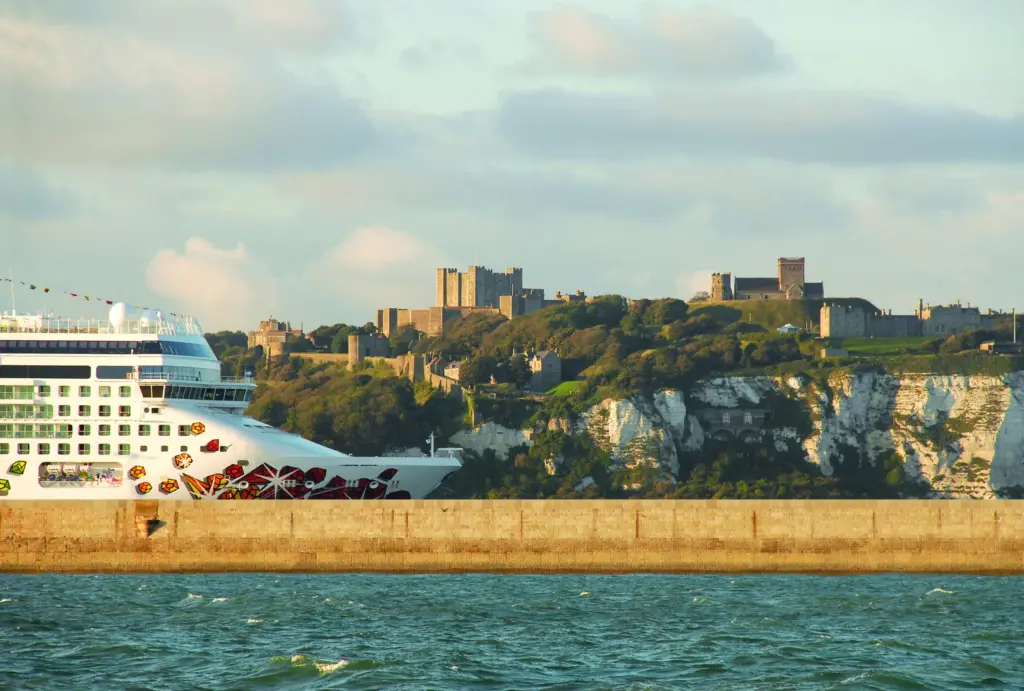
UK ports face mounting pressure to invest in shore power and cleaner energy while confronting cyber threats that could bring operations to a standstill, delegates heard at the British Ports Association’s annual conference.
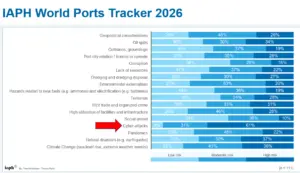
The event at Dover’s Cruise Terminal 1 last week highlighted the growing tension between demands for maritime decarbonisation and the cost of providing new infrastructure, particularly for smaller ports. Cyber security was another major concern, with 61% of port operators surveyed by the International Association of Ports and Harbours rating it an ‘extremely high risk’.
Speakers called for more consistent regulation, more help from government investment and stronger defences against attacks.
Net zero and shore power
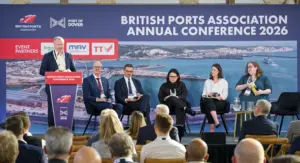
While ports themselves are not mandated (yet) to lower carbon emissions, because the vessels that use them increasingly are, if the ports want their business, they have to provide the necessary low-emissions fuels or power.
Rhona Macdonald, senior sustainability advisor with the BPA and IAPH, said while being largely supportive of the direction, she was concerned about competitiveness.
“This is a tax on shipping,” she said. “It feels as though shipping is being penalised despite being the most efficient way to move freight. Coastal shipping is hugely important yet there is a lack of incentive – and we are seeing that the EU is seeking to increase penalties.”
Meg Turner, Environment & Sustainability manager at the conference host port, the Port of Dover, said any shore power carbon policy would not be commercially viable.
“If customers do something it affects us massively,” she said.
“Ports are going to have to be geared up to handle a multitude of fuel options,” said Jonathan Campbell, chief financial officer at P&O Ferries, who told delegates the company was aiming at net-zero operations by 2050. Portsmouth International Port pic
“We are reducing emissions in every way we can – ferries that were built to be as fuel efficient as possible will be required across the whole industry, and ports have to be prepared or you will become limited.
“Ports need a latticework of regulations, a consistent framework.”
Customers have to be prioritised. This will create huge challenges for smaller ports who have neither the cash nor the physical space to offer what they demand.
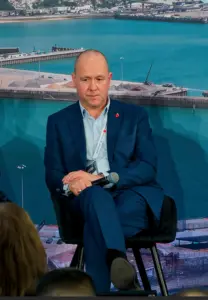
“If they want it we have to provide it,” said Mike Sellers, Port director at Portsmouth International Port, “At Portsmouth, anything we can do to improve the environment or air quality, we do it.”
This has certainly helped – the port now provides shore power to hybrid Brittany Ferries every day and cruise ships since July.
“A month ago three ships plugged in at the same time,” he said. “So far 200 vessels have plugged in.”
Challenging but not impossible
“We generate 8GWh, which is 8% of our power,” said Simon Broster, head of Development Group Property & Utilities with Peel Ports. “The Port of Liverpool has five turbines and there are plans for four more. We have solar PV. There are challenges, but it’s not impossible.
“It’s not a quick fix because of town planning requirements around buildings on the port estate and the capex of building them, plus cleaning the solar panels. But the time spent will pay dividends later on.”
The UK has the highest energy costs in Europe, which is of course a major stumbling block. Sellers called on the government to classify shore power as a marine fuel, exempting it from VAT
“We are really struggling as a country with electricity costs compared to our competition,” said Mark Simmonds, director of Policy & External Affairs with BPA. “It would be great if the government could look at this again.”
There are downsides to electrification: David Pownall, vice president – Power Systems at Schneider Electric admitted that it was far easier to disrupt port systems that had been electrified.
“This is one of the most critical topics,” he said.
Cyber security
“Almost every year, a port goes down,” said Thomas Dryden, partner and head of Cyber Europe – Financial Lines, McGill and Partners. Usually ransomware, where criminals demand payment to unblock systems they have attacked, is let in by human error.
Dryden cited the major cyberattack on Jaguar Land Rover in September 2025, which caused severe disruption to the company’s manufacturing and retail operations. JLR had to shut down its IT systems to limit the impact.
“Nine out of ten is human related, poor passwords, vendors with back routes into systems, a convergence between systems,” said Colin Lavelle, a partner at law firm Hill Dickinson.
In the results of a survey of port operators asked what they believed to be the greatest risk facing them today, cyber security was thought by 61% of them to be ‘extremely high risk’, said Chloe Rowland, senior manager for Data Collaboration, Risk & Resilience at the International Association of Ports and Harbours (IAPH).
Could AI, despite the fears surrounding this rapidly emerging technology, be one of the defences against cyber attack?
“Is it our friend?” asked Mark Simmonds, director of Policy & External Affairs, BPA.
“Yes,” said Chloe Rowland. “Focus on the positives that the technology is bringing. Strengthen threat detection analysis. Cyber security shouldn’t be siloed. Preparations need to be an over-arching consideration, everyone within the port operation.”
There was some good news – insuring a port against such attacks is not an obstacle: Dryden said that competition among insurers was keeping prices down.
“Insurance is buyer friendly, premiums are down from three years ago driven by an over supply of capacity,” he said. “There’s an opportunity to get bespoke coverage but you need to know what your key risks are.
“Are you segregating your networks? Controlling access properly? ID controls? Processing what would happen in an incident?”
If the UK government is serious about its net zero ambitions it will have to take industry with it somehow, and ports for one are going to need incentives to deliver their end of the bargain – and with the digital revolution, deliver it safely.