![MaritimeJournal[Seawork]](https://www.maritimejournal.com/wp-content/uploads/2026/09/MaritimeJournalSeawork.svg)


Historic Tees dockyard at full capacity for first time since 1980s
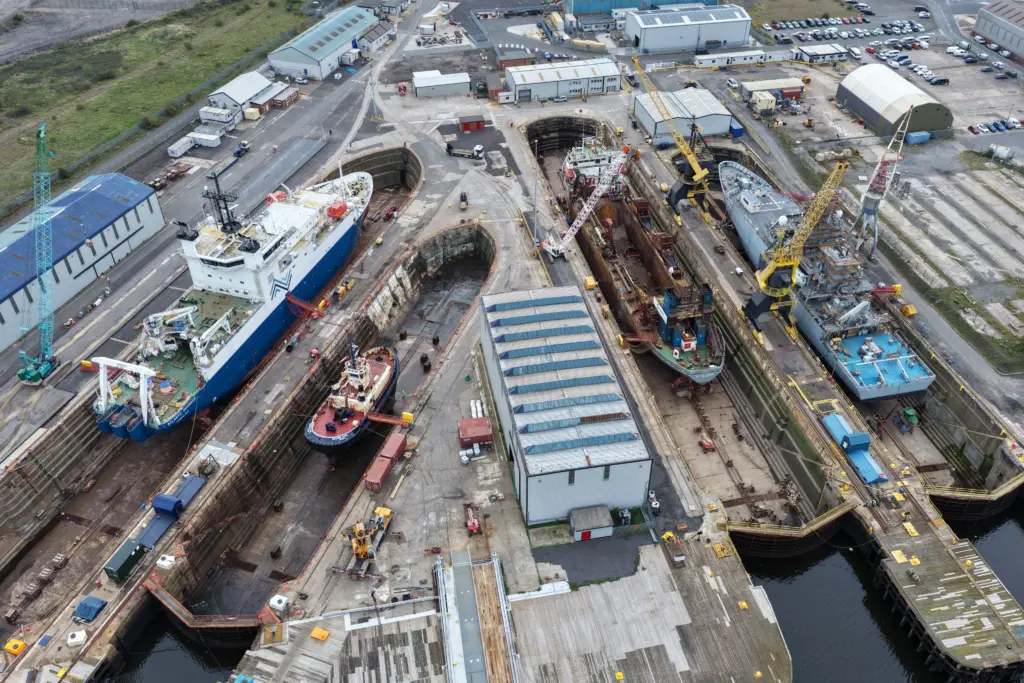
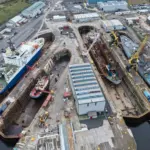
All four dry docks at the former Smith’s Dockyard on Teesside were full this week under one operator for the first time since the 1980s after a major spend from UK Docks Marine Services.
It’s a big boost for the ship repair and marine engineering sector, which has long roots in the region but has been falling down in recent years.
Now UK Docks Marine Services has made a multi-million-pound investment to restore and expand the historic site to create a modern ship repair and maintenance facility serving commercial and defence customers across the UK and the world.
The milestone brings the former Smith’s yard under a single operator for the first time since the famous name closed in 1987.
This week’s line-up included the multi-purpose offshore vessel Atlantic Guardian, Tees tug Svitzer Alma, suction dredger City of London and former Royal Navy survey ship HMS Enterprise. A survey vessel and a patrol vessel were also undergoing afloat repairs at the yard’s East and West Quays.
For UK Docks, the full house is proof that investment in ship repair infrastructure can unlock new capacity and business opportunities in a sector vital to offshore energy, port operations and naval support.
“I know how big a name Smith’s Dockyard was for a lot of people in Middlesbrough – different generations worked there across almost the whole of the 20th century – and I hope they’re delighted to see the site thriving again under one owner,” said founder and executive chairman Harry Wilson, MBE.
“We’ve always believed in the UK’s marine industry, and while others were closing down yards over the years, we were seeking to reopen them and develop them further.”
From derelict docks to expanded capacity
UK Docks first moved into Teesside in 2014, leasing two dry docks that had to be cleared of decades of accumulated waste before they could be brought back into service. In 2025, the company agreed a long-term lease with PD Ports on the adjacent shipyard, adding two more dry docks, repair quays, engineering and fabrication workshops and extensive laydown areas.
The expansion trebled the company’s Teesside footprint from five acres to 16.5 acres and included refurbishment of workshops, machinery and operating equipment, as well as investment in craneage, quay space and the overall yard layout.
“It’s great that we’ve had the shipyard fully operational across four dry docks this week, but we want that to become the norm, rather than the exception,” said managing director Jonathan Wilson.
“It’s one thing to restore and refurbish a shipyard, but it’s another to make sure it has full order books and sufficient work for the workforce and the contractors and sub-contractors in the supply chain who also benefit from the business we generate.”
Scope of works
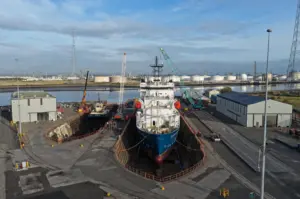
The four docks range from 120m to 175m in length, giving the company more flexibility to accommodate a broader mix of vessels. The expanded site also provides an additional 200m of quay space and lay-by berths, supporting afloat repairs alongside dry-docking work.
“We want to get the message out there, far and wide, that we have four dry docks, heavy lift quay space and highly skilled staff, fully operational for defence or commercial ships from the UK and international clients,” said Wilson.
The company expects the yard’s workload to be split broadly equally between commercial and defence projects. Royal Navy work has become an important part of its business, with vessels visiting Teesside in recent years including HMS Protector, HMS Echo, HMS Forth and the former HMS Enterprise. The expanded facilities are expected to strengthen its position when tendering for future defence contracts, while supporting demand from the North Sea’s offshore industries.
UK Docks, which is exhibiting at www.Seawork.com in June 2027, was founded by the Wilson family in South Shields in 1992 and has since expanded to ship repair and boatyard operations at Cremyll and Gosport, as well as Teesside.
The next challenge is to turn this week’s milestone into sustained industrial activity.
“We see a lot of potential and possibilities in the site and have a five-year plan to maximise it as an asset,” said Wilson. “We are a service centre supporting that huge and growing industry all across the North Sea and beyond, hopefully bringing business to the yard for many years to come.
“Having four docks will allow us to look for new opportunities and expand on our existing services and facilities. It will make our operation more efficient, increase our workforce and enable us to increase our market.”