![MaritimeJournal[Seawork]](https://www.maritimejournal.com/wp-content/uploads/2026/09/MaritimeJournalSeawork.svg)


Ultrasound fire foam greenlighted
Ultrasound technology is being used to quantify the exact water/foam ratio for onboard firefighting in what is thought to be the first time.
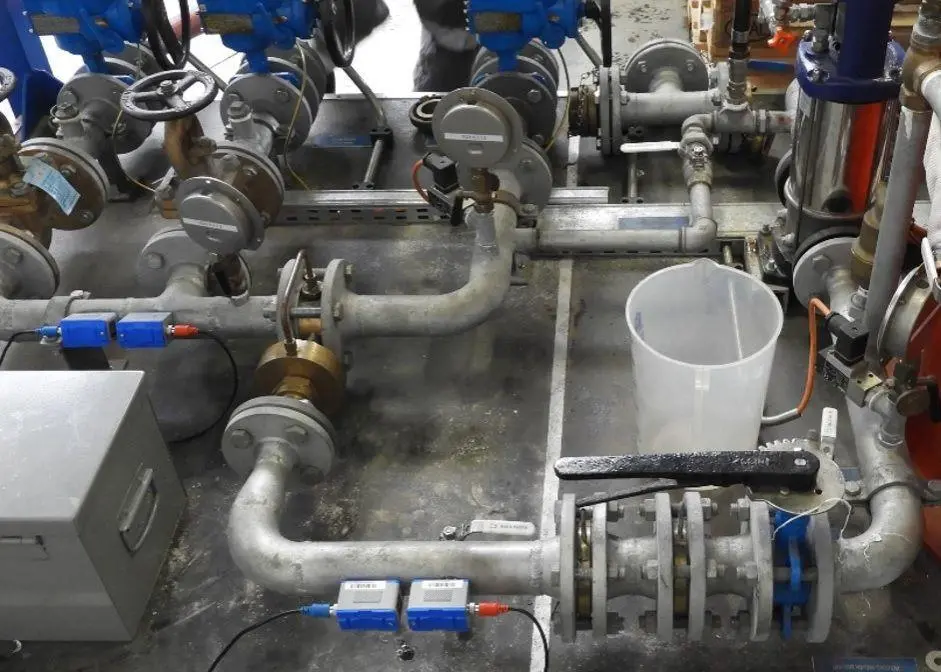
Classification society DNV has issued a verification statement allowing Survitec to use its fire foam testing process onboard maritime vessels or offshore structures. The new Produced Foam Live Test method uses ultrasound technology to verify the effectiveness of fire-fighting foam, according to the mandatory requirements set out in IMO MSC.1/Circ.1432 9.2.4.
Jan-Oskar Lid, technical sales manager at Survitec, said: “We have developed a safe, environmentally sound and predictable test method removing a lot of the time and expense involved in foam sampling and testing. It delivers peace of mind to ship operators and crews.”
Quicker and more efficient
The ruling applies to any vessel or offshore structure that has a deck foam system, a high expansion foam system (engine room) or Heli-deck foam system.
Survitec uses two ultrasonic flow meters to compare both values. Unlike existing techniques, the Survitec method means testing can be performed while the vessel is berthed alongside, without having to discharge any foam overboard or send samples to testing labs.
Current test methodologies have to run the fire-fighting system with foam for at least two minutes, so there is a heavy consumption of costly concentrate, often resulting in the need to replace the entire tank volume. The produced foam is discharged overboard. Survitec’s Produced Foam Live Test does not need to use the concentrate or produce foam in the test.
Survitec’s Produced Foam Live Test method has already been used by several gas carrier operators.
By Rebecca Jeffrey