![MaritimeJournal[Seawork]](https://www.maritimejournal.com/wp-content/uploads/2026/09/MaritimeJournalSeawork.svg)





£10m Expansion at Port of Tyne
Due to the success of the UK Port of Tynes bulk cargo business, a £ 10m investment programme to extend cargo handling facilities has begun.
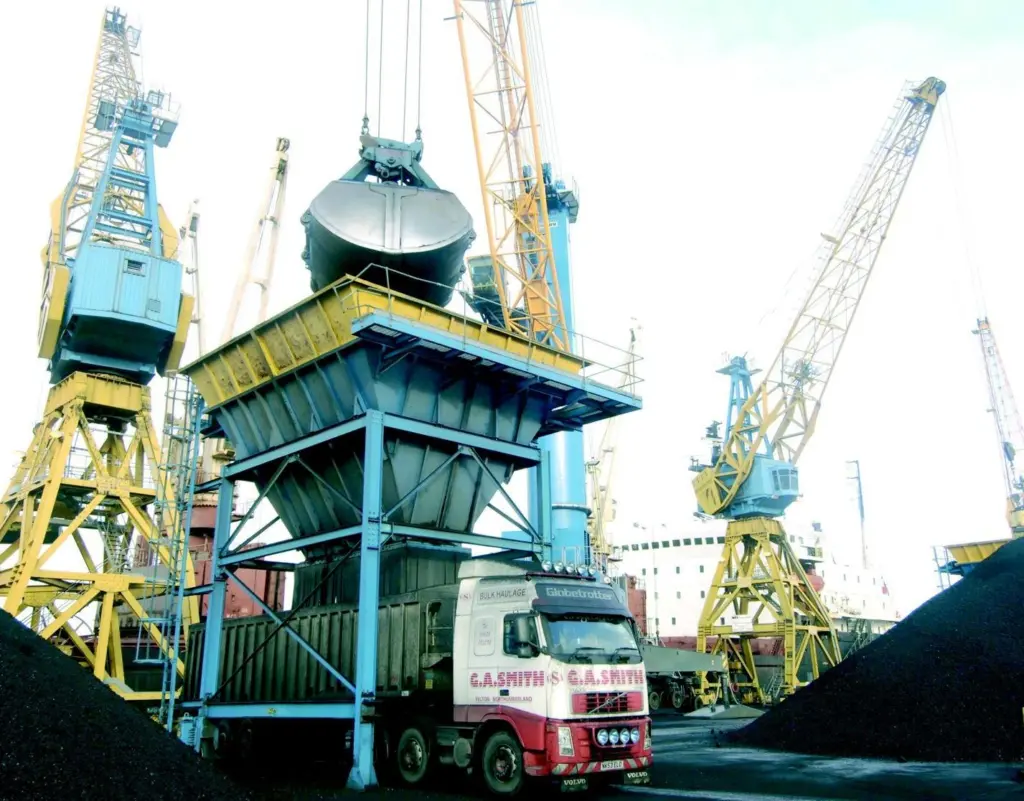
Implementation will extend through to April 2007, enhancing the Port’s bulk handling capability on the main conventional cargo facility, Riverside Quay.
This investment has been driven by the growing bulk import and export business, which includes significant tonnages of coal.
The expansion plans include the deepening of the berth and channel, an extension of the Port’s main cargo handling quay, investment into more operating equipment and the creation of a second rail siding.
The main river channel from just outside the piers to Tyne Dock will be deepened from 8.6m below chart datum to 9.1m and Riverside Quay will be dredged from 10.5m to 12.1m CD. The deeper channel and berth along with the 60m extension to Riverside Quay, lengthening the quay to 580m, will enable the Port to accommodate larger ships up to handymax and panamax sized vessels.
The Port has already placed an order for a fourth Liebherr LHM 320 mobile harbour crane, 23.5m3 grab and mobile hopper totalling £1.65m in value. The new crane, due to become operational this month, will add flexibility to the Port’s operations as it will handle a wide variety of bulk and general cargo commodities, including ferrous scrap, coal, forest and steel products.
The new rail siding will incorporate 1,120m of track, feeding directly into the 15 acre coal stocking ground.
The Port’s rail terminal is connected to the UK national network and the new siding will provide additional capacity to handle increased tonnages of bulk materials.
The Tyne has a long and distinguished tradition of handling coal. Exports peaked in the mid-1800s, when 23.6m tons were exported in one year.
Exports ceased in 1998 following the demise of the local mining industry and the coal loading equipment was sold to New Zealand in 2002.
The current imported coal business through the Port started in 2004 with a first shipment of 19,000 tons of Russian coal. Volumes increased to some 630,000 tons last year and are expected to double in 2006. Total cargo volumes in the Port grew by 30% last year to reach 4m tons.
MJInformation No: 21926

Related Articles
 OTHER NEWS
 OTHER NEWS
 FEATURES & VIDEOS